 Add us as a preferred source on Google
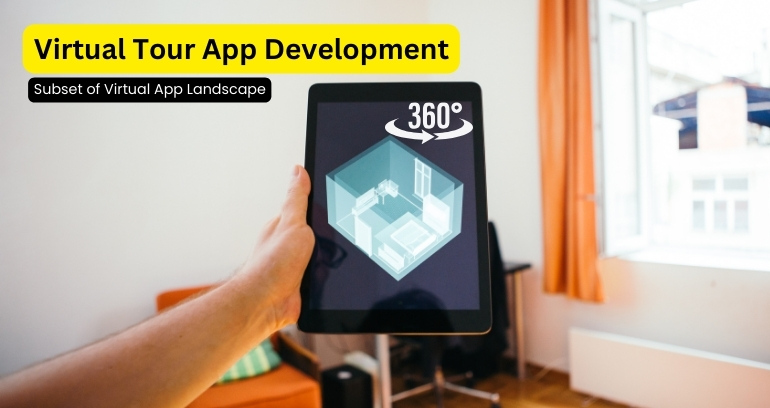
Apps that run in a virtual environment without being installed, whether on-premises or in the cloud, are virtual apps. In connection to the virtual tour apps, both showcase real-world or virtual environments using digital technology and let the user witness virtual experiences. A subset of virtual apps, virtual tour apps are specifically created to replicate physical spaces or locations to meet the needs of education, exploration, and marketing.
Regarding the online business landscape, merchants should adopt the latest technologies that evolve with time to enhance online presence and, in turn, increase sales. One such trend is virtual tours, which boost engagement, let visitors explore your business from anywhere, and get more leads. Is it worth it to fuel up your business with virtual tour apps?
Websites featuring virtual tours get 5-10 times more views than those without.
Around 75% of potential buyers prefer virtual tours as the chief factor before purchasing. Also, Google favors 360-degree experiences over still photography. Besides, virtual tours lead to a 12% increase in engagement and a 16% boost in organic search.
These figures prove how impactful the virtual tour is in businesses. Of course, you should also invest in virtual tour solutions to boost the power of your marketing efforts. How? Accumulate enough knowledge about this technology to make it work in your favor.
We have curated a blog post to help you learn how to easily use virtual tour mobile apps.
Virtual Tour Mobile Applications – Concept Behind
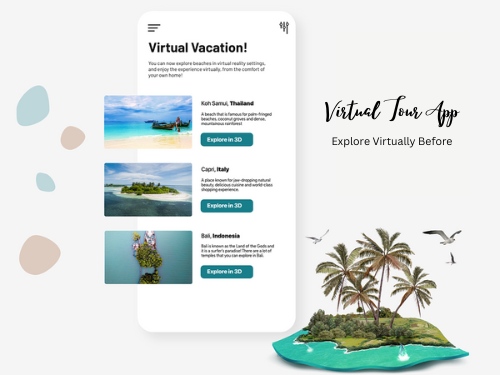
When you want to create 360-degree views of real-world locations for your businesses, you can choose to develop virtual apps.
You can use virtual tour software in varied industries, such as education, healthcare, automotive, real estate, e-commerce and retail, hospitality, and more.
Among these, virtual tours are usually picked in the real estate industry to provide an engaging walk-through of space with the help of 3D models, hyperlinked still or video images, and 2D panoramic images. Besides, they can include music, sound effects, text, and narration.
Hotels using virtual tours avoiding standard photos get approx. 50% more clicks.
While eyeing other industries, you will know that besides real estate agents, sales reps and college recruiters use such apps to promote their spaces to their prospects. Photographers also leverage virtual tour solutions to capture distinctive events, like corporate gatherings, weddings, and more, in immersive 360 photography.
Next, we will look at various virtual tour apps you can develop for your business to whichever industry it belongs to.
What are the Main Types of Virtual Tours?
1. Interactive 360-degree Photo & Video Apps
360-degree camera application lets the users view and capture panoramic photos and videos using software and merge them or take one uncut shot, giving users a comprehensive 360-degree view of their surroundings.
By swiping or exploiting motion sensors, users can explore spaces via such apps to view different angles of the spaces.
Top Industries Using 360-degree Apps: Training, Real Estate, Travel, Education, Marketing, etc.
Key Features (To Be Included)
- Non-compass capture
- Automatic geo-tagging
- Automatic storage in SD card.
- Direct upload to social media sites/apps.
- HD option to get high-resolution panoramas.
- Remote shooting
- Compatible to all devices
360-degree App Development Tip: 360-degree virtual tours are easily developed with high accessibility as they can be deployed on any app or website. Most brands prefer using a Unity 360 virtual tour game engine because it uses multiple extensions and plugins that ease 360-degree virtual tour app development.
2. 3D Virtual Tour
One more interactive 3D model of a space, a 3D virtual tour, facilitates potential customers to witness the property from anywhere. Using 2D panoramic images, image-based models, and hyperlinked still video or images, such a virtual tour offers a more immersive and detailed experience compared to traditional photos or videos.
Key Features (To Be Included)
- Audio and voiceovers
- Password protection
- High-resolution images
- Background music
- HD green screen videos
- Virtual tour guide
- Virtual interactions
Top Industries Using 3D Virtual Tour Apps: Hospitality, Real Estate, eCommerce, Logistics, Automotive, etc.
3D Virtual Tour Apps Development Tip: You can include many interactive options and engaging details and deploy such apps on the web or integrate them into apps for desktop, mobile, or other platforms. You can create these tours for long-destroyed and fictional locations.
3. Virtual Reality Tour
When the simulations of the current locations are created using sequences of still images, videos, or 360-degree images, it is the virtual reality tours. Also known as immersive tours, these include varied multimedia elements, like music, sound effects, floor maps, text, and narration.
The best way to visit a place without even being there is through 3D virtual reality tours. You will get exceptional realism, immersion, and user control. It feels like being at a location physically and witnessing the views.
Key Features (To Be Included)
- Google Street View Upload
- Group Live Experience
- Floor plans upload
- Meeting Schedule Booking
Top Industries Using Virtual Reality Tour Apps: Hotels, Real Estate,
Virtual Reality Tour App Development Tip: A perfect software featuring the digital world in 3D and a headset lets the users visit a place, experience the views just by turning their heads, and interact with the ambiance using the headset controllers.
4. Guided Virtual Tour Apps
A guided virtual tour targets individuals, tourists, or group visitors around venues or interesting places, like historic buildings, landscapes, sites of a city or region, and natural areas. Guided tour apps allow visitors to listen to such guided tours on their audio device, added with multimedia, such as audio commentary, video, or text clips.
Key Features (To Be Included)
- Audio guide
- Offline availability of guides
- Social media sharing
- Narrated guides
- Interactive maps and navigation
Top Industries Using Virtual Guided Virtual Tour Apps: Travel and Tourism, Hospitality, etc.
Virtual Guided Virtual Tour App Development Tips: While developing guided tour apps, you should prefer a platform that doesn’t need coding skills, letting the users create seamless walkthroughs with no changes to the existing code.
5. Real Estate Showcase Apps
Research says in real estate, around 54% of buyers avoid exploring properties that lack virtual images, and 50% of them found this technology useful in decision-making.
Designed especially for showcasing properties and letting prospective buyers or renters explore a home or commercial space virtually, real estate showcase apps usually include features like property deals, contact forms, and pricing.
Millions of people can virtually visit the properties while lounging on their couch at home. They simply need to put on their VR headset and witness three-dimensional, immersive walkthroughs of properties. It’s just a matter of minutes, and potential renters or buyers can virtually visit dozens of locations and decide accordingly.
Key Features (To Be Included)
- Calendar
- Saved searches and alerts
- Mortgage calculator
- Social media integration
- Data security
- In-app messaging and chat
- Maps
Real Estate Showcase App Development Tip:
List the crucial features your app needs, like property listings, high-quality images, search filters, and property details. Consider extra features like virtual tours, neighborhood information, mortgage calculators, and user reviews.
6. Museum and Exhibition Virtual Apps
Digital platforms for apps that provide virtual experiences of museums and exhibitions to the users; museum and exhibition virtual apps allow exploration of museum collections, historical sites, art galleries, and exhibitions while relaxing at their homes. All they need to do is use their devices, like tablets, computers, and smartphones, and seamlessly access the historical and cultural content without geographical constraints.
Key Features (To Be Included)
- Interactive 3D Tours
- Audio Guides
- High-Resolution Image Galleries
- Interactive Maps
- Social Sharing
- Bookmark & Favorites
- Event Calendars & Notifications
- Educational Resources
- Different device optimization
Top Industries Using Museum and Exhibition Virtual Apps: Media and Entertainment, Education, and Art and Culture.
Museum and Exhibition Virtual App Development Tip: You can integrate Augmented Reality (AR) with your museum and exhibition virtual apps to boost user experience; they must point their smartphones at the exhibits and get relevant details.
7. VR Exploration Apps
Specifically developed for Virtual Reality (VR) platforms, VR exploration apps facilitate users to explore virtual landscapes, environments, or scenarios. Such apps may range from educational tours of historical sites to immersive, engaging experiences in fictional worlds. They reap the potential of the immersive abilities of VR to let the users experience the presence and immersion in the surroundings they are exploring.
You can enjoy immersive experiences via such apps using VR headsets.
Key Features (To Be Included)
- Multi-user Support
- Avatars Customization
- Informational Overlays
- Adaptive Scaling
- Offline Mode Access
Top Industries Using VR Exploration Apps: Gaming, Healthcare, Entertainment, Automotive, Architecture, Military, Education, Manufacturing, etc.
VR Exploration App Development Tip: In your VR exploration app development service, you must ensure your app gets feedback that would give enjoyable and comfortable experiences for every user.
8. Location-based AR Tour Apps
One can opt for location-based augmented reality (AR) apps to project virtual objects into the real-world environment. Location-based or markerless AR needs no physical markers to perform like other marker-based augmented reality that connects the virtual object to a market, such as a QR code, image, etc. Besides, this virtual tool app includes gamification elements, like scavenger hunts or challenges.
Key Features (To Be Included)
- AR Overlays
- Points of Interest (POIs)
- User-Generated Content
- Navigation and Wayfinding
- Privacy and Data Security
- Feedback Loops
- Regular Updates
Top Industries Using Location-Based AR Tour Apps: Education, Tours and Travel, Healthcare, Gaming, Marketing and Advertisement, etc.
Location-Based AR Tour App Development Tips: Consider battery consumption optimization as AR/VR apps use GPS and varied camera functionalities that can drain the battery more.
9. Educational Field Trip Apps
Virtual tours of colleges have boosted by around 258%.
An amazing way to educate students on exploring new places while they stay relaxed at home is educational field trip apps that use video and the web to improve online learning. Trips to parks, museums, historical sites, and more let the students know there’s much to explore outside their classrooms. These educational field trip apps can include audio clips, videos, images, sounds, video visits, museum docents, and more to provide students with a well-structured learning experience.
Key Features (To Be Included)
- Digital explorations via videos, images, sounds, and more
- Include experiential content
- Tools for personal reflection and boosting inner knowledge
- Tips from field trip experts
- Q/A section
Educational Field Trip Apps Development Tip: The educational field trip app development can integrate integrative quizzes, discussion forms, and assignments targeting students to simulate field trips to inaccessible and distant locations.
10. Travel and Tourism Virtual Apps
“By 2028, the global virtual tourism market will likely catch up with a valuation of $23.5 billion.
Providing immersive experiences to the users, virtual apps for travel and tourism help explore attractions, destinations, and landmarks without any physical existence. Besides, such apps offer self-guided tours, allowing users to explore the locations independently.
Key Features (To Be Included)
- Virtual guide
- Camera to shoot and share photos
- Regular content update on adding new locations
Travel and Tourism Apps Development Tip: The best app monetization approach is a well-infused travel and tourism virtual app development with user reviews, offline maps, and ticket booking.
11. Custom-branded Business Tour Apps
Brands interested in showcasing their campuses, facilities, or factories may opt for custom-branded business tour apps. Such apps improve public relations, recruitment, or stakeholder engagement. Enterprises, especially real estate operators, will find such apps useful for increasing client engagement and lead generation.
Such apps are customized per specific branding and business needs, ensuring personalized and unique user experiences.
Key Features (To Be Included)
- Interactive 360° Views
- Offline Access
- Analytics
- Navigation Options
- Augmented Reality (AR) Integration
Top Industries Using Custom-Branded Business Tour Apps: hospitality, universities, real estate, and more.
Custom-Branded Business Tour Apps Development Tip: Prioritize user experience by ensuring the app’s responsive design, easy navigation, and intuitiveness, as it leads to positive word-of-mouth referrals and higher engagement.
12. Event and Venue Preview Apps
The demand for a virtual event option increased by 84% of people.
A software app crafted to offer users detailed insights and previews into venues and events. This may be useful for event attendees, organizers, or anyone seeking to attend or book an event. Users can get whatever details they want for an event from such apps.
Key Features (To Be Included)
- Ticketing Integration
- Social Media Integration
- Multimedia Galleries
- Event Schedules
- Accessibility Information
Event and Venue Preview App Development Tip: Mobile optimizations must be considered to ensure the mobile-friendliness of the app. Your app should be responsive, load quickly, and provide a seamless user experience on mobile device.

Features of a Robust Virtual Tour Mobile Application
| 360-Degree Virtual Tours | This feature in a virtual app allows users to explore different places and locations, providing them with an immersive and realistic experience. |
| Interactive Maps | Including interactive maps in the virtual app eases navigation through the virtual tours and facilitates users starting tours or accessing extra details by clicking specific locations. |
| Multilingual Support | You can make the app simply accessible by including multiple language support. |
| Virtual Reality (VR) Integration | The app may support VR headsets, such as Google Cardboard or Oculus, providing users with an exceptional immersive experience. |
| Search and Filter Functionality | Implementing search and filter options in the app can help with the easy search for finding specific locations or tours aligning with the users’ interests. |
| Rating and Review System | Such a feature will let the users share their experiences with the locations, assisting others in making the best choices and maintaining quality standards. |
| Accessibility | The app with accessibility features, such as voice commands and screen readers, will allow special people with disabilities. |
| Content Management System (CMS) | Offers an easy-to-use backend CMS for tour creators to manage their content post-uploading. |
| Analytics and Insights | The inclusion of analytics tools in the app will help track user engagement, |
| User-Friendly Interface | The app needs an easy and intuitive user interface, permitting users to access content and tours effortlessly. |
| High-Quality Images and Videos | Make the virtual tours visually engaging and informative by making the app supportive of high-resolution videos and images. |
| Audio Narration and Descriptions | Written descriptions or audio narration guide users through the tour, offering information and context about every point of interest or location. |
| Offline Mode | Users can download virtual tours for later offline viewing, which is specifically valuable for visitors who experience network issues during their journeys. |
| User-Generated Content | This feature in a virtual tour app facilitates users to create and share their virtual tours, promoting a community of the globe’s contributors and diverse content. |
| GPS Integration | Providing GPS in a virtual tour app can help the users with location-based recommendations and confirm that positioning and mapping are accurate while they travel. |
| Social Sharing | A virtual tour app with social sharing lets the visitors share their experiences of virtual tours on social media platforms, fostering user-generated content and the app. |
| Monetization Options | Offering some tours in exchange for an amount may make the app roll out increased revenue. Varied monetization models, like in-app advertising, subscriptions, etc., can be profitable. |
| Feedback and Support | While using the app, the users may appear with any issue. Here, the virtual app should allow them to share their feedback and access customer support service through which they can get resolutions. |
Monetizing Virtual Tour Mobile Applications
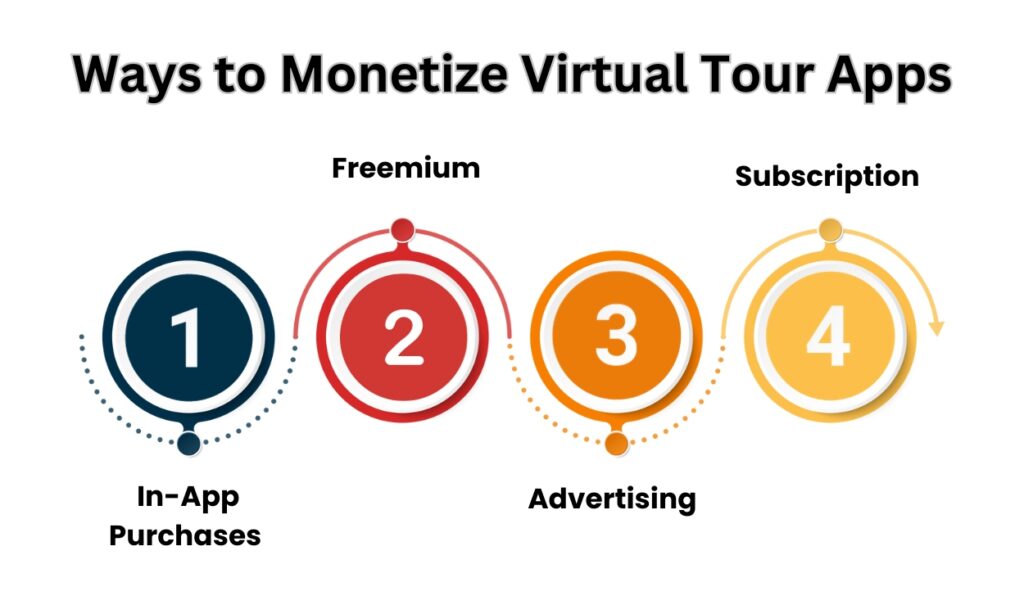
The in-app purchases and freemium apps can monetize virtual tour apps. A type of interactive marketing, virtual tours can assist businesses, showcase services, products, or locations, and sell them.
Ways to Monetize Virtual Tour Apps
1. In-App Purchases (IAP)
The most money-making monetization strategy is in-app purchases; the term refers to buying various items directly using the app, including virtual goods, premium content, and subscriptions. Thus, this category also includes freemium models and subscriptions.
However, in-app purchases can be noticed as a standalone monetization model. Still, it’s usually combined with subscriptions or free apps to boost generated revenue and reach a broader audience. In the mobile environment, free downloading with in-app purchases is the preferred way to monetize virtual tour apps.
2. Freemium (Free-to-Play)
The monetization strategy is widely used in apps that directly distribute digital content to users, like music players and social or health apps. Such a pricing strategy holds an approach according to which the apps can be downloaded for free. Still, the money is charged to enjoy additional features or services, known as a premium subscription.
Simply put, the users need to pay nothing to download the app but upgrade to the paid version to get complete accessibility to the functionality.
At the entry-level only, such a model will attract profit. Besides, developing virtual apps using Unity will also diminish development costs and expand the VR experience reach.
3. Advertising
In the classic monetization strategy, the advertising revenue model uses different ads within the applications to catch a broader audience.
The production team finds this business model beneficial as after installing the app, the ads pop up, and money gets your account instantly.
Besides, balancing visitors’ excitement, annoyance, and willingness to click the ad can be challenging. But, with the required practice and knowledge, it can be sorted.
4. Subscription
One of the most preferred ways of monetizing freemium apps is the subscription business model, which includes a recurring amount that users pay for accessing premium services, functionality, or content. Generally, users are charged every month, quarterly, or yearly for the subscription, during which they get unlimited access to the content that stays unavailable to others.
Subscription apps are still attempting to gain popularity compared to their opponents, yet they hold the caliber to attract significant revenue. Video, music, GIS apps, and social networks usually pick such a monetization strategy.
Tech Stack for Virtual Mobile App – Technical Backbone
Choosing the right tech stack is necessary to ensure you emerge with the best app with high performance, scalability, and user experience.
We have listed the technology stack you can consider for developing a virtual mobile app.
| Techstack for Virtual App Development | |
|---|---|
| Programming Languages | Kotlin (Android), Swift (iOS), JavaScript (React Native, Flutter) |
| Development Frameworks | Flutter, React Native, Android SDK (Android), UIKit (iOS) |
| Backend Development | Node.js, Ruby on Rails, Python (Django, Flask), Java (Spring Boot) |
| Database | MongoDB, MySQL, PostgreSQL, Firebase Realtime Database or Firestore |
| Cloud Services | Google Cloud Platform (GCP), Microsoft Azure, Amazon Web Services (AWS), Firebase. |
| Maps and Location Services | Google Maps API or Mapbox |
| Push Notifications | Firebase Cloud Messaging (FCM), Content Management System (CMS), Apple Push Notification Service (APNS) |
| Authentication and Authorization | OAuth 2.0, Firebase Authentication, JWT (JSON Web Tokens) |
| Analytics and Crash Reporting | Crashlytics or Sentry, Google Analytics or Firebase Analytics |
| Version Control | Travis CI, Jenkins, or CircleCI, Appium or Detox, Payment Integration, Git, Security |
| UI/UX Design Tools | Figma, Sketch, or Adobe XD, NPM (for JavaScript/Node.js), CocoaPods (for iOS), Gradle (for Android) |
| Performance Monitoring | New Relic or Instabug |
1. Programming Languages:
- Kotlin (Android): For native development on Android devices.
- Swift (iOS): For native development on iOS devices.
- JavaScript (React Native, Flutter): For cross-platform development, if you are devising targeting Android and iOS using a single codebase.
2. Development Frameworks:
- React Native: If you choose JavaScript, this framework allows you to build cross-platform apps with a single codebase.
- Flutter: Another option for cross-platform development, known for its beautiful UI and high performance.
- Android SDK (Android): To develop natively for Android.
- UIKit (iOS): For developing natively for iOS.
3. Backend Development:
- Node.js: Popular for developing fast and scalable backends, especially using JavaScript/React Native.
- Ruby on Rails: If you find ease in using Ruby, Rails is a robust web application framework.
- Python (Django, Flask): Django is a powerful framework known for its security, while Flask appears to be a lightweight option for developing RESTful APIs.
- Java (Spring Boot): A reliable option for creating enterprise-grade backends.
4. Database:
- MySQL, PostgreSQL: For structured data storage.
- MongoDB: For NoSQL database needs, especially if you have a lot of unstructured data.
- Firebase Realtime Database or Firestore: For a cloud-based, real-time database solution with offline support.
5. Cloud Services:
- Google Cloud Platform (GCP), Amazon Web Services (AWS), or Microsoft Azure: For cloud hosting, storage, and other services.
- Firebase: If you prefer Google’s ecosystem, Firebase offers a wide range of cloud services tailored for mobile apps.
6. Maps and Location Services:
- Google Maps API or Mapbox: Integrating location-based services and maps into your app.
7. Authentication and Authorization:
- Firebase Authentication: Provides secure authentication methods for mobile apps.
- OAuth 2.0: For integrating with social media logins.
- JWT (JSON Web Tokens): For securing API endpoints.
8. Push Notifications:
- Firebase Cloud Messaging (FCM): This is for sending push notifications to both Android and iOS devices.
- Content Management System (CMS): WordPress, Drupal, or a headless CMS
- Apple Push Notification Service (APNS): For iOS devices.
9. Analytics and Crash Reporting:
- Crashlytics or Sentry: For monitoring and reporting the app crashes.
- Google Analytics or Firebase Analytics: For tracking user behavior.
10. Version Control:
- Git: Essential for version control and collaboration among developers.
- Travis CI, Jenkins, or CircleCI: Automating testing and continuous integration processes.
- Appium or Detox: For mobile app testing.
- Payment Integration: PayPal, Stripe, or Braintree for handling in-app payments.
- Security: Follow best practices for mobile app security, including authentication, data encryption, and authorization.
11. UI/UX Design Tools:
- Figma, Sketch, or Adobe XD: For designing and prototyping the mobile app’s user interface.
- Dependency Management: CocoaPods (for iOS), NPM (for JavaScript/Node.js), or Gradle (for Android) to manage dependencies and libraries.
- Performance Monitoring: Tools like Instabug or New Relic for app performance tracking and user feedback.
Development Challenges and Solutions for Virtual Mobile Apps
Building a virtual app can be rewarding, but it arrives with a cluster of challenges. Below, we will discuss some common challenges with the potential solutions that may help build an expected app.
1. Cross-Platform Compatibility
- Challenges: It may demand more effort to make your app run seamlessly on Android and iOS, mainly using cross-platform frameworks.
- Solution: You should conduct rigorous testing on the platforms and prefer platform-specific code when needed. For the safer side, you can hire Virtual App developers with the required expertise and experience.
2. User Engagement
- Challenge: Keeping users engaged and interested in your virtual tours may be tricky.
- Solution: You can append interactive elements, such as storytelling, gamification, and quizzes, that can help make tours more attractive. Besides, foster social sharing and user-generated content to create a community around your mobile app.
3. VR Integration
- Challenge: It can be complicated to integrate virtual reality (VR) into your app. Also, not every device will support VR.
- Solution: You can offer VR support as an option for compatible devices. You may prefer using libraries, such as Unreal Engone or Unity, for VR development.
4. Device Fragmentation
- Challenge: Various Android devices with different screen sizes and potential may lead to fragmentation problems.
- Solution: You may use responsive design rules to let your app adapt to varied screen sizes. You can also test various devices to ensure compatibility.
5. Monetization Strategy
- Challenge: Finalizing the right and most suitable monetization model for your virtual app can be tricky, whether through in-app purchases, ads, or premium content.
- Solution: Conducting deep market research can help you understand your target audience and their preferences. Also, provides a fusion of free and premium content and should be transparent, considering the pricing aspect.
6. Performance Optimization
- Challenge: Virtual tours usually need rendering high-resolution images and 3D environments that may result in performance issues on distinctive mobile devices.
- Solution: Use the latest techniques, like texture compression, level of detail (LOD) rendering, and electing to optimize graphics performance. Choose the use of native code for resource-intensive jobs.
7. Content Creation and Management:
- Challenge: It may be difficult to create and manage virtual tour content, like 360-degree images and videos, as it can be time-consuming.
- Solution: You can implement a user-friendly and easy-to-use content management system (CMS), allowing content creators to upload and manage virtual tour assets. You can automate the process wherever possible.
8. Bandwidth and Data Usage
- Challenge: High-quality images and videos will exhaust a significant amount of data, leaving users frustrated.
- Solution: Let users view offline by allowing them to download tours. You can also implement content streaming with bitrate control for data usage optimization.
9. UX and UI
- Challenge: Crafting an immersive and intuitive UI/UX for virtual tours can be tricky.
- Solution: You can prefer investing in user-centered design (UCD) principles and perform user testing to refine these aspects. Besides, you can prioritize simplicity and simplify the navigation.
10. Security and Privacy
- Challenge: User data protection and secure transactions are crucial within the app.
- Solution: Encryption implementation for data storage and transmission can help you. Besides, following the best practices and complying with privacy regulations, such as CCPA and GDPR, would also be supported.
11. User Feedback and Support
- Challenge: User feedback management and timely support can overwhelm the growing user base.
- Solutions: Selling a system for accumulating and addressing user feedback can be the right solution. Consider in-app support chat or email support implementation for users to reach when such issues are encountered.
Case Studies: Some Real-World Examples of How Businesses are Leveraging Virtual Tour Potential
1. Zillow 3D Home Tours

Industry: Real Estate
Description
One of the most popular real estate platforms, Zillow emerged as a 3D Home Tours, facilitating home buyers to explore properties virtually. Besides, it lets homeowners and real estate agents create 3D tours of the homes they list for sale on the app.
Challenges
- User Experience: To ensure users witness a seamless and immersive experience during virtual property tours.
- Content Creation: Persuading homeowners to make them invest time in creating 3D tours for their online listings.
- Scalability: Easily handle increasing 3D tours and maintain server capacity.
Solutions
- Incentives: Offered incentives to homeowners, like increased listing visibility, motivating them to create 3D tours.
- User-Friendly App: Built an easy-to-use application that assisted users in creating 3D tours using their smartphones.
- Integration: Seamlessly integrated 3D tours into the Zillow app to let prospective homeowners access them.
Result
The 3D Home Tours feature of Zillow caught popularity among real estate professionals and property buyers, especially during the pandemic days when physical property visits were not allowed.
Besides, it offered a better way for buyers to explore homes online and effectively supported sellers in showcasing their properties.
2. Pokémon GO: Augmented Reality Gaming Phenomenon

Industry: Gaming and Entertainment
Description
Developed by Niantic in collaboration with The Pokémon Company and Nintendo, Pokémon GO is an augmented reality (AR) mobile game. Players of this game can explore the real world while grabbing virtual Pokémon creatures. The game merges GPS data and the smartphone camera to craft an immersive and interactive gaming experience.
Challenges
- Scalability: Niantic was required to handle a huge inflow of users when the game caught up with the sensation overnight.
- Technical Complexity: Infusing AR, GPS, and real-time geolocation data was tricky.
- Physical Safety: Concerts touched the surface when the players were found indulged in the game and not concentrating on their surroundings, potentially leading to accidents.
Solutions
- Server Scaling: The company scaled its server infrastructure faster to accommodate millions of players easily.
- Technical Expertise: Niantic exploited its years of experience building Ingress, one more AR game, to build the underlying technology.
- Safety Features: Implemented unique safety features, such as alerts to stay aware of surroundings and discourage playing while driving.
Result
Pokémon GO grabbed the top position on its release in 2016. It engaged millions of players who explored parks, neighborhoods, and landmarks while capturing virtual Pokémon.
The success of the game showcased the capability of AR gaming and uplifted other developers to explore the technology. With time, Niantic resumed updating and expanding the game, presenting new features and collaborations with the top brands ahead, strengthening its roots in the AR and gaming industry.
Future Trends of The Virtual App Market
The possibilities of virtual apps are promising and secure infinite growth and innovation. Below, we will discuss some trends and developments that may mold the future of virtual apps.
1. Extended Reality (XR)
Encompassing AR, VR, mixed reality (MR), and extended reality (XR) will constantly work to bridge the gaps between the physical and digital worlds. XR apps will be preferred for simulation, training, gaming, etc.
2. Immersive Augmented Reality (AR) Experiences
AR technology is expected to become more advanced and chosen for integration into routine life. Virtual apps will arrive with immersive experiences, improving everything from navigation and education to shopping and remote work.
3. Metaverse Development
The metaverse concept, a collaborative virtual space, is gaining traction. In the future, virtual apps are likely to play a crucial role in building and navigating metaverse environments, providing a wide range of economic, social, and entertainment experiences.
4. Artificial Intelligence (AI) Integration
Virtual apps will enhance recommendation systems, personalization, and natural language processing for more interactive and immersive experiences when integrated with AI.
5. Spatial Computing
Such technologies will facilitate users interacting with digital content more intuitively and naturally. Eye tracking, gesture recognition, and voice commands will become the standard features in virtual apps.
6. User-Generated Content
Virtual app users will contribute more and more to content creation, like user-generated virtual experiences, virtual real estate, and games within the metaverse environment.
How Much Does It Cost To Create A Virtual Tour App?

The cost to develop a virtual tour app varies depending on several factors, like the complexity, size, features, functionality, etc., and the skills and experience of the development team you hire for your virtual tour app development project.
Estimated Cost to Build a Virtual Tour App: $10,000 to $100,000
Well, this is just an estimated price. You should get a consultation from a mobile app development company, putting forward your project requirements, specifications you need to include, and, most essentially, your budget to get the right price for your virtual app development. The brand will emerge with a package suiting your requirements and expected outcomes.
Wrapping Lines
In this blog, we learned about the virtual tour app, types, challenges and their solutions, features to include, monetization options, tech stack to follow, trends, and cost to develop one.
We hope you cleared all your relevant thoughts and issues. Still, for more assistance, you can connect with our experts!
To build a high-quality virtual tour app, you should hire a mobile app development company to seamlessly catch up with the expected outcomes with increased revenue. Besides, consider conducting a walkthrough on the app stores to peep into the most downloaded virtual tour apps, reviews, etc. Moreover, learn from their mistakes that may impact your app revenue ahead.
Connect to an experienced mobile app development company today!