
 Add us as a preferred source on Google
While stepping back in time, you will notice that the launch of giants like Amazon and Alibaba pushed the growth of the eCommerce venture a step ahead.
Eyeing the facts and figures, we found that the eCommerce industry has been witnessing a progressive elevation in sales since 2014 and is constantly increasing with time. Statista reports that the sales, which reached $1,336 billion in 2014, experienced a boost and caught up with $5,211 billion in 2021. The figure recorded to be $6,310 billion in 2023 is expected to reach $8.1 trillion in 2026.
AWS Backup vs. Traditional Backup Methods
Businesses must choose effective backup solutions to protect their data. This section compares AWS Backup with traditional backup methods, highlighting their advantages and disadvantages.
|
AWS Backup |
Traditional backup |
|
AWS Backup is a fully managed backup service of Amazon Web Services that automates and centralizes the backup of AWS services. |
Traditional backup methods involve on-premises solutions, such as tape drives, external hard drives, or dedicated backup servers. |
|
AWS is scalable and easily accommodates growing data needs without infrastructure changes. |
The organization has complete control over its infrastructure and data, eliminating the reliance on cloud providers. |
|
Automated backup schedules and lifecycle policies reduce the risk of human error and provide regular data protection. |
Tradition backups do not require an internet connection for access, allowing for immediate recovery in case of data loss. |
|
Pay-as-you-go pricing allows businesses to only pay for the storage and services they use. |
Scaling traditional backup solutions often requires significant investment in new hardware & infrastructure. Managing large volumes of data can become cumbersome. |
|
Easily integrate with other AWS services, enhancing data management and recovery processes. |
On-premises solutions require ongoing maintenance. |
|
Encryption and compliance features that help meet regulatory requirements. |
In case of disaster, traditional backups get lost or are at risk of getting damaged. |
What are the benefits of optimizing AWS Backup and restor
Did you know the factor that’s driving increased sales in e-commerce is evolving technologies? Yes, advanced technologies, like AI and IoT, are revolutionizing business operations and customer interaction. There are more benefits to unveiling how beneficial AI and IoT are for building smart ecommerce stores for improved customer experience.
This post aims to give you an understanding of advanced technologies in eCommerce, AI and IoT integration, the future of smarter ecommerce, and more.
Let’s gear up.
Understanding AI and IoT in the Context of eCommerce
A stack of technologies that power up computers to perform varied advanced functions, including the ability to understand, see, and analyze data, translate languages, make recommendations, and more, is artificial intelligence (AI). Encompassing natural language processing, data mining, and machine learning, Artificial Intelligence (AI) impacts any business functions in your organization.
Emerging with exceptional value for businesses and individuals, AI is backing innovation in modern computing. Based primarily on machine learning (ML) and deep learning, AI is usually adopted for data analytics, predictions, natural language processing, object categorization, intelligent data retrieval, recommendations, and more.
On the other edge, a collective network of linked devices and technology that ease communication between devices (among themselves, too) and the cloud is referred to as the Internet of Things (IoT). Using sensors, IoT devices accumulate information about their environment, interpret it, and connect it to a network.
Let’s dig deeper into the role of AI and IoT in ecommerce.
On the other hand, complex animations and custom design require more time and expertise, leading to higher expenses.
|
App process |
Development Time |
Average cost |
|---|---|---|
|
App design research |
Based on a niche and available resource |
$100-$350 |
|
UX design |
Simple – 10-14 hours Medium- 50-60 hours Complex- 150+ hours |
$2000-$8000 |
|
UI design |
Simple – 14-20 hours Medium- 80-90 hours Complex- 100+ hours |
$10,000-$40,000 |
|
Branding |
50+ hours |
$5,000-$20,000 |
|
Animations and illustrations |
Depends on the level of illustrations |
$1000-$20,000 |
AI in eCommerce
Including eCommerce, AI holds the caliber to influence varied industry verticals, like healthcare, logistics, banking, finance, etc.
Let’s unwrap how AI benefits ecommerce brands.
1. Increased Customer Retention
When it comes to analyzing customer behavior, AI gets deeper and emerges with more precise and complete data scans in which business owners understand customer behavior, preferences, and buying patterns and ahead provide more personalized experiences. This improves customer retention.
2. More Targeted Advertising and Marketing
With Artificial Intelligence, you can ensure complete implementation of personalization across varied channels. More personalized messages let you stay ahead of the curve and communicate directly with your customers. Deep personalization techniques that get activated with advancements in AI and machine learning customize content for customers. When data from purchase history and other customer interactions is analyzed, one can learn customers’ requirements and deliver the message that resonates with them the most.
3. Efficient Sales Process
AI assists in gathering and deeply analyzing customer data for sales funnel personalization, automating follow-up of abandoned cart inquiries, sending the right message to the right prospects at the right time, etc. This way, customers witness a more personalized experience that boosts their engagement, leading to increased sales.
4. Automate Tasks
By leveraging the power of machine learning and natural language processing, AI in eCommerce helps automate repetitive jobs, like customer support, loyalty discounts, and product recommendations, that save energy, time, and operating capital.
5. Personalized Product Recommendations
AI provides personalized product recommendations based on lookalike customers and past customer behavior.
Have you noticed websites recommending items you may like? It’s because of machine learning that analyzes your previous history and behavior. This way, retailers can deliver personalized experiences, implement a suitable marketing campaign, optimize costing, and emerge with customer insights.
6. Improved Customer Service
AI-powered chatbots and virtual assistants help deliver seamless customer support. Besides, these AI bots allow simple transactions, freeing support agents to focus on more complicated issues. As virtual agents are available 24/7, low-level issues and questions can be resolved anytime without leaving customers waiting.
7. Smart Logistics
Arriving with predictive powers, Machine Learning helps forecast stock transit times, shipment delays, and demand levels. AI streamlines operations across inventory management, order processing, distribution, and supply chain to improve customer experience.
8. Price Optimization
AI comes into play where humans lag. Here, AI algorithms also analyze the supply and demand of the products and optimize the pricing accordingly. With time, AI-based tools have gained more power to predict the discount strategy and evaluate the discount to offer for the sale.
9. Customer Segmentation
AI-enabled tools allow e-commerce operators to access more customer and business data and further process it to better understand customers and identify the running trends. Based on data and customer behavior, they segment customers according to their geographic location, demographics, and purchasing patterns.
10. Sales and Demand Forecasting
AI makes sales forecasts precise by infusing thorough sales data with real-time customer insights. This way, operators get a comprehensive business picture to make smarter decisions.
IoT in eCommerce
IoT integration with e-commerce has transformed the way we shop and displays a completely new customer experience.
Let’s move ahead to learn how IoT is contributing to redefining e-commerce.
1. Improved Customer Experience
IoT-powered smart devices provide a seamless shopping experience to customers, making it more efficient and convenient to enhance their experience. For example, smart shopping carts, one of the best business processes for automated shopping, demand customers to scan and pay for purchased items without waiting in a checkout queue.
2. Predictive Analysis
Like AI, IoT accumulates customer data, including buying patterns, preferences, and behavior. Further, business operators use this data to generate easy-to-understand insights to make well-informed decisions. Even they mold the marketing strategies per their customers’ requirements.
3. Inventory Management
IoT-enabled sensors installed in warehouses collect real-time inventory level data, allowing e-commerce businesses to optimize inventory and avoid over or under-stocks. This lets them experience improved supply chain management at reduced costs. Additionally, such devices track stocks in transit, their real-time status, and more to diminish the chance of lost or damaged products.
3. Virtual Assistants
Virtual assistants infused with the power of the Internet of Things, like Google Home and Alexa, remold customers’ shopping experience. Customers can track their upcoming shipments using such products and get real-time updates. This makes their shopping experience hassle-free and convenient, from order placement to delivery.
4. IoT Enabled Robots
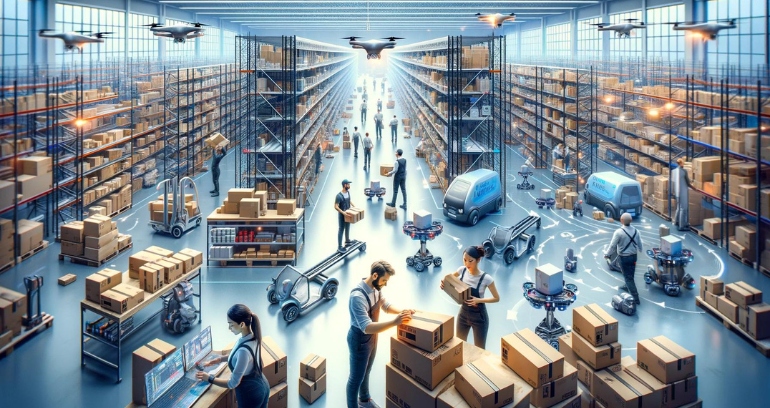
Mobile robots help optimize warehouse operations, diminish labor costs, and enhance order fulfillment accuracy and speed, everything without interfering with ongoing warehouse operations.
5. Supply Chain Management
IoT devices, like RFID tags, offer accurate and detailed data on products’ journeys, tracking their speed, position, and condition. Also, it prevents incorrect deliveries and lost cases by giving exact arrival times. On the other edge, customers can also track their ordered products till they get them at their doors.

Building an AI and IoT-enabled eCommerce Platform – Parameters to Consider
The cost to build AI- and IoT-powered e-commerce platforms may range between $ 5,000 and $300,000. This is an estimate; the cost may vary depending on varied factors, like your project needs,
Also, while building AI and IoT-powered mobile apps, you should consider some key aspects described below:
1. Define Business Objectives and Results to Attain
Adhering to the expected ROI and your business outcomes, you should define milestones for your ecommerce platform in advance. This lets you determine if your e-commerce app works per your chosen outcomes. Ahead, you can expand it to catch up with more objectives.
2. Integration Challenges
If you already have an app architecture, it can be challenging to integrate AI and IoT solutions into it. Developers should navigate the integration complexities with the app requirements before stepping ahead. The best way to overcome these issues is to consider customization, interoperability, and compatibility.
3. Data Privacy and Security
The use of advanced technologies demands the processing and analysis of a huge data volume. Data privacy and security are mandatory to build user trust and comply with data security regulations. To beat this, you can address concerns with user data and implement robust security measures.
4. Opt for Apt Hardware
Choose the type of hardware essential in e-commerce app development as it may affect the project’s progress later, and changing it may be time-consuming and costly.
5. Pick the Right IoT Platform
You need to ensure the IoT platform you choose is scalable, robust, and capable of handling millions of device connections simultaneously while allowing configuration for machine interactions.
| Bonus Tip: Secure your app necessarily as the IoT technology is ever-evolving and dynamic, the security needs of which change constantly. On top of it, your app accumulates data from varied devices, so it’s more prone to cyber-attacks or threats. You must ensure your app includes every robust security measure, like access control mechanisms, data encryption, etc., along with multi-authentication elements that protect your customer data and devices. |
6. Determine Your Budget Scope
Undoubtedly, when you are about to start a new venture or expand an existing one, you need to plan a separate budget covering new technologies and tools.
7. Learn About Customer Requirements and Market Trends
Conduct market research thoroughly to understand emerging trends and your customers’ preferences. By analyzing the data, you will get deep insights that will help you customize AI and IoT features in your e-commerce app to meet specific user demands.
8. Seamless User Experience
Choose a user-friendly interface for your e-commerce store that users may find easy to navigate.
9. Partner with Best Ecommerce Development Company
Hire experienced e-commerce experts with technical proficiency who can help you develop or integrate advanced technologies into your business.
10. Continuous Testing and Optimization
Regular testing and platform updates ensure smooth operations. Leverage your customer feedback and performance data to make regular improvements. Ask your service provider for such ongoing services.
11. Scalability
Building AI and IoT-powered e-commerce platforms demands scalability. Your app should hold the caliber to perform perfectly for any number of users and handle increased data volume with seamless performance.
Integrate AI and IoT into Your Existing Ecommerce Store



 +1 (989) 535-9295
 info@emizentech.com
 emizentech