 Add us as a preferred source on Google
The use of marketing concepts by businesses in one or more other countries is known as international marketing. Due to advancements in global markets, companies may now operate in practically any nation. Global marketing is an essential exchange of products and services across countries. Organizing and carrying out the pricing, advertising, and delivery of goods and services applies to the entire world.
Companies today are free to promote internationally rather than only within their boundaries. In addition, the economies are growing and making room for more aggressive marketing due to the customers’ changing needs, choices, interests, and tastes. Therefore, businesses must act quickly to meet client requests through well-defined business models.
What is International Marketing: A Complete Overview
International marketing, also known as global marketing, involves promoting and selling products and services beyond domestic borders. This strategy encompasses the entire process of creating, pricing, promoting, and distributing products and services on a global scale. The aim is to meet both individual and organizational objectives, adapting to various market dynamics across different countries.
Why Is International Marketing Important?
International marketing is crucial as it expands a business’s reach beyond its home market, increasing sales and growth opportunities. It diversifies income, reducing reliance on one market and buffering against economic downturns. Engaging in global markets encourages innovation and builds international partnerships, enhancing a brand’s worldwide reputation. In today’s interconnected world, international marketing is key for a company’s long-term success and competitiveness.
Key Challenges in International Marketing
International marketing is inherently more complex than domestic marketing due to a variety of challenges. It requires marketers to conduct thorough research to understand distinct consumer behaviors, legal restrictions, public sector influences, and environmental factors in foreign markets. The main focus is on managing controllable aspects to create a favorable market presence, despite numerous uncontrollable external factors. Key challenges include:
- Cultural Differences: Grasping local customs, language, and consumer behavior is essential.
- Market Research: Accurate data gathering is challenging due to diverse market dynamics in different countries.
- Regulatory and Legal Issues: Navigating varying laws across countries is crucial for legal compliance in business operations and advertising.
- Economic Variances: Fluctuating currencies and economic conditions impact pricing strategies and profitability.
- Political Risks: Government policy changes or political instability can significantly impact marketing strategies.
- Logistics: Managing international supply chains requires overcoming transportation and regulatory challenges.
- Adaptation vs. Standardization: Balancing global brand consistency with adapting to local markets is a strategic decision.
- Technology and Communication: Different levels of technological adoption affect marketing tactics and customer communication.
- Consumer Behavior: Catering to region-specific consumer preferences and behaviors is vital.
- Competition: Understanding and differentiating from both local and international competitors is critical in saturated markets.
Adaptation in Global Marketing
In the global marketplace, marketing strategies must be flexible and adaptable. Marketers are required to tailor their product, pricing, promotion, distribution, and research strategies, taking into account unpredictable factors such as competition, international affairs, regulations, consumer behavior, and technological advancements.
Benefits of International Marketing
Expanding into international markets offers significant growth potential for businesses, bringing several key benefits:
- Broader Customer Base: It allows companies to reach more customers, expanding their market beyond domestic boundaries.
- Buffer Against Economic Downturns: International operations can provide stability and reduce dependence on a single market’s economy.
- Utilization of Excess Production Capacity: Companies can make better use of their resources by catering to international demand.
- Fostering Global Partnerships: Engaging in international markets helps build connections with partners worldwide, enhancing business opportunities.
- Diversification: Entering different markets helps diversify business risks and revenue sources.
- Increased Brand Recognition: Operating internationally can enhance a brand’s visibility and reputation globally.
- Access to New Ideas and Practices: Exposure to different markets can lead to innovative ideas and business practices.
- Economies of Scale: Expanding market reach can lead to cost advantages in production and distribution.
- Job Creation: International marketing contributes to job creation, not just in the home country but also in the host countries.
- Competitive Advantage: Companies that successfully market internationally often gain a competitive edge over those that don’t.
What are the Primary Sources of Foreign Marketing?
1. Multinational Corporations (MNCs):
These entities operate in multiple countries and are characterized by centralized management and a global network of offices, support desks, or production facilities. They play a crucial role in international marketing by producing goods and services in various nations.
2. Exporters:
These are businesses or individuals that legally sell goods and services overseas. Exporters act as crucial conduits in international trade, connecting different markets and facilitating the flow of products and services across borders.
Features Of Global Marketing
Global Outlook in Business
In the competitive global economy, many companies seek opportunities beyond their domestic markets. This global perspective is vital for enhancing market positions and leveraging the extensive possibilities of international trade.
By embracing international marketing, businesses not only expand their reach but also gain insights into diverse markets. This leads to innovative products and strategies tailored for a global audience, which is essential for success in the dynamic global marketplace.
What Are the Types of International Marketing?
All the elements of contemporary marketing characterize international marketing. The latter, however, seeks to meet the demands of customers worldwide. Thus, it crosses international boundaries. Export or licensing is typically the first step for multinational enterprises wishing to sell their goods or services in a new nation. Along with these choices, supply chains, joint ventures, and foreign investment are different forms of worldwide marketing (FID). Let’s investigate further.
1. Export
Exporting is the act of sending products or services to a foreign government. Companies who want to grow internationally frequently think about exporting first. That’s not shocking, either.
Exporting has the least risk compared to our list’s other foreign marketing strategies. It is the least affected by the company’s human resources administration.
2. Licensing
A corporation—also referred to as the license holder of a multinational entity- has the right to utilize its trade secrets through a licensing agreement. The typical duration is set, and the licensor is compensated with royalties.
In the United States, there are several instances of intellectual property licensing. These cover trade names, manufacturing techniques, copyrights, and trademarks. Disney, Iconix Trademark Holdings, and Warner Bros. are a few of the largest global owners.
3. Franchising
Like licensing, franchising entails the holding company allowing a foreign company to conduct business under its brand. On the other hand, franchises typically operate under more stringent regulations than licensed businesses.
Additionally, businesses that provide services like hotels, rental companies, and restaurants use this form of foreign marketing more frequently. However, licensing is often limited to the industrial industry.
4. Collaboration
A joint venture is when two companies from different nations work together for the advantage of both. It is the combined involvement of two businesses in an incident in which each business:
- Donates Resources
- To Some Extent, Owns The Thing
- Share Stocks’ Risk
Sony-Ericsson is arguably the most well-known worldwide joint venture to date. It involves a collaboration between the Swedish telecom business Ericsson and the Japanese electronics manufacturer Sony.
5. Direct Foreign Investment (FDI)
In FDI, a business establishes capital costs in another nation to manufacture goods. In contrast to strategic partnerships, the foreign corporation owns the subsidiary entirely. Thus, it creates direct control or a powerful impact on the decision-making procedure.
Among other things, mergers, acquisitions, retail, services, and logistics are instances of foreign direct investment. These global marketing strategies are used by several American businesses to advertise their commodities internationally. Here are some illustrations.
What is Global eCommerce?
Selling a product online to customers in other countries is called global e-commerce. If there is a demand for your products, there are almost no boundaries to where your firm may grow. Internationalization thus has certain traits like:
- There are two or more nations involved.
- specialized marketing tactics for particular nations
- It permits communication between a business and an overseas client.
- Decisions are made in light of the international business climate.
As you might have imagined, organizations that are effective at global marketing have access to exciting prospects. It does, however, also pose several risks and difficulties. E-commerce is divided into three primary categories: business-to-business (represented by websites like Shopify), business-to-consumer (represented by websites like Amazon), and consumer-to-consumer (websites like eBay).
Some Examples of International Marketing
The practice of commercial operations intending to plan profitably, price, promote, and direct the stream of a company’s products and services to customers or users across several countries is involved in international branding.
The marketing goal for advertisers is the same whether the market is domestic or global. The goal is to generate a profit by offering goods and services in areas that need them. The sole distinction between domestic trade and international marketing definitions is that it refers to marketing operations across national borders. Below are some examples.
1. Airbnb
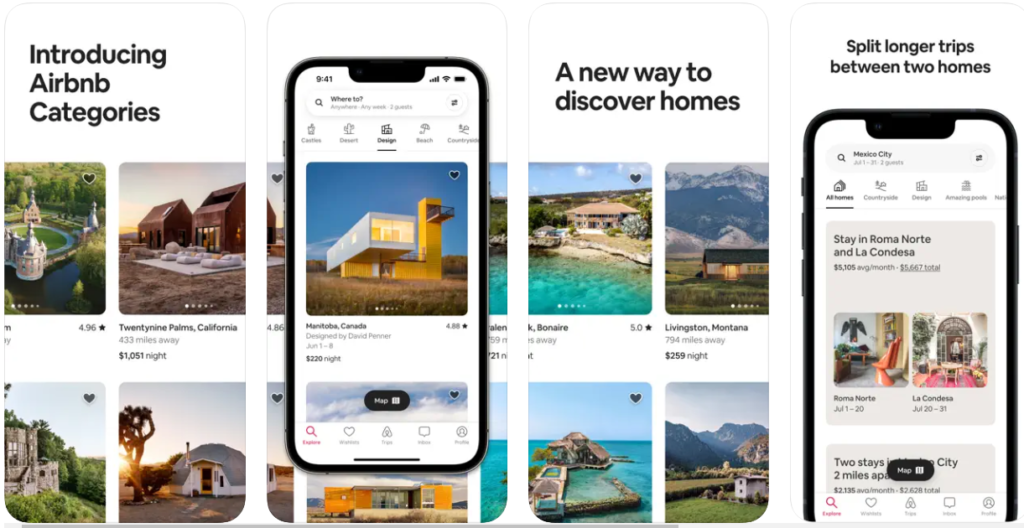
In San Francisco, Airbnb, an ecommerce platform for holiday rentals, was established in 2008 by Brian Chesky and several anonymous friends. Since then, the business has expanded to include more than 1,500,000 entries in more than 34,000 locations worldwide.
To render its website accessible worldwide, Airbnb has a specialized interpretation department. However, to build trust and a feeling of community among hosts and visitors, it also uses the potency of local narrative.
2. Nike

Through foreign sponsorships, Nike has expanded its footprint internationally throughout the years. One such instance is its earlier, protracted agreement with Manchester United, an English soccer team.
In addition to foreign partnerships, Nike employs several tactics to sell its goods internationally. For example, the NikeID co-creation portal gives consumers control over design. As a result, the brand can quickly deliver goods that accommodate ethnic and stylistic distinctions.
3. Coca-Cola

One of the most well-known brands in the world, Coca-Cola is famous for its excellent purpose. It’s a great illustration of a company with a successful global marketing plan. The corporation granted businesses some leeway to modify the soda’s flavour to suit the individual preferences of the market. Price, distribution, marketing, and marketing are all adjusted to meet particular needs.
Coca-Cola emphasizes ideas shared by all people, including joy and sharing. However, the company also adapts its advertising through cultural allusions and sponsorship agreements with local personalities.
4. Apple

Keeping a good trademark throughout nations is a critical component of Apple’s worldwide marketing technique. Different regions of the world employ the same simple, minimalist style for the company’s goods, advertisements, and websites. Additionally, the website’s graphics are the same regardless of the nation or tongue.
To put it another way, the manufacturers of the iPhone prioritize unified marketing and advertising experience. Take note that most brands might not respond well to a one-size-fits-all strategy. But it appears to be effective for Apple. The iPhone manufacturer was named one Interbrand’s top worldwide brands of 2019.
5. Spotify

Spotify, an audio broadcasting and media company in Sweden, was established twelve years ago. Spotify now has 299million users worldwide and 17 offices. Additionally, the business was included on Interbrand’s list of the top international companies in 2019.
What accounts for Spotify’s swift global expansion from its Swedish base? The way it expresses its substance provides the solution. The streaming platform encourages users to work on a routine or style of living that people worldwide have found rather than a particular musical genre. For instance, you may choose music for working out, falling asleep, or studying. International musicians might thus easily attract listeners from various nations if their work fits into a specific category.
Five Tips For Global Marketing
- Market Research: Understand each target market’s unique preferences and habits.
- Buyer Persona: Create profiles reflecting the typical customer in each region.
- SEO Strategy: Optimize your website for search engines globally, using relevant local keywords.
- Localize Content: Adapt your messaging to fit the local culture and language.
- Social Media: Engage with audiences on popular platforms in each market using tailored content.
Wrapping up
Developing an effective foreign marketing plan can be challenging for small and medium-sized firms. They frequently lack the resources or knowledge necessary to start such a campaign. Smaller firms might collaborate with rival enterprises in the neighbourhood to develop cultural studies. In addition, hiring marketing professionals with an understanding of international marketplaces is an additional choice.
Research is the most crucial factor for a successful worldwide marketing campaign, regardless of the strategy you select. It will help organizations make better judgments and help them realize their full potential in emerging markets. Finally, frequent adjustments are needed to maintain competitiveness in the international market. You may, for instance, reassess your business strategy every three months.
Frequently Asked Questions about International Marketing
What are the roles of international marketing?
To encourage international social and cultural interchange. To close the gap between rich and developing nations by assisting developing countries in their rapid industrialization. Finally, to ensure sustainable resource utilization on a global scale.
What are the benefits of international marketing?
>> Increased earnings.
>> It is lessening competition.
>> It increased product longevity.
>> Easier control of financial flow.
>> We have improved risk management.
>> Gaining from currency conversion.
>> Having access to export funding
What are the elements of international marketing?
Seven Components of Global Marketing
>> Infrastructure
>> Research.
>> Localization of the product.
>> Localization of marketing.
>> Communications.
>> Inbound advertising.
>> Outbound promotion.
What are the three international marketing concepts?
The three main divisions of international marketing concepts are business-to-business, business-to-consumer, and consumer-to-consumer. For example, Shopify is business-to-business e-commerce, Amazon represents business-to-consumer, and websites like eBay follow consumer-to-consumer.