


























































































































































































































































































































































































































































































































































































































































































































































































How AI & IoT Enhance Smart eCommerce Store Development?
While stepping back in time, you will notice that the launch of giants like Amazon and Alibaba pushed the growth…

Stay updated with the latest tech blogs, guides, in-depth articles, and industry insights. Explore our blogs on the latest technology, development, and digital trends. Our experts cover a broad spectrum of tech topics, from mobile app development industry statistics to the latest AI trends, revenue models, and monetization methods.
While stepping back in time, you will notice that the launch of giants like Amazon and Alibaba pushed the growth…

In this article, you will learn: Practical, beginner-friendly app project ideas that are simple to start yet impactful. Key…
Artificial Intelligence (AI) is revolutionizing our world as we approach 2024, transforming from a futuristic vision into a vital part…
One of the giants ruling the eCommerce platform market, Shopware, has emerged with its updated software version 6.5.8.2. Belonging to…
While stepping back in time, you will notice that the launch of giants like Amazon and Alibaba pushed the growth…

Ecommerce Development
In this article, you will learn: Practical, beginner-friendly app project ideas that are simple to start yet impactful. Key…
Mobile App DevelopmentOdoo VS SAP: Everything You Need to Know! Are you at a turn in your entrepreneurial growth, wondering, "Which enterprise…
Uncategorized
While stepping back in time, you will notice that the launch of giants like Amazon and Alibaba pushed the growth…

Ecommerce Development
In this article, you will learn: Practical, beginner-friendly app project ideas that are simple to start yet impactful. Key…

Mobile App Development
Artificial Intelligence (AI) is revolutionizing our world as we approach 2024, transforming from a futuristic vision into a vital part…

Top Companies
In the past few months, headlines in the tech industry have been covered with AI. Many companies are leveraging the benefits of artificial intelligence. But what exactly is it? AI is a wide-ranging tool that enables people to rethink how we integrate information, use the resulting insights, and analyze data to improve decision-making.
Growing demand also impacts the market for the need for AI developers to implement the technology in the system. They are the person who is well- aware of the technology and tools and can benefit you with multiple solutions. If you are looking for AI experts to develop your product or to work on an existing project but are unaware of how to hire an AI developer, we have covered all the details in the blog. So, let’s keep on reading!
Artificial Intelligence developers are individuals who are capable of articulating the things related to AI and machine learning techniques to make software or applications. They are well acquainted with diverse technologies, tools, and frameworks, along with multiple programming languages.
AI developers build intelligent systems that are capable of performing tasks that traditionally require human intelligence. AI engineers have many kinds of roles in the industry according to their expertise. One of the key roles is to gather the data, design, develop, and deploy the AI solutions into the new or existing system.
AI software developers design and build software solutions that incorporate AI technology develop and maintain AI algorithms and models capable of problem-solving, learning, and adapting to new situations, revolutionizing various industries ranging from healthcare and finance to entertainment and transportation. Artificial intelligence programmers work tirelessly to transform vast amounts of data into actionable insights. For example, when the platforms suggest content you might like, such as movies on Netflix or songs on Spotify.
Here are some common functions of the AI developers:
AI developers can bring transformation to your industry in possible ways. Let's explore some tips to follow before hiring.
These can result in an unsatisfactory hiring experience, and to avoid it, the company should be well aware of the things prior. They can make a proper posting for recruitment, including the requirements they want for the particular profile, qualification, experience, and the type of job to provide the proper and successful hiring.
Look for developers who have strong programming skills(e.g., Python and R); other than this, as AI is an emerging technology, many developers are still in their learning phase. In that case, they are not yet experts, so make sure to ensure and ask properly about the details provided by the developers beforehand, like if they have the latest knowledge of frameworks( e.g., PyTorch, TensorFlow, Keras) and algorithms(e.g., ML. Deep Learning, NLP).
One of the main things to look at before hiring is whether the person is able to deliver the things properly about what to execute among the team members. AI development often involves collaboration with cross-functional teams. So, it is necessary for the developer to have good communication with others.
Make sure to look for the portfolio of the developer and their past projects. And if they are capable of the work that your company requires in the project. The portfolio is beneficial and is good to look for as it will provide the details of all the capabilities of the individual along with the experience.
Make sure the candidate is perfect for your company environment; the wrong person can ruin many things, including creating a toxic environment. So look for someone who is a perfect fit, which includes their values, work style, and ability to collaborate with different team members and teams.
When it comes to working on your new AI project or existing system, every business owner requires the best AI developers as competitive as Google or Microsoft. So, to get your hands on the top AI developers, here are some key steps to follow:
The first and foremost step in hiring AI professionals is to be clear about the roles and responsibilities of the developer you are looking to hire. Specify all the skills and requirements that you are searching for, the experience level, and the minimum qualification the person must have necessarily.
Once you are clear about the things that you require in the AI developer for your project or company, it’s time to search on the various platforms to attract potential candidates. These can include job boards, professional networks, developer communities, and AI-related forums.
In this process, filter out the resumes or the portfolios of the candidates who meet the basic requirements. This is part of the initial screening; take a general interview, either through video calls or through phones, to check on the candidate’s communication skills and whether they fit the particular role.
Now, the candidates who are selected in the screening section are forwarded for the technical round. This is a brief interview of each candidate, and it can take an hour to decide whether one qualifies for your requirements. Along with the interview, technical assessment is a must to test the knowledge of the person and their hands-on programming languages and their frameworks. Also, see if the candidate has experience with AI areas like NLP, deep learning, and neural networks.
Give the preference to one who has some past experience with AI technology and had their hands on some projects related to this. Ask about the role they played in their contribution. As per this, decide whether they fit your organization and project requirements can be clear with this.
So, these are some simple steps to take to hire an AI developer for your organization who is the perfect fit as per your requirements.

Working on an AI project development or integration requires the same amount of vision and creativity, along with a deep understanding of technical skills, tools, frameworks, and algorithms to bring the ideas to life. So, let's dig deeper to look at some essential skills an AI developer should have before hiring.
The programmers are of different categories, and companies require AI developers as per their requirements, such as who can build AI algorithms and systems from scratch. This includes some basic skills such as Python, C++, R, and Java, as well as an understanding of the latest algorithms and frameworks.
One of the essential things in skills to be considered for good AI developers is understanding their background if they are aware of AI for any sector. The ML frameworks include TensorFlow, Keras, Caffe, PyTorch, and many more. These are some of the most used tools in AI-enabled systems, and they can be tricky to use. Thus, look for this in the AI developer's portfolio.
The AI developers work with large sets of data using Big data, Hadoop Frameworks, and Spark. These are the skills that allow the processing and cleaning of the data sets, thus extracting the information that makes up the training sets. These include R, Python, Java, and Scala.
AI is still in the phase where developers are learning to work. Thus, it is necessary for an AI developer to think conceptually and outside the box. They should be aware of any factors that gonna come their way and also work on that by understanding by thinking at a high level to make the work efficient.
AI developers must be able to understand how humans think to improve the project. As AI has the capability to make work efficient with personalized experience, it is necessary to command it in that way, and that requires a deep understanding of AI concepts and human surroundings.
To hire an AI developer, one must ask them if they are able to work with the team and have the skill to solve technical and team issues, as they are responsible for solving real problems that come with the creation and implementation of new AI models.
These are some of the most important skills of an AI developer, moreover, it is not bounded here and can also consider the skills and things as per your project requirement.
Are you someone who is upgrading your company and wants to implement AI technology in the system? But are confused about why to hire an AI developer specifically for the work. So, to reduce this query, we explained some key advantages.
AI developers play a crucial role in automating routine and time-consuming tasks. By using machine learning algorithms and AI applications, they can design systems that handle repetitive processes more efficiently, freeing up human resources to focus on more strategic and creative aspects of their work.
They are able to create systems that are capable of processing and analyzing vast amounts of data at high speeds. This leads to improved decision-making as businesses can derive actionable insights from complex datasets. AI-driven analytics empowers organizations to make informed and data-backed decisions, enhancing overall operational efficiency.
The automation capabilities enabled by AI can result in significant cost savings. Tasks that traditionally required substantial human labor can be automated, reducing the need for manual intervention and lowering operational costs. This cost efficiency is particularly evident in areas such as customer support, data entry, and routine administrative processes.
They contribute to the creation of personalized customer experiences through the development of recommendation engines, chatbots, and other AI-driven interfaces. By understanding customer behavior and preferences, businesses can tailor their products and services, leading to higher customer satisfaction and increased loyalty.
AI solutions are inherently scalable, allowing businesses to handle increased workloads without a proportional increase in resources. This scalability is essential for organizations experiencing growth or fluctuations in demand, ensuring that their AI systems can adapt to evolving requirements.
Embracing AI technologies provides a competitive advantage in the market. Businesses that integrate AI into their operations can offer innovative products and services, setting themselves apart from competitors. This differentiation is particularly appealing to customers who seek cutting-edge solutions and forward-thinking companies.
AI developers are at the forefront of technological innovation. Their ability to implement AI solutions fosters a culture of innovation within the organization. This innovation extends beyond products and services to encompass operational processes, creating a dynamic and forward-looking business environment.
AI developers play a crucial role in ensuring the ethical and responsible implementation of AI technologies. They can design systems that prioritize fairness, transparency, and accountability, addressing concerns related to bias and unintended consequences. This ethical approach is increasingly important as AI applications become more widespread.
The cost of hiring an AI developer can depend on various factors and can differ according to that. However, the average cost of hiring an AI developer can be around $50-$100 dollar, Let’s have a look such as:
Well-established companies or renowned AI development enterprises may charge higher rates due to their reputation and track record. On the other hand, Startups or less-known companies might offer more competitive rates to attract individuals.
The location of the company or developer can significantly impact costs. For example, developers in regions with a high cost of living may charge more. And outsourcing to countries with lower labor costs can be a cost-effective option. For example, if you are considering a developer from the US, they may cost more than $50 dollars, and if preferred from India, they can cost less.
Highly experienced AI developers with a good track record in artificial intelligence, machine learning, and related fields typically command higher salaries. Junior developers or those with less experience are affordable but might require more training and guidance.
The complexity and scope of the AI project influence costs. Larger and more intricate projects often require a higher level of expertise and, consequently, higher costs. Specific technologies, tools, or frameworks needed for the project can also impact the overall cost.
A team of AI specialists with different skills may be needed for AI projects. The number of team members and their individual expertise contribute to the overall cost. Specialized skills, such as natural language processing, computer vision, or deep learning, can command higher rates.
It is important for companies to carefully assess their specific needs and budget constraints when hiring AI developers. Additionally, clear communication and a well-defined scope of work can help manage costs effectively throughout the project.

EmizenTech, an AI development company, provides multiple solutions crafted by our team of professional AI developers. We provide top AI development services that help in the boosting productivity and let you make informed decisions. Here is a snapshot of our achievements and experts.
Now, let’s have a look at some of our USPs to help you understand our work better.
Our team comprises seasoned AI developers with extensive expertise in developing and deploying a wide range of AI models. From machine learning algorithms to advanced deep learning techniques, our developers are well-versed in the latest technologies to meet your specific requirements.
Recognizing the diverse needs of our clients, we offer flexible engagement models to ensure the best approach that aligns with your project goals. Whether you require a dedicated team, fixed-price projects, or hourly-based collaborations, we adapt to your preferences for a smooth and efficient collaboration.
We understand the importance of partnering across different time zones. We have a team that is available at any working hour, making sure of effective communication and continuous progress regardless of geographical differences. This enhances our work and also helps clients to get their work on time and trust our team with clear communication.
We prioritize delivering projects on time, as per the client's required time, with quality work. On-time delivery of projects makes our clients happy and satisfied. Our promise to deliver punctually is supported by project management practices, clear communication, and a dedicated focus on each project closely.
Our team also provides the post-maintenance and support to our client's projects for the best experience. Often, the client faces an issue in getting things done once face an issue when launched in the real world and has to go for another option to work on it. Our company makes it hassle-free and ensures that the AI app continues to work optimally with the help of upgrades and troubleshooting.
To guarantee the success of your AI projects, we implement the best performance management practices. Regular assessments, feedback loops, and continuous improvement initiatives are also part of the process. This ensures that our team not only meets but exceeds your expectations, delivering high-performance AI solutions.
When looking for an AI developer for the project, no one wants to compromise over the small details; thus, here are the top skills of our proficient AI developers and how they can be helpful for you in your project.
According to market research, the global financial service market size grew from $25848.74 billion in 2022 to $28115.02 billion in 2023 at a CAGR of 8.8%. It is expected to grow to $37484.37 billion in 2027 at a CAGR of 7.5%.
The market for financial services is growing by a great number. If you are also looking for AI software development for the finance industry, our AI developers possess profound knowledge in this sector. They can provide you with multiple benefits, such as fraud detection to algorithm trading and many.
The global AI in customer service market size was valued at USD 1.95 billion in 2022 and is projected to expand at a CAGR of 22.3% during the forecast period, reaching a value of USD 7.08 billion by 2030.
To enhance customer support with AI, our developers have much experience in NLP apps. With AI in customer support, we can also create chatbots and virtual assistance that can make the system much more understandable and responsive to customer queries with human-like comprehension.
AI in the retail market is estimated to be worth USD 6 billion in 2022 and is slated to witness over 30% CAGR from 2023 to 2032.
Thus, if you are looking for the best solution for AI integration in retail, we are well-versed in implementing voice and image search capabilities, enhancing the shopping experience, better personalized experiences and recommendations, and many more, resulting in better sales.
The global market revenue of AI in marketing is expected to grow from 27.4 billion US dollars in 2023 to 107.4 billion in 2028.
With AI in marketing, real-time data analysis can be done very easily, and this can be done with the help of our AI expert developers, who can provide smooth optimization of marketing campaigns.
AI in the healthcare market was estimated at USD 22.45 billion in 2023 and is expected to grow at a compound annual growth rate (CAGR) of 36.4% from 2024 to 2030.
To get your project done in the healthcare industry, you can get the desired results with our developers bringing their knowledge to the healthcare industry, where AI has the most potential. We create intelligent healthcare solutions, including diagnostic tools, patient monitoring systems, and personalized treatment plans.
According to MarketsandMarkets, the supply chain market is expected to reach USD 10,110.2 million by 2025 from USD 527.5 million in 2017, at a CAGR of 45.55% during the forecast 2018-2025.
Our AI developers are experts in implementing solutions that optimize logistics, inventory management, and demand forecasting. Implementing AI algorithms helps in better decision-making, streamlines operations, and enhances the overall efficiency of supply chain processes.

Hiring AI developers from EmizenTech is a simple process. Follow these four easy steps to get AI Engineers to your project:
Begin by sharing your project requirements with us. Whether you need AI solutions for financial services, customer support, retail sales, marketing, healthcare, supply chains, or any other sector, provide details about your objectives, scope, and desired outcomes. Our team will carefully review your requirements to understand the specifics of your project.
Based on your requirements, we will present you with a shortlist of AI developers whose skills and expertise align with your project needs. This shortlisting process takes into account the unique demands of your industry and the specific challenges you aim to address. You will have the opportunity to review the profiles and choose the developers who best fit your criteria.
Once you have identified candidates, we ease the interview process. You can now connect with the shortlisted AI developers to have a look at their technical proficiency, problem-solving skills, and compatibility with your project requirements. This step makes sure that the selected developers you have are capable of your project and understand its intricacies.
After finalizing your choice of AI developers, the onboarding process begins. We simplify the necessary administrative and logistical tasks to get the developers integrated into your project. Once onboard, the team is now ready to work on your project and deliver it with an innovative solution.
Hiring an AI developer requires multiple steps to be done properly and considering all the processes properly. In the blog, we have mentioned all the possible ways you can hire an AI developer for your project seamlessly by prioritizing both technical and cultural fit for your project. Make sure the AI developers you choose are not just capable professionally but also can work with the unique demands of your industry.
If you are facing issues with the process and choosing the best, you can get in touch with our AI experts and get the best AI developers who are speacialized in providing the best results, taking all the points in the mind of the business. So think no more and get the best today.

Generative AI is the subset of AI and the newest form, resulting in better content creation by utilizing the training data. And became a popular choice for many at a time. But why so?
The extraordinary ability to produce human-like writing, audio, videos, and images is one of the reasons and is possible with the help of its first AI conversational chatbot in the fall of 2022. let's have a look at the growth of generative AI in upcoming years.
So, are you excited to know more about Generative AI and how it works? So wait no more sail in and have a better look at what it is and how it works.
Generative AI is the class of artificial intelligence algorithms and models designed to generate new or original content. The models are trained with the help of huge datasets and can generate output by analyzing all the data fed into the system.
Generative AI contains different models, and these are used to identify the patterns and structures within the data that is fed into the system and make new or original content with its help.
These Generative AI models have the power to learn different approaches, including semi-supervised or unsupervised learning for training. This results in the enterprises understanding the large amount of unlabeled data to create foundation models more easily and quickly. These foundation models, as the name indicates, can be used as the base of AI systems that can perform multiple tasks.
Some of the examples that include the Foundation model are GPT- 3 and stable diffusion, which allow the user to generate an essay based on a short text request. The help of GPT-3 and stable diffusion is used to generate photorealistic images given a text input. For this stable diffusion, 2 main diffusion models present GANs and VAEs.
For more details about different Generative AI models, you can refer to “Generative AI App Development: Complete Guide.”

Share This Infographic Freely, but Kindly Give Credit to Emizentech Pvt. Ltd. with A Link to Our Website or Social Media. Thank You!
As an AI Development Company, we can provide you with multiple Generative AI services to integrate, resulting in enhanced performance and ROI. To know more details about the services, you can also contact to our AI experts. They will explain each point and solve every query for you as soon as possible. Feel free to contact us and also share this infographic with others, and do not forget to give EmizenTech Pvt Ltd. proper credit by inserting the link.

The success of the fitness industry lies in efficiency. Gym owners and managers find it tricky to maintain a balance between various duties, from upkeeping equipment and facilities to marketing the services and member engagement. The admin job demands much time and resources that keep the gym owners from improving members' experience.
With time, advancements in technology have revolutionized the fitness industry. About 70% and more fitness professionals use AI, and the statistics depict that AI can improve activity levels by around 82%. Eyeing these figures, an increasing number of gym owners opt for AI-powered solutions, be it mobile apps or software, to automate their work.
This post will discuss how AI-powered smart gym management apps are helping the Fitness sector, top IoT devices creating buzz all around, easy steps to develop an AI-based gym fitness management mobile app, how to integrate AI in your existing gym management apps, cost to develop an app for your gym, and more.
Let’s get the ball rolling!
When traditional gyms or health clubs are integrated with AI to let fitness enthusiasts and club owners get assistance in varied effortless gym operations, like
This is the trending and advanced way that makes both parties free to perform other, more valuable jobs. Gym owners can now attend to members better, while fitness fans can keep track of their fitness goals and real-time progress.
The AI-infused smart gym management app is developed to manage the smart gym, its operations, gym members, staff, etc.
By making the best use of an AI-powered smart gym management software app, fitness industry experts and gym owners can simply manage their routine fitness activities and streamline their gym management chores.
Also termed fitness club management solutions, such apps developed for the fitness sector usually get confused with gym CRM systems. While clearing this, let you know that the latter ome aims at customer relationship management and helps them easily manage customer interactions and boost their satisfaction.

By integrating AI into gym management apps, the AI algorithms analyze user data, provide personalized recommendations, offer real-time feedback, and suggest workouts that suit individual requirements.
Let's talk about the role of AI in gym management apps in detail:
When driven by Artificial intelligence, personalized fitness apps understand user data better. First, AI algorithms gain insights into users' preferences, provide nutrition guidance, create personalized workout plans, and set goals accordingly.
When integrated with AI, gym management apps offer real-time feedback and revise workouts seamlessly. Besides, computer vision and motion tracking technologies well-integrated into AI algorithms assess the exercise form and techniques and provide instant corrections and feedback.
AI-powered smart gym management software apps make good use of machine learning algorithms to learn from user exercise preferences, behavior, and feedback. Using this data, AI suggests apt exercise intensities, workouts, and durations to optimize outcomes and improve the user experience.
AI-infused fitness club apps use predictive analytics to anticipate and set fitness goals for users. Also, such apps analyze user behavior, past performance, and psychological data and help set attainable goals, boosting motivation and long-term adherence.
AI algorithms track user interactions, workout regularity, and adherence to goals and spot the patterns contributing to good habit formation. This way, such apps offer personalized reminders and motivational messages to help users stick to lasting fitness habits.
AI-integrated smart gym management system apps constantly learn from user feedback and interactions, which leads to the app's ongoing improvements in functionalities and recommendations.
By leveraging contextual data, AI-driven fitness club apps can offer personalized experiences. When integrated with other apps or devices, like nutrition apps, AI algorithms can accumulate additional information relevant to users' overall well-being. This data helps adapt workout plans and provides nutritional recommendations per dietary habits.
AI-enabled gym management system apps scan risky movement patterns and offer real-time feedback to prevent injuries by correcting forms. Also, the AI algorithm in the app identifies overtraining or burnout patterns and modifies plans or suggests rest days to prevent overexertion and optimize recovery.
Fitness apps can dynamically adapt workouts based on user feedback and real-time data, leveraging the power of AI. This data further adjusts exercise duration, intensity, or rest intervals to optimize users' training experience.
Let’s explore the types of gym management apps you can develop for your fitness business.

The admin needs to perform varied operations to perfectly manage the gym, members, staff, and trainers.
Roles and responsibilities of Health Club owners and Managers
AI-powered smart gym management software apps emerge with valuable insights and recommendations. This data contributes to allowing super admins to make well-informed financial management decisions and handle complex issues easily.
The integration of AI in mobile apps helps secure sensitive information and safeguards it against breaches, making admins perform in a safer and more secure way.
Gone are the days when super admins had to conduct repetitive and mundane tasks like email management, membership management, and data entry. AI-powered apps can assist them in automating such tasks, freeing them from other higher-level responsibilities.
Now, super admins no longer need to stick to some top priority tasks like booking appointments, answering emails, offering support, and more, as the AI-driven system apps will do that for them.
As AI is always advancing by consistently adapting and learning, it constantly improves processes and services, ensuring the admins stay at a competitive edge following the trends.

Excel is a matter of the past few days; now, admins can conduct the member registration process faster and more easily with this feature. This feature of the gym management app lets super admins effortlessly register their gym members and get details about their memberships, past purchases, communication history, and more.
By implementing automated check-ins, like biometric identification, membership barcode scanning, NFC scanning, etc., admins can diminish the waiting time at the front desk.
Admins can get updates on work shifts and manage employee schedules per their availability.
Such apps can reduce the paperwork of super admin and avoid repetitive jobs of manual billing.
Such apps automate the staff scheduling processes using which managers can adjust staffing, assign shifts, and optimize schedules. Besides, AI-driven gym management apps provide easy payroll management that reduces manual errors and saves time for other more-valued jobs.
The crucial feature of your business is analytics and reporting. It offers a complete view of your business in graphical or other form to help super admins derive valuable insights from them.
An AI-powered smart gym management app eases admins to effectively manage their emails, including editing, adding, or deleting contact details, scheduling emails, and dividing customers into sections.
Admin can schedule the members' classes, the updates of which are reflected on their admin panel.
Integrated virtual assistants and chatbots help super admins of the gym management apps to provide chat support to their members easily.
This is the best way to communicate with your members. You can edit, send, and schedule push notifications to remind your gym members about upcoming classes, events, and the latest offers.

Gym Owners/Managers:

Gym trainers, instructors, and staff work with all-aged fitness enthusiasts and skill levels. Besides, they perform the following roles and responsibilities:
Using AI-enabled Smart Gym Management apps, gym trainers can easily schedule workouts for their gym members and notify them via push notifications or texts.
Besides gym owners, the trainers can view and manage the profiles and details of health club members from a centralized database. This way, they can manage and share their clients' bookings, manage and track client progress, create diet plans, and more.
AI-integrated fitness apps allow gym instructors to process payments from clients and alert the ones who haven't paid about renewing their membership. Besides, they can track the progress of their gym trainees and personalize their diet plans and workout formats.
With the power of AI in mobile apps, gym trainers can easily upload or share workout or diet plans on the app to let members know about them.
The trainers can set reminders for their upcoming sessions and even alert them about their next session to avoid missed appointments and double bookings.
Gym instructors can communicate with the gym members whenever they need assistance regarding their diet plans and workout sessions.
The AI-infused gym management apps can contribute to easy inventory management for gym instructors and staff. They will keep track of each equipment stock.
The staff or instructor effortlessly manages the gym's peripheral services, such as medical services, welcome packs, physiotherapists services, and more.
Using this feature, the gym trainer can handle the online workout sessions for the members. This way, they help clients with the right details of upcoming online sessions.
Gym Instructors/Staff -

The gym members pay the health club to use the gym services and meet their goals for well-being.
Using the AI-integrated gym management mobile apps, members can onboard easily and quickly with no stress.
Whatever gym services the member wants, they can effortlessly choose from those listed on the app.
Using AI-powered fitness apps, the members can access them with no specific knowledge or skills and get the required gym service they are looking for faster.
Members with busy schedules and lifestyles can reap the advantage of remote workouts and maintain a healthy and active life from anywhere.
Whether the gym members are traveling, online or offline, anywhere, or even lounging at your home, they can get 24/7 support to resolve any query or issue.
The gym members don't have to go to the front desk to pay for their membership. They can do that by using AI-based gym management apps.
The gym members can track their progress in real-time using the health club apps and accordingly work more to achieve the goals set by the gym trainers.
This feature of the gym management app allows members to schedule classes and appointments.
As the app is AI-powered, it lets the gym members access the gym door control system.
Also, they can track their training history and progress review by accessing their online accounts via apps.
The gym member can view the information about their membership, billing, account status, and more on their screen.
Gym Members -
IoT device implementation in smart gyms transforms the way management and tracking activities are performed. Often referred to as AIoT (Artificial Intelligence of Things), these devices integrate AI and IoT technologies to improve gym functionality.
Let's understand how things take place.
Note: We have read that integrating IoT sensors with workout equipment gathers maintenance requirements and usage frequency data. Here, the AI algorithm also predicts the equipment's malfunction, allows timely repairs and diminishes downtime.
Overall, integrating IoT devices with AI in your smart gym makes you offer an efficient and personalized fitness experience to your gym members.
You can infuse the power of IoT in your smart gym in many ways.
Some devices that you can use to implement this technology are listed below.
When we talk about IoT fitness devices, the most common examples that come into play are smartwatches and fitness trackers.
Wearables Functionality
Leading Players of Wearables: Google, Apple, Amazon, Bose, etc.
A smart equipment-powered gym, like smart training gear, is best for the members as it guides them and gives feedback about their training and performance. Also, it alerts the gym manager if equipment requires maintenance or replacement.
Some Smart Training Gear and Equipment
Bikes, Weights, Yoga mats, Mirrors. etc.
Leading Players of Smart Training Equipment: Hammer Strength, DRAPER, eGym, IncludeFitness, etc.
Gym members use various standalone apps, known as fitness apps, for their workouts. Users download small and specialized programs on their mobile devices, like smartphones.
Fitness Apps Functionality:
Leading Players of Fitness Apps: MyFitnessPAL, Strava, Fitbit, Adidas, Nike, etc.
Wearable technology, smart apparel, and footwear monitor the wearer's physical condition. These can track and monitor the wearer's sleep patterns, activity, and health indicators, like blood pressure, heart rate, and body temperature.
Smart Apparel & Footwear Functionality
Leading Players of Smart Clothing: Levi's, Tommy Hilfiger, Google, Under Armour, Samsung

You can transform your gym with an automated health and fitness store to revolutionize it into a 24*7 revenue creator. This innovative step will make it easy for gym members to shop for gym-relevant products, like accessories, clothing, drinks, food, and more, anytime without any extra help.
This self-service store, well-infused with the power of IoT and AI, offers an efficient shopping experience. Like, the product sensors and smart shelves help in real-time inventory management. For example, when a member purchases an item, the stock levels automatically update, ensuring the products never stock out.
Besides, the AI-powered app developed to manage the store makes efficient use of the latest technologies, like AI, that analyze their purchases and fitness goals and offer personalized recommendations to gym members. This leads to an improved shopping experience and boosted sales.
Such gym store management apps are also valuable for easy payments. Members only need to select the products they want, go to checkout, pay online, and get an instant invoice; everything is within the app. It helps simplify the purchasing journey of gym members with a cashless process.
On the other edge, the gym owners/managers generate consistent income without extra staff, even during non-operating hours.

Consider the below strategies to ensure the security of the AI-powered smart gym app and its members' data.
You must implement end-to-end data encryption between the gym management app and its servers. This way, data will stay unreadable to unauthorized users even if intercepted.
Keep your app and all the software up-to-date, including the security patches that locate breaches and safeguard against potential threats.
The best way to catch potential data breaches promptly is to create a robust incident response plan that assists the businesses before, during, and even after a suspected or confirmed security incident. It includes regulatory authorities if needed and notifies the affected members.
With AI-driven biometric recognition, you can improve authentication methods, like facial or fingerprint recognition. It will offer a more secure login procedure and add ease for gym members.
Incorporate multi-factor authentication (MFA) and strong password policies to append an additional security layer to provide high-level security. It avoids unauthorized access to member accounts.
Integrate blockchain technology into your verification process and data storage as it offers a tamper-proof and decentralized ledger, easing anyone to edit or delete data without authorization.
You need to know data protection regulations applicable in your region, like HIPAA, and ensure your app complies with these laws to prevent legal consequences.
By training your machine learning models, you can easily identify and classify potential threats. This approach permits the smart gym to stay competitive and away from malicious elements, protecting user data and the application's functionality.
People who are interested in building AI-based gym management mobile apps can get the go-ahead to attract varied business benefits. Let’s unveil a few:
By combining AI capabilities with real-time data accumulated from wearable devices, we can deliver hyper-personalization and highly curated suggestions to consumers. This ahead leads to increased customer retention and attracts new, potential clients.
By leveraging the power of AI and adding innovative features to your gym management app, it is anticipated to attract additional users, even those who are already using another app. App users look for a wide range of useful features that can intensify their exercise level and give a feeling of being under the guidance of a personal trainer.
AI-powered fitness apps gather data about active and inactive users, which you can use to plan effective marketing strategies. This way, you can aim at the target audience and offer them the expected services to boost sales and, thereby, revenue.
You can make exercises more enjoyable and exciting by developing a health club app for your business. By leveraging the accumulated clients' real-time information, you can provide them with more personalized food and training advice and expert workout recommendations, permitting users to meet their fitness goals faster.
To build an AI-enabled smart gym management mobile app, you must follow a few steps. Let’s take a walk-through:
Start with analyzing the needs for which you want to develop an app. Besides, scan the target audience you want to offer your services to.
Now, you should decide which platform you plan to launch your app on Android, iOS, or both. The platform type will decide what app you should create; for Android or iOS, you need to develop a native app, and if you want your app to work on both platforms, you should build a cross-platform app.
Also, as you are building an AI-infused app, consider the latest technologies that can make your app stay ahead of the curve and meet the transforming fitness industry.
Ahead, decide which features you should incorporate into your gym management app. Consider your target audience's expectations and your app's specifications; it will help you in this.
In this phase, start with crafting a user-friendly and engaging gym management mobile app for your gym members to ease navigation around the app. Also, make the app appealing to attract more users to your app.
It is time to build your app following the Agile approach and leveraging the tools and latest technologies required to make the best AI-powered smart gym management app.
Obviously, you are looking to earn increased revenue from your app; for that, select a suitable monetization model. You can choose from the following to boost your sales:
| In-App Ads | You can show in-app ads targeting gym accessories or relevant content to users choosing the free version of your app. They will switch to the paid version of your app to get rid of such apps. This way, you can increase the number of users purchasing a paid version of your app. |
| Premium Features | Offer some features for free to the app users, and for advanced ones; you can charge an amount. |
| Paid Fitness Consultation | If your app includes features that connect your app users with online fitness experts, you can charge an amount for that. Interested fitness enthusiasts will pay to get personalized fitness or workout guidance. |
| Free or Subscription | Decide whether you want the users to download your smart gym management app for free or whether you will charge a fee for that. |
Now, after you develop your fitness app, it’s time to conduct rigorous testing to address issues or bugs. If you caught up with a few, connect with the development team to resolve the errors and make the app run seamlessly as expected.
Now, it's time to launch your app. For that, you need to deploy it on the respective app store. Make your app available for the users' use.
AI integration in existing gym management mobile apps can automate processes, offer valuable insights, and improve user experience.
Let's discuss how to integrate AI.
First, identify the areas where adding AI can improve your app, like automated scheduling, AI-driven analysis, and personalized workout recommendations.
Here, choose the AI technologies that can meet your objectives, like NLP, ML, and computer vision. ML algorithms are more beneficial for fitness apps.
From your app, gather relevant data, like workout history, user behavior, and preferences. Ensure the data is well-organized, clean, and labeled to train machine learning models.
Now, analyze user data using ML algorithms and offer personalized workout recommendations. Consider varied factors to tailor suggestions, like past performance, fitness goals, and user preferences.
A virtual assistant implementation using natural language processing (NLP) can help users interact with the app via text or voice commands. It will ease scheduling workouts, asking questions, and getting fitness tips.
Now, automate scheduling using AI algorithms based on user past history, preferences, and gym availability. Besides, implementing reminder features will keep users committed and engaged in their fitness routines.
Computer vision integration into the app helps analyze users' workout forms via the app's camera. This can also offer real-time feedback on workouts, assisting users in maintaining apt form and diminishing the injury risk.
Ahead, using predictive analysis, identify trends, predict user engagement, and optimize resource allocation. This assists in staffing, planning promotions, and equipment maintenance.
Communicate with users clearly about their data usage and ensure compliance with related data protection regulations.
Ask users for feedback regarding the AI features and use them to consistently improve and iterate on the AI integration.
Now, it's time to test the AI features you integrated into the app by applying different scenarios to ensure reliability, enhanced and positive user experience, and accuracy. If you address any issues or bugs, correct them promptly.
As the app is set to use now, you need to teach the users and provide information on how to make the most of the newly added AI features. It will improve user adoption and satisfaction.
Implementing monitoring tools in the app to track the performance of AI features. You can identify areas of improvement and optimization by regularly analyzing data.
You can successfully integrate the power of AI with your existing gym management app by following the steps above and making your app more personalized and efficient.
The average cost to develop an AI-powered smart gym management app starts from $100,000 and goes beyond suiting your business requirements.
Various Factors Affect the Cost of Developing a Fitness App:
| Factors | |
|---|---|
| Platform | The platform cost adds to the Each platform arrives with different pricing as the different platforms need different programming languages. Cross-platform solutions development reduces the cost to 50%. |
| Features | The number of features you include in your app will add to the final cost. The type of app decides the features you add; in advanced ones, the features are more than those of simple ones. |
| Design | Building a user-friendly and appealing app demands is a time-consuming and costly process. Intuitive apps with attractive designs engage more users. Therefore, the more alluring design you choose for your app, the more it will cost you. |
| Team Location | The location of the team you hire for your smart gym management app development impacts the development cost, as the charges per team member rely on the region in which they reside. The price varies with the location of the app development team you hire for your project. |
| Testing | The cost to test a health club app depends on its complexity. And it will affect the app development cost. |
| Tech Stack | The tech stack you choose for developing your app impacts the cost. The rarely used technology or tools will not give the required potential per your expectations. Choosing the latest and trending tools and technology will demand high demand, influencing the development cost. |
More factors affect the app development cost, so consider them when making an apt budget before you start.
Holding a decade and even more years of experience, EmizenTech is thriving worldwide, delivering the best quality app development solutions and meeting expectations within the decided timeframe.
You can hire Emizentech to complete your AI-powered smart gym management app development project; it will go as anticipated. We have more reasons that you can consider while hiring an AI app development company.
Key Highlights of Emizentech

Developing a gym management app seems to be easy; you can go ahead and build one for your business. Well, an app development project needs the creator to be tech-savvy, you might be or not.
If you are not, you can partner with an app development company holding an engaging portfolio, create completely customized solutions, offer dedicated support, build highly robust and scalable solutions, etc.
Connect with a team of expert app developers today and kickstart your project soon!

Just a few years ago, no one would have thought that in the coming years, machines would be able to act, behave, and do tasks just like human beings. Today, artificial intelligence is one of the top technologies used in almost every industry. AI is not just limited to industry scale but plays an integral role in our daily lifestyle.
In our smartphones, almost every mobile application leverages artificial intelligence for excellent customer experience. AI-based mobile applications are in huge demand as they help startups and businesses improve their business processes and take futuristic and data-driven designs to ensure business growth and success. The global mobile artificial intelligence market size is expected to grow at a CAGR of 26.9% from 2023 to 2030.
If you are also an entrepreneur looking for an idea to develop an AI-based mobile app, then this article is for you. This article will explore 100+ innovative artificial intelligence app ideas for Android and iOS in 2024. So keep reading!
If you are running an online e-commerce store, developing an AI-based app for your store would be one of the best decisions you have ever made. AI is helping today's online retailers by delivering a streamlined UX and collecting business and user data for better business decisions. Amazon's e-commerce mobile app is the best example of AI usage. The e-commerce giant uses machine learning to improve product selection, UX, and logistics. It helps increase customer retention, seamless automation, and more targeted marketing & advertising.
Although many news apps are available, a few have incorporated artificial intelligence. An AI-based news application can understand the user's interesting topics and showcase the news that is relevant to the user. E.g., if a user is interested in business topics, he will see almost every business-related news and vice versa. The app can also leverage the user's geolocation to provide news of the user's locality.
Investing early in AI for language learning is a way to earn millions of users and revenue. Duolingo is the best epitome of the AI-based language learning app. There is a vast user base of working professionals and students using such apps to groom their communication skills in multiple languages. Using AI in a language-learning app can analyze the user's performance, create dynamic tests, enhance motivation, and improve the overall experience.
Do you know that nearly every 3rd search made on Google is through voice? Users appreciate better and more convenient ways of searching; that's why voice searching is in high demand. Whether it is a music app, OTT platform, ecommerce app, and any other type of app, the voice assistant is being used everywhere. A voice assistant app can perform phone tasks without users' touch. For e.g., users can say "Play the Imagine Dragon Song" on the Spotify app, and it will start playing it.

A chatbot is a human-made computer program that can initiate and carry on a human-like conversation with humans. The AI-driven chatbots can handle all the queries that a user may have regarding your service. While the initial chatbots had generic answers due to pre-programmed scripts, today, the newer chatbots are coming with pre-built machine learning and artificial intelligence, by which they can learn from experiences and resolve highly advanced queries on the spot. Chatbots are highly helpful in e-commerce apps as they can collect data, improve customer engagement, increase customer retention, reduce customer care and support costs, and much more.
Although many Geo location or Geo Tracking apps are available in the market, the AI-Based Geolocation apps are still in demand as they can help businesses search for potential points of interest, such as stores, supermarkets, spas, party venues, etc. These apps are called the GeoInterest app that works on a smartphone and guides the users through detecting and locating different places of interest determined by you on a trip.
Apart from this, an AI-Based Geo Tracking app is also used to improve efficiency in operations. For e.g., Uber heavily used AI and many logistics companies to improve operational efficiency, analyze road traffic, and optimize routes.

People who travel a lot always find themselves searching the weather conditions of the region they are traveling to. But AI-Based weather forecasting apps can help determine the accurate forecasting of climate in the preferred locality.
For e.g., NowCast weather forecasting app use ML to predict forecasts and offer weather reports with high-end proficiency. AI also helps to gather any information regarding any change in weather conditions.
Also read: App Development Ideas For Travel Industry
Very few people know that the recruiters and human resource teams of companies also use smart software to ease the hiring process. AI helps in eliminating blind hiring and filtering the application based on the requirements. Using machine learning software, HRs can examine applications on specific parameters. The resumes can be filtered by certain keywords and required skills.

AI has also gained momentum in the fitness industry as well. The very common use of AI is in fitness equipment such as Smartwatches by Apple, Fitbit, and other companies. These are making home workouts smarter and better. AI-based personal training also gained popularity during the coronavirus breakdown period when people could not go to gyms. AI-based trainers can operate like human trainers, and they will advise you on a pose, exerting force, etc. You may also have a one-on-one setting and receive feedback throughout an exercise on your posture.
Hundreds of photo editing apps are available in the market, but only a few are leveraging artificial intelligence. AI photo editing apps speed up the editing process and make it easier to improve the look of your photos. AI can do in seconds what could take hours if done manually using Photoshop. Users can even try different hairstyles and makeup without actually taking a salon appointment.
Let's Build a New App Together
To help users manage their smartphone storage space, there are file storage apps to remove unnecessary data. However, finding every unnecessary file and then deleting it manually can be a very time-consuming and strenuous task. But AI can easily find junk files, duplicate files, photos that were taken accidentally, or data that has not been used for a long time. These files can be deleted with a single click, and users can manage space efficiently.
A cost tracking app with AI can be helpful in managing your business expenses, generating reports, and doing other tasks. AI can help in finding out the relevant information that you want to know about expenses within any time period.
An AI-powered meal planner app can help you to create a customized meal plan meeting your body's nutritional requirements. Considering the different parameters of your body, such as weight, height, body mass index, calories, age, etc., can create a meal plan suggested by an expert nutritionist. This mobile app idea is worth a try as there are very few AI-powered meal apps on the market.
Mobile app developers are using AI and its underlying technologies to develop an app that can count your calorie intake. You can create an app that can count the calories by just taking a photo of the meal, and AI will automatically detect the ingredients of that dish and calculate the total calories of that diet. The users don't even need to manually enter the dish's name.
AI can help with many difficult problems, and cybersecurity is also one of them. It can be used to automate threat detection and can help in challenges like vast attack surfaces, 10s or 100s of thousands of devices per organization, hundreds of attack vendors, and masses of data. ML performs three major tasks in cybersecurity which are Regression, Clustering, and Classification.
Not every business can hire a professional content writer for content marketing purposes. Developing an AI-based content creator app can be a boon for such online businesses. You may be wondering whether AI can actually match the human content creation quality, then obviously, it can't. However, it can give you fantastic marketing benefits. AI-powered technologies use NLP for understanding content and can understand the SEO tactics used by powerful search engines to provide you with highly SEO-optimized content. It can also help in content ideation as millions of content pieces are already available on the internet, and creating new and unique content is always tricky.
An AI-powered market-based app can help analyze your market niche's demand and competition. Artificial intelligence, in collaboration with machine learning, can analyze the ups and downs of the market shares and provide useful insights.
AI-Based healthcare apps can be highly beneficial to both patients and providers if used for improving care, chronic disease management, early risk identification, and workflow automation and optimization. There are many applications of AI in healthcare practices, such as Robot-assisted surgery, virtual nursing assistants, workflow assistance, fraud detection, dosage error reduction, connected machines, clinical trials, preliminary diagnosis, image analysis, and data security. It can also use the combination of historical data, diagnosis, and medical intelligence for the discovery of new drugs.
You can create apps based on AI to train your company staff or employees on different technologies or topics. Employees can mention what new skills or type of training they want to improve the same. On the basis of that information, AI-based training can suggest the topic of training and provide the same to the professionals.
In any MNC or big company, it is highly important to monitor and track the performance of your employees and check whether they are giving full productivity to work or not. Using AI, it is possible to build apps for businesses or educational institutes where employees, HRs, or pupils can enter information, and the app will provide meaningful insights.


Such apps are highly useful for those users who travel frequently. An AI-based language translator app can record, detect and translate the language of the person speaking into the desired language and vice-versa. This makes it simpler to communicate and interact with people across the world without hiring a translator.
Although many food delivery apps are available in the market, a few uses AI in their operations. Using AI, many roadblocks or tasks can be easily managed, such as assigning delivery partners, giving estimated delivery time of food orders, headaches of taking orders, resolving customers queries, availability of the restaurants, and much more.
The travel industry always appreciates new technologies in its operations. AI usage in travel and tourism can help travelers in many things, such as personalization in trip planning, better travel experience, analyzing customer pricing preferences, automatically resolving travel queries, and dynamic pricing.
A car accident or roadside breakdown app can connect you with the nearest hospital or garage, helping you in every circumstance by tracking your location. AI will list down all the reputed car service companies and healthcare providers as per the users' location.
The major purpose of a jewelry store app is to buy, sell, and evaluate jewelry and gemstones. The main essence of a mobile app is to allow customers to evaluate, download, buy, sell, or assess the authenticity of gems and jewelry. By using artificial intelligence, you can give better information to buyers. The app would be able to take and analyze a photo of a gemstone and give the results in the form of an assessment of its dimensions, size, color, and imperfections.
Incorporating AI and ML with the sports forecasting apps will be highly beneficial as they can predict the outcome of sports you play. The throne is a perfect epitome of this. It can give you the possible outcome of sports by giving you live updates, highlights, and many other features to analyze the quantitative values in sports.
Many experienced technicians or mechanics encounter situations in which they require support and solution for the repair. Here as well, AI can help. Its technologies, augmented reality and virtual reality, can be utilized to train them with the tools which are used in rare conditions and are also expensive. Metaio app offers an AR-based repair tool for Audi. Many such apps are still in the development process.
AR and VR are the two-child technologies of AI, which are in very high demand because of their real-life uses. Using AR & VR, you can design every room corner without even buying a piece of furniture. All this is possible with your smartphone. You can look around your living room, kitchen, bedroom, etc., place the furniture items, and get a 3D view using VR. This saves your money and exonerates you from regular visits to the furniture shop and trying different colors on the wall.

AI is not limited to just interior designing. It can also help in the complete construction of the building. The project developers can have a view of the building in a 3D format using AR. The app can also have tracking features to scan the construction site with your iPhone. For e.g., all the electrical lines and pipelines on the construction site will appear where they will be placed using only an Apple iPhone or iPad.
AI is not just limited to dating apps, but it can also be used in matrimony apps where people are looking for their life partners. It can take the input of the preferences of the user, such as height, job, locality, caste, religion, career industry, etc., and can give results accordingly. Shaadi.com harness this technology and is continuously ruling the market.

The AI-powered Astrologer App is a celestial companion offering personalized horoscopes, predictive insights, and compatibility matching. It harnesses AI to analyze birth charts, providing accurate readings on love, career, and health. Users can explore cosmic events, receive daily reminders, and engage in real-time conversations with an AI astrologer chatbot for instant guidance on life's journey.
For Example:- Astrolona AI and Bhrigoo - AI Horoscope apps are based on this same idea
There was a time when homemade cures were in trend and could treat health problems without taking medicines. You can build an app in which you can mention the homemade cure ideas and can also allow users to share their homemade treatments. AI can analyze which treatment is getting more success, and then it will be shared with more users.
Introducing the AI-powered Personal Finance Manager! This cutting-edge financial tool leverages the power of artificial intelligence to help you manage your finances like never before. With the AI-powered Personal Finance Manager, you can easily track your income, expenses, and savings in one place. The intuitive interface allows you to categorize your transactions, set budgets, and view detailed reports of your financial activities.
For Example- MoneySense is a leading-edge mobile app that uses artificial intelligence to help users manage their personal finances effectively. The app provides a user-friendly interface that allows users to track their income, expenses, and savings in one place.
AI-based smart home automation refers to the use of artificial intelligence (AI) technologies to automate various tasks and functions within a home environment. With the integration of AI, smart homes are capable of autonomously controlling and managing various devices, appliances, and systems, making the home environment more convenient, efficient, and comfortable for the occupants.
Some examples of AI-based smart home automation include:
1) Energy Management: AI can analyze energy usage patterns in the home and automatically adjust the thermostat, lighting, and other energy-consuming devices to optimize energy consumption and reduce utility bills.
2) Security and Surveillance: AI can analyze video feeds from security cameras, detect unusual activities or intrusions, send alerts to the homeowner, or trigger automated responses such as turning on lights or sounding an alarm.
3) Voice-Activated Assistants: AI-powered virtual assistants like Amazon Alexa or Google Assistant can control various smart devices in the home through voice commands, providing convenient and hands-free control over tasks such as controlling lights, adjusting temperature, or playing music.
An AI-powered Personalized Beauty Advisor app is a digital platform that uses artificial intelligence (AI) algorithms and data-driven insights to provide users personalized beauty recommendations and advice. The app typically uses a combination of user input, such as skin type, hair type, and beauty preferences, along with data analysis and machine learning to generate tailored recommendations for skincare, makeup, haircare, and other beauty products.
For Example- Revieve is a company that offers personalized digital beauty experiences powered by AI and AR. They have launched an AI Makeup Advisor that engages consumers with an AI-powered selfie.
An AI-based Virtual Parenting Assistant App utilizes artificial intelligence (AI) to support and guide parents in their parenting journey. The app uses machine learning algorithms to assist parents in making informed decisions and improving their parenting skills through personalized recommendations and suggestions based on the child's age, developmental stage, and individual needs.
The use of an AI-based Virtual Parenting Assistant App can provide several benefits to parents, including:
1) Personalized Support: The app can provide customized recommendations and suggestions based on the child's unique characteristics and developmental stage, which can help parents make informed decisions and feel more confident in their parenting approach.
2) Time-saving: The app can streamline parenting tasks, such as tracking developmental milestones, managing sleep and feeding schedules, and monitoring health and wellness, which can save parents time and effort.
3) Access to Expert Advice: The app can provide expert advice and resources on various parenting topics, empowering parents with knowledge and help them make informed decisions.
An AI-based personalized music composer app uses an AI algorithm to create music tailored to an individual's preferences and needs. It has various potential uses in the entertainment industry, music production, and therapeutic settings. It also enhances the user experience in music streaming platforms, assists musicians in the creative process, and be used in therapeutic interventions.
For Example- it can be used in music therapy sessions for patients with mental health conditions, such as depression or anxiety, to create calming or uplifting music that can aid in their treatment.
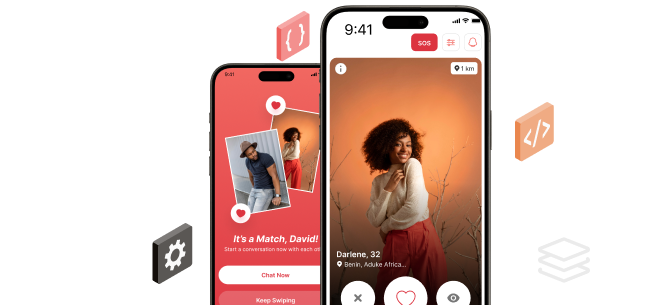
By integrating AI into dating apps can enhance their performance of it. The app can analyze who you are attracted to and understand the behavior of individuals providing suggestions that are tailored to their preferences, increasing the likelihood of finding a suitable match. Also, with this, AI recommends to the users which of their photos is more effective at getting the matches.
For Example- Tinder is using AI in the dating app, which lets it achieve a high level of personalization and accuracy in matchmaking.
AI as a platform powers the smarter bank. With the integration of AI in the banks it helps them identify key insights in a vast amount of data, calculate risks, and automate routine tasks. This ensures increased productivity, reduces risks, and dramatically improves customer service.
For Example- Bank of America is using AI in their banking apps; the virtual assistant named Erics is present.
Integrating AI in Mind Map Generator is a powerful tool that uses artificial intelligence algorithms to generate mind maps that can help you structure your ideas and thoughts in clear and organized ways. It is the easiest way to make project plans and accumulate and refine valuable ideas to create your own metaverse of ideas.
For Example- MindNode is a mind-mapping tool that can be used by Apple users.

An AI camera does automatic scene recognization. Once you point the camera in the right direction, the AI camera app enables the setting behind the scenes for the killer shots. Or we can say that integrating AI in phones helps in better photos by intelligently identifying objects and scenes by automatically adjusting the camera settings.
For Example- Photoshop Camera uses AI to utilize a ton of creative effects.
There are many things that can be possible with the help of integrating AI. By using an AI-based video editing app, you can have time-efficient automated editing, enhanced visuals, and personalized experiences. They help in recognizing objects and generating subtitles, creating dynamic effects, transcribing speech, and many more.
For Example:- InVideo helps in making professional videos directly on the computer. You can also upload existing footage, select templates, and many other options.
AI algorithm in the vocabulary app can analyze user data such as their past performance, learning preferences, and pace to personalize the learning experience. AI vocabulary apps can also provide customized vocabulary lists, study materials, and quizzes that are personalized to the individual user.
For Example:- WordUp is an AI-powered app that hones your language abilities. It combines enjoyable components such as snippets from movies or TV shows.

AI in real estate is used in chatbots that can help customers file claims, answer policy questions, and even recommend products based on customers' needs. AI also helps in evaluating risk more accurately by analyzing large amounts of data such as historical claims data, credit scores, and social media activity.
For Example:- Snapsheet Cloud is an insurance platform that automates various parts of the claims process, such as reducing the time it takes to calculate appraisal and receive online payments.
AI in real estate companies used to innovate buying, selling, and investing in property. It can do a tenant screening, much like it is used for customer service in other industries. AI Chatbots and assistants are some tools that are used by the general public and agents for common questions and collecting contact information to generate qualified leads.
For Example:- TRIRIGA is an app that is launched by IBM and uses AI in real estate to efficiently manage office space.
Image recognization is a subset of computer vision. It uses AI and ML for classification, segmentation, and detection, as well as tagging images. It also identifies various digital objects, images, logos, videos, attributes, places, and buildings.
For Example:- Google Lens is now almost used in every smartphone, and users can easily search for any detail from any image.
Some accounting software programs are using AI to automate repetitive tasks, including Recording data in the correct accounting formats. it also helps in increasing efficiency in essential and foundational routines and practices in a way that ultimately leads to better business decisions.
For Example:- Quickbooks Online uses ai to automate data entry, provide insights into the business's financial health and categorize business transactions.

AI is integrated into shopping sites or apps; this specially developed algorithm makes suggestions based on learning user behavior. It is also used in-store for assistance, price predictions, and product categorization to inventory tracking, supply chain management, and logistics.
For Example:- Amazon Alexa Voice AI helps customers with their online shopping needs.
Integrating AI in self-care apps, it enhances the usage of such apps, such as can customize the results as per the user's requirement and skin type by using Faqs.
For Example:- Healthily, it is the world's first medically approved platform designed to promote self-care. This app has been built to cater to the personal needs of customers, which is achieved by combining responsive AI tools and trusted insights.
AI in shopping list management apps helps users to get a pre-made list according to previous purchases and activities. This reduces the time for analyzing what to add or not; you just need to put the extra things that are needed other than the things present and can remove the items from the list which are not required.
For Example:- The Frooty app helps you while you're shopping at the store. Smart AI cost predictions, magic auto sorts, an experimental in- Store item locator, and products are some features of the app.

AI in the delivery management system enables the feature of analyzing your customer data and identifying specific preferences and needs. That allows them to provide you with personalized services tailored to each customer. It automates and optimizes many aspects of service delivery, such as scheduling, dispatching, and tracking.
For Example:- NetworkON is an AI-powered delivery management software to deliver exceptional digital experiences for your customers.
With the integration of AI in money management apps, one can link all their financial accounts, such as bank accounts and investment accounts, and can easily track their financial activities. They can also analyze spending patterns and help the customer to identify the areas where they can save.
For Example:- Cleo is an AI budgeting app that makes it easy and more fun for you to create budgets and manage personal finance.
Using AI in the agricultural app help to yield healthier crop, control pests, monitor soil and growing conditions, improve a wide range of agricultural wide range of tasks in the entire food chain supply, and organize the data of farmers.
For Example:- A German startup PEAT started PlANTIX, an AI-based application for identifying nutrient deficiency in the soil, fertilizers that help to improve the harvest quality, and many more.
The AI-powered recipe generator app allows users to enter the ingredients they have without quantities, and by analyzing this, the AI chef will generate a list of customized recipes. This saves the unwanted time that is consumed in thinking about what to make.
For Example:- LetsFoodie is a virtual heaven where culinary dreams come true.
Integrating AI in a document scanner uses an advanced version of optical character recognition(OCR) to classify a document by reading metadata. This technology has automated the scanning of files, classification of documents, and accurate processing.
For Example:- iScanner is popular AI-powered document management and scanning app.
Integrating AI in plant care gives multiple features such as a light meter, a watering calculator, and a care tasks system to ensure the plants get just the right amount of light for their photosynthesis. Alao with it has an AI assistant that can answer plant-specific questions any time of the day or night.
For Example:- Gro is an AI-powered indoor gardening system that helps backyard gardeners grow fresh herbs and vegetables year-round.
AI-powered stylist app gives shoppers preferred product suggestions based on style preferences, body type, occasion, and event. A virtual stylist app also helps client define their personal style within their budget.
For Example:- Save your Wardrobe is an AI-based stylist app that offers personalized recommendations for fashion products.
The app uses AI algorithms to analyze sleep patterns, collecting data on factors such as sleep stages, sleep duration and interruptions, heart rate, and even your bedroom environment to deliver insights directly to your phone each morning.
For Example:- Sleeptracker-AI is an app that analyzes and monitor your sleep pattern and habits to provide you with daily update and tracking for a better sleep cycle ahead.
AI in career services provides personalized career guidance and support to users. It enables counselors to access and analyze vast amounts of data, identify patterns and trends, and make more accurate predictions about the future of work.
For Example:- Career AI is a hiring assistant tool that automates and streamlines the hiring process. It allows users to create detailed job profiles and generate interview questions.
Integrating AI in fashion can be a useful option as it can provide multiple benefits, such as generating design concepts based on specific inputs, such as fabric, style, and color; it also can be integrated into the printer that can generate ai based designs for printing.
For Example:- FindMine is an AI-based fashion app that uses images and text to recommend the choices of the users.

These apps, with the help of AI, analyze the place where the food is no longer required and inform the distributor to collect and redistribute it so that it can be used again and not be thrown away.
For Example:- Food Cowboy is one of the examples that is using AI to reduce food wastage. It connects with all the farmers, food banks, and grocery stores to redistribute the surplus food that otherwise is thrown away.
It is an app that is designed to navigate the complexities of traffic and transportation; it provides real-time updates on the traffic, route suggestions, and essential information to help you reach your destination efficiently and safely.
For Example:- AI traffic is a traffic guide app
Integrating AI into nonprofit organizations can analyze their supporters' behavior. With the help of these apps, the data of the donation amount can be calculated and can atomate the system like scheduling meetings or sending out customized thank you emails.
For Example:- Dataro is a donor scoring software that helps in collecting funds and raising more from your existing donors.
These are the apps that are used to detect diseases in pets vis photos and can get virtual consultations with expert veterinarians. The technology looks for potential issues with eyes and skin and, most recently, the joints of pets.
For Example:- Toto, an AI-based pet care app that has an AI chatbot integrated support, veterinary consultations, pet care product delivery, and many more.
It is an AI-powered speech coach or AI public speaking coach app that provides you with judgment-free data on your filler words, pacing, eye contact, and many more.
For Example:- Orai is a mobile app for iOS and Android that uses AI to help improve users' public speaking skills by allowing users to practice their speeches and receive real-time feedback.
AI parking is a video analytics app that can automatically detect the occupancy status of a parking spot, identifying whether it is occupied by someone else or is free.
For Example:- Where to Park is an AI-powered app that helps find a parking lot with the help of AI CCTV cameras and real-time analysis.
To provide a personalized experience, AI is integrated into the event planning apps that analyze attendee data and even help find the perfect venue. AI-powered chatbots can answer attendee queries in real time, freeing up valuable time for event planners.
For Example:- AI for Events is an AI-based app that can give you snapshots of data in real-time as your event is taking place.
With the help of AI in the wine sommelier app, users can scan wine labels, wine lists and pick the wine based on reviews and taste profiles. It also helps on monitoring vineyards and identifies areas in need of irrigation, fertilization, or pest control, thus improving grape yield and quality.
For Example:- Vivino App is an AI-based app that builds the taste and flavor profile of every individual based on their user history and the wine they have interacted with digitally.
The automatic AI noise canceling function constantly analyzes environmental ambient sound components and automatically selects the most effective noise canceling mode. This help in better clearance while on important calls or meeting.
For Example:- Krisp's noise cancellation cancels background noise and reduces echo during your calls.
By integrating AI in the password manager app helps to store, generate, and manage complex passwords of various online accounts. It employs advanced encryption techniques to safeguard user data, offer automatic password suggestions, and simplify login processes across devices.
For Example:- Bitwarden is the best app for free password management, while the paid versions add extra security and storage tool.

With AI-powered tools, users can easily track their expenses in real-time. Using a mobile device, travelers can quickly enter their purchases into an expense management platform, allowing them to easily reconcile all receipts afterward.
For Example:- Yokoy is an AI-powered travel app that streamlines your travel and expense management and automates travel allowance and timely reimbursements.
It uses advanced AI algorithms to understand your selected text or problem and provides you with relevant hints to help you solve it. Along with it, it also provides the study buddy who has the same problem or is on the same page in their studies.
For Example:- StudyBuddy is an AI-powered digital learning assistant that creates engaging and effective learning for learners.
These are the applications that track mood designed for people experiencing mood swings. Understanding your feeling leads to improving your emotional well-being. You can also record or write about what's happening. You can use the journal whenever you want to. And if you keep on using it, you'll automatically see the difference in your feeling.
For Example:- Mindsera is an AI-powered journal that uncovers hidden thought patterns.
AI-powered coding tutorials can help learners create and complete programming tasks faster, more efficiently, and with higher Accuracy. AI tools are revolutionized the way learner approach coding.
For Example:- CodeTutor is an AI coding app that teaches how to code by building projects and answering your questions every step of the way.
AI Lawyer is a revolutionary new app that provides instant legal assistance and protection to users, all powered by advanced artificial intelligence technology, whether you are fighting against parking tickets, bank fees, or robocalls or just need information on how to navigate the legal system.
For Example:- OneLaw.ai is an AI-powered legal research platform that uses NLP to analyze and understand legal documents.
AI in asset management and tracking can be used for multiple purposes, such as automated inventory management. With the help of this, businesses can track their asset. It can also be used for predictive maintenance. This means that AI can analyze data to identify potential issues with critical equipment before they occur.
For Example:- Radiant RFID is a tracking system that harnesses the latest radio frequency identification to locate assets in a wide variety of environments.
AI in the hotel management app enhances hotel revenue management by predictive modeling to analyze historical data and predict future demand, optimizing pricing. It can also assist in dynamic pricing as per demand and occupancy.
For Example:- Allora.ai, by SHR group, help hotels with a dynamic suite of hotel management software.
An AI-powered Digital Detox Assistant app helps users to cut from the real world. It identifies your usage of all the devices and, according to that, helps in the breaking schedule of using smartphones or digital devices helps in lowering the stress level.
For Example:- Digital Detox, an app that disconnects from your phone in order to connect with yourself, others, and the world.
It is a real-time video chat and translation tool that can recognize the most common signs and help an ASL speaker communicate more easily with someone who doesn't know the language. It is also capable of translating American Sign Language into English in real time.
For Example:- SLAIT is a sign language translator tool that was started in the year 2021.
AI robots for home perform a variety of tasks such as laundry, cleaning, and providing care for elderly or disabled people. You can control this with the help of a phone also and can give commands to them. They are also made to adapt to the environment.
For Example:- The Roomba vacuum cleaner robot is used to clean floors, carpets, and rugs.

AI trading bot is a computer program that uses machine learning to trade cryptocurrency in a way that is effective and beneficial for the user. Ai trading bots can gather masses of knowledge about the state of the market before executing a trade.
For Example:- 3Commas is a crypto investment platform that offers manual and automated trading strategies.
With the help of this app, you can understand food and beverage storage. It will help you maximize the freshness and quality of the food item. By doing this, you will able to keep items fresh longer than if they were not stored properly.
For Example:- The food freshener Checker app manages refrigerator and food stocks to maximize the freshness of your food and minimize waste of the food.
AI is one of the growing things in today's world; AI algorithms can be used to generate new forms of content, such as virtual reality experiences, interactive video games, and personalized news articles.
For Example:- AI Dungeon is a glimpse of the future of ai in media and entertainment industry apps. It lets you create a story in seconds.
AI in gaming refers to responsive and adaptive video game experiences. It is especially important as developers deliver gaming experiences to different devices. It includes anime, fantasy, adventure, or mystery.
For Example:- Chess is one of the leading game apps that uses AI technology to improve your game skills and help you train.
AI-powered inventory management integrates with your existing enterprise resource management and business intelligence systems to provide early warning for problem stock so you can address these issues before they hit your bottom line.
For Example:- Smart Purchase Orders is an ai based inventory management app that enables enhanced and instant forecasts based on real-time data.
AI-powered reminder apps are usually integrated with calendars so that they can send you notifications to reach the deadline or when you have an appointment coming up. It also helps you give reminders about birthdays and reminders for checking emails.
For Example:- Todoist is a task manager and reminder app with a clean and simple interface loaded with features.
The school management software are using AI in their system to enhance the performance of the work. It helps create a personalized study schedule for each learner, considering the knowledge gaps, and also helps the management of various in-school document management.
For Example:- Edisapp School ERP Software enables you to record and process all your school's vital information about students.
There are multiple benefits that an AI scheduling assistant can do. It can protect your habits, sync with the team calendars, assist in project management, for managing meetings for busy teams, and many more.
For Example:- Reclaim is an AI scheduling assistant app that manages recurring events well.
AI in drone technology is an autonomous flight. AI algorithms can enable drones to fly autonomously without the need for human intervention. It enables drones to cover larger areas and perform tasks more efficiently.
For Example:- Dronelink is an advanced AI drone flight controller app for manual fly missions for maps, waypoints, orbits, panos, and many more.
AI integration into apps for NFTs can let us track them and analyze the market more. It has a vast amount of market data, historical trends, and user behavior to generate actionable insights and predictions.
For Example:- Starryai is an AI art generator app that you use to create NFTs. You simply enter a text prompt, and our AI transforms your words into works of art.

AI, apps like ChatGpt enable it to perform multiple tasks, such as about. Finding answers to multiple arduous questions and making prompts and can advise you on anything you are confused about. You can integrate it into your business to make difficult things easy in minutes.
For Example:- Microsoft Bing is another app like ChatGPT that can be used for similar functions.
There are many apps like Midjourney that are integrated with AI. This, with the help of prompts, can make realistic images that can be used in various projects. You can make imaginary images also, like dogs sitting on clouds and having wings.
For Example:- Adobe Firefly is one of the apps like Midjourney that releases an AI image generator.
It is an AI model that can draw images from any text prompt. All you need to do just type your idea in the text, choose your favorite art style and let you make art photos for yourself; AI avatars also come in seconds.
For Example:- Bing image creator is an app that is very similar to DALL. E2. which helps you create AI images.
Improved Accuracy is an AI-powered note-taking app that can accurately transcribe spoken words into text, reducing the risk of errors that may occur when manually taking notes. It is faster and more efficient than the traditional method.
For Example:- Taskade was one of the first apps on the market to incorporate AI into its note-taking strategy.
AI algorithms can effectively analyze the 3D model and continously compare it to the ongoing print process. The technology can also monitor essential parameters like temperature, pressure, and speech to ensure that they remain within the optimal range.
For Example:- PrintSyst.ai is a management software solution designed to enhance the quality of 3D printing.
AI writing assistants utilize machine learning to help users through various steps of the writing process, including research, grammar and time checking, and localization. It also assists in making everything from writing emails to social content and blog ideas faster.
For Example:- Notion is an AI-based writing assistant that helps create high- quality in just a few seconds.
It is an app that can be utilized for planning personalized diet planform its users. Rather than working towards a generalized definition of healthy means, the app caters to the individual, helping users achieve their stated goals through its suggestions.
For Example:- Youniq is a US-based app developed by the company Youniq Health that uses AI to develop an intensely personalized diet plan for its users.
AI can also recognize similar stories that have already been published and analyze why or why not a story has been well received by readers. And also, AI can help with storytelling by identifying an audience's emotional reaction to a story.
For Example:- Charisma is a plug-and-play platform for creating interactive stories with believable virtual characters.
Artificial intelligence can leverage the massive amount of diverse types of data, such as geospatial data, social media data, and wireless network sensor data, to enhance our understanding of natural disaster forecasting and detection.
For Example:- Flood AI is an app that is used for knowledge generation, and communication on flood relayed data and information.

Skin analysis and diagnostics can be done with the help used skin analysis and diagnostics to detect skin conditions, such as acne, hyperpigmentation, and aging. By analyzing images of the skin, computer vision can provide insights into skin health, recommend skincare products or treatments, and track progress over time.
For Example:- Coralai skincare solution for your skin, environment, and lifestyle powered by Deep learning AI.
We see a lot of fake videos and pictures made by computers (called deepfakes), and it's hard to tell what's real and what's not. That's why an app that can spot these fake videos and pictures is essential. This app would use innovative technology to look closely at videos, photos, and sounds to find small details that need to be corrected, which are hard for us to see. It checks how things look and sound compared to real ones to tell if they are fake. People want this app because it helps to know what's true on the internet, in the news, and on social media. It's beneficial in stopping wrong information and ensuring that what we see and hear online is real. This app makes the internet safer by helping us trust what we see and hear.
There's an excellent idea for an app called the "AI Scientist App." This app is like having an intelligent scientist on your phone. It uses AI to help people easily understand science. Imagine you're curious about how plants grow or why the sky is blue. You can ask this app, and it will explain it to you in simple words. It's not just for kids; even adults who want to learn more about science can use it. This app can show experiments you can try at home, answer science questions, and even help with school projects. It's becoming popular because it makes learning about science fun and easy for everyone. Whether you're at home, in school, or just curious about the world, the AI Scientist App can be your pocket guide to the wonders of science!
These apps help pet lovers bond better with their pets with the help of multiple functionalities. The app can be designed by implementing social media features for pets, such as making cute sounds, video recordings, and clicking photos. The apps can also let pet lovers translate speech and talk to their pets.
For example- One of the most popular apps to look at for a better idea of such apps is Petpic.
In this article, we have gone through many different apps in which we can leverage artificial intelligence and become a market leader. Artificial Intelligence apps are the future of the mobile app industry. Emizentech is the best mobile app development company specializing in AI development services. Besides, we are ruling the market by developing AI-powered mobile apps for varied industry verticals. Let us know your requirements, and we will come up with a custom mobile solution for your business.

Lately, with the debut of ChatGPT on November 22, a growing number of users, especially marketing professionals and online business owners, are reaping the most out of this AI-powered chatbot. As this AI tool demands prompts to crop up with the desired outcomes, increasing numbers of users invest their time writing the right and perfect prompts and consistently experimenting.
Witnessing people struggling to create prompts, a new AI Prompt toolkit emerged: AIPRM. This AI tool facilitates the creation of the best AI prompts for distinct topics and use cases and is recognized for guiding a pathway to success with generative AI tools. Post that, the AI market got overwhelmed by varied economic and easy-to-use AIPRM alternatives.
We have curated a list of the top 10 AIPRM alternatives to reduce your workload and ease your journey to choosing the best AI Prompt toolkit.
Let’s get deeper and come to light with something valuable.

In a short span of under four months, AIPRM has garnered a user base of over a million from around the world, including prominent brands such as Adobe and Disney. AIPRM has rolled up as a perfect time saver for ChatGPT users. Using this AI-prompt tool, one can get prompts on different topics with just a click.
If you're interested in learning more about this, go through our article on AIPRM extension.
However, AIPRM isn't the only player in the field. There are other viable alternatives tailored to different needs.
Before you go with any tool per your requirements, it's essential to consider a few factors that may let you pick the best and right tool.
The first and foremost aspect that you should take along is the price.
While going in hand with AIPRM extension for chatGPT, at a certain edge, you will find this tool quite expensive as its paid plans are costly. Obviously, upgrading to all the features and getting access to all the prompts is necessary, but at the same time, it would be expensive.
So, while choosing one, compare the plans also.
As AIPRM works as an extension on ChatGPT only, you would need to copy and paste if you want its prompts to use on its alternatives. This will for sure suck your time and may hinder productivity.
So, pick the one that may help save your time and boost productivity.
With the ChatGPT pro plans, you would also need to subscribe to AIPRM plans, which would be an add-on to your AI-generative tool cost.
So, plan accordingly, as you would have to pay not only for your AI-generative tool but also for your AI prompt toolkit.
The stuffed user interface of the AIPRM tool is quite distracting. Numerous prompts are available on a single screen focusing on one target. As for copywriting, there are 100+ prompts.
So, go with the one that may appear with a clear user interface that keeps you focused.
AIPRM is not compatible with Firefox entirely. So, Firefox users should also look for any alternative that may work seamlessly on this browser.
AIPRM specifically covers SEO and SaaS development. So, target picking one that may meet varied use cases.
So, why settle for less with AIPRM when you can get much using its alternatives?
Now, with no more delay, jump onto a walkthrough to better and more effective AIPRM alternatives.

Besides AIPRM, you can choose ChatGPT Prompt Genius to improve your experience with ChatGPT. This browser extension is free and open-source, using which you can get the maximum benefit from your conversations with the AI chatbot.
| Access Range of Prompts | AIPRM is chiefly focused on SEO, SaaS development, and marketing prompts, but this AIPRM extension can offer you prompts for varied use cases. |
| Customizable Themes | Those who are fed up with the messy and over-stuffed user interface of ChatGPT can use ChatGPT Prompt Genius. This AI prompt toolkit lets you personalize your ChatGPT interface with customized themes, like hacker, fireplace, etc. You can choose any theme per your preference and enjoy. |
| Chat History Sync | This AIPRM alternative lets the users save their chat history as HTML, PNG, or PDF files. So, now you can go through your past chats and refer to important details easily. |
| Vast Prompt Template Library | The chief reason behind using such a tool is the prompt template. So, using ChatGPT Prompt Genius, you can reap the benefits of an extensive prompt template library. Besides, you can share, import, and find any prompt you want easily, as these are well-categorized within the extension for your ChatGPT conversation. |
It is an open-source browser extension that you can easily download and use free of cost. Hosted on GitHub, the community reviews its source code and contributes to improving it.

Using the prompt templates created by Cohesive AI, you can generate high-quality content around 13 times faster. Also, this holistic AI tool can assist you in editing, creating, and publishing relevant content, all set to optimize for conversion.
| Multi-Lingual Prompts | Whatever language you prefer, you will get prompts in more than ten different languages. |
| Wide Variety of Templates & Categories | Cohesive AI meets different use cases with varied categories and templates. |
| Effective Prompt Templates | The prompt templates this AI tool provides are effective and easily understandable. |
| Expand or Enhance Response | Cohesive AI generates extra prompts for you to let you improve your responses. |
| Starter Plan | $0 |
| Pro Plan | $11 |
| Team Plan | $11 |

One more AIPRM alternative, Prompt Vibes, provides an explanation of the prompts beforehand, so you don’t need to try them first to know their functions. Also, these are categorized so well that you can easily find them per your requirements. Well, this AI prompt tool needs to go a long way to master this field. However, it's freely accessible.
| Work & Home Productivity | In its professional and personal settings, you will witness enhanced efficiency while handling varied challenges and tasks. |
| Time-Saving Solutions | Using the off-the-shelf prompts, you can accomplish jobs faster and more effectively. |
| Varied Prompt Templates | You get access to 100+ ChatGPT prompts for diverse tasks and situations. |
Free to use for everyone.


A free prompt marketplace, Chatsonic holds the caliber to take your AI conversation to a level ahead. Creative ChatGPT prompt ideas that come from this AI tool help you save money. Besides, you can create your prompt templates using Chatsonic’s AI prompt manager for ChatGPT, publish them to let others use them, and get rewarded. So, no more giving your time to create content, as this tool can do it for you at a faster pace.
| Varied Prompt Templates | This AI tool is a free AIPRM alternative for generative AI tools. You can reap the benefits of such prompts. Some of these are Instagram captions prompts, Facebook ad copy prompts, video script prompts, etc. |
| Free Prompt Marketplace | You can get useful prompts for ChatGPT on this AI prompt marketplace free of cost and with unlimited access. |
| No Extension Needed | With the Chatsonic prompt marketplace, you don't need any extension to use the AI prompts. |
| Rewards On Prompt Sharing | The prompt sharer will get rewarded and featured as the Editor's choice. |
| Free Trail | $0/month |
| Long-form | $12.67/month |
| Custom Plan | Depend on custom packages |

One more alternative to AIRPM, WNR.AI eases prompt creation by converting a simple form into a sophisticated one to assist them in getting dependable and high-quality results from AI. You can save, reuse, and share them. This tool converts your content into templates influenced by McKinsey, Asana, and the WNR community.
| Product Management | WNR.AI assists in easing complicated product management jobs with this tool's user-friendly templates. |
| Investor Tool | For both founders and investors, there are templates that can analyze the companies. |
| Strategy or Company Templates | Use such prompt templates to enhance your business strategy and meet your objectives. |
Free to use for everyone.

One more AIPRM alternative, PromptPerfect, lets the users make the best use of ChatGPT. Where prompt optimization is quite time-consuming and leads to suboptimal outcomes, you can trust this tool. It saves your time by streamlining prompt optimization. Also, belonging to every language background, you can reap the benefits of this tool.
| Fast Results | With this AIPRM alternative, you can get well-optimized prompts in 10 seconds or even less. |
| API & Data Access | API access helps users to export their data to a common format, permitting them the integration of AI into their apps. |
| First Auto Prompt Optimizer | PromptPerfect is widely known as the first and the only optimizer with the caliber to conduct prompt optimization for any AI model automatically. |
| Multi-Goal Optimization | This tool lets you customize your prompt optimization per your requirements, like a shorter prompt, faster optimization, etc. |
| Multi-Language Prompt | You can optimize your prompts in whichever language you want, as this tool arrives with the feature of a multi-language prompt. |
| SOTA AI Models | This AIPRM alternative permits users to optimize their prompts for GPT-3/3.5/4, ChatGPT, MidJourney, Stable Diffusion, and DALL-E-2. |
| Free | $0 |
| Lite | $9.99 per month |
| Standard | $39.99 per month |
| Max | $99.99 per month |
| Infinite | $6999.99 per month |

Are you looking for a platform where you can get a plethora of options for generative AI prompts? Then, let your head turn to ChatX. This marketplace is recognized as a dedicated hub for generative AI prompts. Whatever your requirements for digging new ideas, your creative project needs, or want to explore the possibilities of AI, ChatX is a perfect go-to AI prompt marketplace.
| Free Image Prompts | ChatX already holds a database of free image prompts that's constantly expanding. |
| Advanced Features & Tools | Users can customize their experience using the advanced tools and features and get the prompts that match their creative endeavors. |
| Right Prompts Suiting Projects | Creative professionals, AI enthusiasts, developers, and entrepreneurs can find the right DALL·E, Midjourney, Stable Diffusion, and ChatGPT (GPT-3) for their projects. |
Free to use for everyone.

With the strength of Prompt Storm, you can elevate your ChatGPT experience. You can easily use it as a Google Chrome extension, which provides innovatively created engineered prompts that users can use with ChatGPT 3 & 4, appending a bit of detail. With this AIPRM alternative, you not only get the right prompt your need but also know about it in detail and can clone it for other cases also.
| Faster Project Development | Using this tool, you can convert your computer coding ideas effortlessly and ease your project testing, leading to faster project completion. |
| Learn Everything | You can get any answer or any subject knowledge you seek, reaping this tool to its fullest. |
| Marketing Assistant | You can get the complete layout of your social media, digital marketing, and SEO plans. |
| Boost Your Productivity | You can create well-written and easily understandable content from articles, emails, and blogs, to plans and reports for your business using this AIPRM alternative. |
Free to use for everyone.

An AI-powered Chrome extension, Query Kitty is the ultimate solution to your queries. It's specifically crafted to ease crypto talks. Using this extension, you can work on making your projects' view clear, along with economic models, tokenomics, and performance metrics. No specific jargon is needed; you can start with simple English.
| Content at One-Click | Using this AIPRM alternative, you can convert selected text into newsletter, social content, articles, etc. |
| Automate Google Sheets | You can get help with Google app scripts or formulas to automate your spreadsheets using Query Kitty. |
| Personal Prompts | You can save the prompts you frequently use routinely, saving you time repeatedly searching them. |
| Code Better | Query Kitty helps generate quick react modules or swift javascript scripts. |
One-time Purchase of a lifetime license at $9.

You can boost your productivity by incorporating AI into your business using this Chrome extension. You only need to choose an AI team to get assistance with your routine jobs. Also, you can query about the articles you are reading, get help with programming, or even find images for your project. With only a single click, you are good to use Open ChatGPT instantly with no login required.
| Special Team of AI Experts | As you are free to choose a team of your choice to get help for your daily work, let you know, some of the team members hold special skills, like current page content summarization expertise. |
| No Login, Just A Click | Well, you don't need to log in specifically to use this extension. Only one click, and you are good to go. |
| Local Data Storage | The local device of the users will store the data securely. So, they can clear their message any time, whenever they want. |
| Perfect ChatGPT Prompts | This tool provides a library where you can access high-quality prompts that are just a keyboard shortcut away. |
Starts from $37

The top users of AIPRM alternatives are AI enthusiasts, prompt engineers, developers, and business persons. But, if you want to appear with a successful and widely-recognized AIPRM alternative, you need assistance from a leading AI/ML development company with extensive experience developing AI tools, including advanced technologies.
You may be an expert at developing an AI-prompt tool, but let you know that, with the growth of your venture, you should hire a software development company and invest your time in other rewarding business jobs. For your AI-prompt tool development, you can hire Emizentech with years of experience in developing custom software that meets our clients' varied business needs worldwide.
AI prompt marketplaces are best at automating AI prompt creation and saving us time. You can choose any above-listed tools to get the required response, and you only need to choose the prompt template, include the basic details, and get the desired outcome.
Well, to find which is the best AIPRM alternative, there's no way out. The one which suits your business requirements is the perfect alternative for you. So, choose wisely.

Artificial Intelligence, a paradigm shifter, is disrupting varied industries worldwide. Whether healthcare, banking and finance, real estate, or any other, every sector is witnessing a push and benefiting businesses and even individuals with automated and easy tasks.
Eyeing the latest facts and figures of AI, Gartner predicts a 25% growth in customer satisfaction in organizations by 2023, maximizing the use of AI in their varied business operations and areas. Noticing an exceptional expansion of enterprises adopting AI, more and more companies are opting for AI implementation. From 2022 to 2030, AI adoption by firms worldwide will expand at a CAGR of around 38.1%.
Yes, you are going right. You can perform better with AI in this competitive and progressive digital world. So, to set the stage to let your business run seamlessly with improved speed, productivity gains, personalized customer services, better decisions, etc., you should seek assistance from an AI development company. Globally, numerous companies are offering AI development services. So, it may be tricky to choose the most suitable.
Here, we have an article uncovering the top ways and, yes, hacks to choose the best AI development company in 2024.
Most reports showcase how AI and machine learning have assisted organizations in boosting their operational efficiency, improving customer experiences, and growing revenue.
The technology arrives with varied benefits for organizations across various sectors.
Let's unveil a few.
Efficiency and productivity are two gains that always stay on the side of organizations using AI. When a huge volume of tasks becomes time-consuming and heavy for humans, AI enters, holding its power of performing all seamlessly at a high pace, freeing up workers for other, more profitable tasks.
AI analyzes and learns from the accumulated data to create highly customized and personalized experiences and services. The technology delivers personalization in varied sectors, like healthcare, where it reads patients' reports and customizes treatments.
AI helps organizations gain insights and data that further help make better and more accurate decisions that are challenging for an individual who may give weightage to his preferences and personal biases.
In this digital age, businesses need to match the steps of emerging technologies and trends. Here, AI helps pace up through shorter cycles that cut down the time it takes to complete one step and move on to the next. This results in a better and immediate ROI.
In real-time, AI can take in and process a huge data volume that allows organizations to implement instant monitoring capabilities to alert the problems, recommend actions, or initiate a response. For example, AI analyzes the information that devices gather about factory equipment. Ahead, it identifies the issues (if any) and predicts the next maintenance requirement, which prevents costly maintenance and disruptive breakdowns.
Hiring an AI solution development company may take time, as finding the best is always time-consuming. Also, an AI expert would help you not only build an AI algorithm but also aid you in analysis.
Let's consider more points to get this better.
An Artificial Intelligence Development company will have a better understanding of varied AI technologies, frameworks, and algorithms.
Hiring a company for AI development services will help you develop custom AI solutions tailored to your unique business needs and challenges.
The organization holding expertise in building AI applications will have access to the latest technology, proven methodologies, and skilled professionals.
AI development companies can offer the best-quality data sets and the apt set of resources required for building machine learning and deep learning models.

While choosing the best Artificial Intelligence Development Company, consider a few factors to help you find the right match for your AI development project.
Before you hire an AI development company, you should evaluate its experience and skills. You can go with a qualified company with a proven track record of accomplishing AI development projects akin to your business requirements.
The years of experience and domain expertise demonstrate the company's caliber to provide the required AI development services. You can analyze their portfolio and the case studies they have completed so far.
Words are not enough to ensure the best results. You should check the brand’s reputation and clients’ reviews. Besides, you can connect with the firm's past clients (asking the company for the medium) and go according to the testaments to its commitment to excellence. You will get a certain surety about your business relations with your chosen AI development company.
An effective AI infrastructure leads to a better ROI in AI projects, and the availability of the required resources, like AI tools, framework, and hardware, will contribute to finalizing a company focusing on your AI project. So, assess the availability of the necessary resources and evaluate the flexibility and scalability of the infrastructure.
Data security is a chief concern when dealing with AI. By meeting with the potential company, you can understand its data protection policies and compliance with regulations and evaluate the approach it prefers to ensure confidentiality and data privacy.
Now, it is time to evaluate the pricing models of all the AI development companies you finalized. While you set a budget to hire an AI development company, consider all the factors affecting the cost, like the type of your project, features you expect, skills of the AI developers you hire, the expertise and experience they hold, support and maintenance post development, etc. Now, compare the quality and value the companies would offer and which would be suitable and better for your project.
Now, let’s walk through the steps to consider while choosing an AI development firm for your business.
When we start something new, we should know or learn almost every possibility and fact about that thing. The same goes here. Before you choose your AI application development partner, you should clear your business requirements, which include:
Tip: You can learn from the issues of other apps' users, start with including the basic features and later add the advanced ones, and hire a dedicated team from a leading AI development firm.
Next, after deciding your app's goals, you can move on to researching the potential companies.
Now, review the firm's portfolio and case studies to get an idea about its work and experience. Previous experience is a must to accomplish the desired outcome.
You can consider:
Following this pattern will help you find the right fit for your business.
The accurate and correct reflection of any company's work and results is their reviews and client testimonials. As discussed above, case studies and portfolios are important, but reviews and customer feedback are more important. Anyone can write perfect and wordy case studies, but the feedback and reviews will put forth the real, backstage story. Apart from checking their site for the same, visit third-party websites, like Goodfirms, Clutch, and G2, to witness the reality.
When you decide on a firm to build your AI app, go through the tech stack it prefers to check the compatibility with your AI project. This will ease you with your decision to move ahead. Focus on the AI frameworks, database management systems (DBMS), and cloud platforms they use.
The company's tech stack reveals its expertise. Their diverse tech stack will reveal they hold the caliber to develop different types of AI apps.
Common tech stack you should consider:
Tip: As we discussed, the apt choice of tech stack will help make the best AI app faster and easier.
The key to app development is how the company communicates with its clients. Most companies follow Agile methodologies, such as Scrum, leading to constant communication. Choose one that prioritizes effective collaboration and communication.
Before finalizing, pay heed to the company's pricing, model, and suitability with your budget and requirements.
Besides, consider every factor that affects the cost of AI app development, like the app's design, AI model complexity, target platform, etc.
Next, target their pricing model; the most common is the time and materials model, and the other is a fixed model.
Tip: A fixed-price model would be best for simple projects with well-defined requirements. But, for your AI app development project, you can go with a time and material one, as it's flexible, offers the best quality, scalability, and control over the project, and helps in budget management.
Whichever option you choose, prioritize your budget and business needs.

Well-recognized as a leading AI and ML development company, EmizenTech offers custom AI solutions to businesses across various industries worldwide.
You can go with EmizenTech to successfully accomplish your AI solution development project considering below aspects:
AI professionals at EmizenTech are proficient in machine learning, computer vision, natural language processes, and robotics, which ensure the best quality outcomes for your projects.
The company delivers a comprehensive suite of AI solutions that fit your business needs with end-to-end AI development services, such as consultation, design, development, etc.
By understanding the unique requirements and challenges of varied industries, EmizenTech's AI developers offer tailored AI solutions addressing your business requirements.
The company's commitment to upgrading with the advancements in AI technology and tools ensures AI solutions are developed using the latest techniques available in the market.
The company holds the expertise to integrate AI solutions with your existing or current systems or develop one from scratch that leads to easy adoption and implementation.
EmizenTech is among those companies that offer post-development support and maintenance services to let its clients stay up-to-date, effective, and efficient in targeting the changing and progressing business requirements.
EmizenTech's AI development services help businesses automate their workflows and operations and make better decisions.
Let's scan some:
Get guidance from crafting a suitable strategy to complete integration that drives automated operations and offers unique customer experiences.
The company’s smart solutions lead to unique content creation, real-time decisions, personalized experiences, and boosted productivity.
Ensure customer-centric and seamless communication, increased satisfaction, and improved customer engagement. Speedy business expansion, etc.
Deliver customized AI-infused mobile app development services meeting your business needs, offering the expected features and functionalities.
Build robust and scalable AI software using the power of AI to drive growth, optimize business processes, etc.
Get services that predict upcoming trends, customer behavior, product recommendations, personalized marketing, etc.
Solutions recognize and interpret visual details, diminish operational costs, derive better business insights, and analyze visual data.
Help process large data volumes, extract informed insights, permit language-based interactions, and perform entity recognition through NLP techniques.
Design smart AI solutions using multi-layered neural networks that replicate and outpace a human brain's operations.

After going deeper and learning the facts and expertise about EmizenTech that can benefit the completion of your AI mobile application development project, you might be eager to get on board with the company. We have jotted a few steps to hire EmizenTech as an AI development company.
Come to the team of expert AI consultants at EmizenTech and put your project requirements on the table for further analysis.
The team will take a walk-through of your project, its requirements, and the outcome you are looking for and will create a list of the most suitable experts for you.
Ahead, you can talk to the shortlisted candidates and emerge with your decision to choose them as your dedicated AI development team.
After knowing your verdict, EmizenTech will ease your onboarding process and help you with a seamless kickstart of your AI project.
Note: By following the Agile approach, EmizenTech stays connected with the clients and works collaboratively to complete the project per their requirements and expectations. This aspect is crucial to consider.
Now, it's clear how vital it is to choose the right AI development for your project. You can now make sound decisions for your business considering the factors we debated here. Be sure you stick to your budget, covering all your requirements for building the best AI app for your business.
EmizenTech can help you with all you need to accomplish your AI app development project with a team of AI experts, the best industry solutions, the latest technologies, and ongoing support.
Connect with us today to meet your success tomorrow.

In this article, you will learn:
As we explore these app project ideas, you'll discover how they're not just exercises but stepping stones to becoming a proficient mobile app developer. Let's dive in and start this exciting learning and skill-enhancement journey.
Before diving into app project ideas, it's crucial to grasp the fundamentals of mobile app coding. Brimming with creativity and technical prowess, this field requires a solid understanding of core concepts to build functional and user-friendly applications.
Mobile app development encompasses two primary platforms: iOS, powered by Apple's Swift or Objective-C, and Android, which primarily uses Java or Kotlin. Each platform has its unique development environment, tools, and best practices. Starting with one platform and gradually expanding your expertise is essential for beginners.
The basics include:
Additionally, grasping the basics of back-end services and API integrations are key components that contribute to the app's functionality. As a beginner, getting comfortable with these elements is your first step towards building effective mobile apps.
Most importantly, coding is a skill perfected through practice. Theoretical knowledge must be complemented with hands-on experience. This is where project-based learning comes into play. By working on real-life projects, you'll encounter various challenges and learn to apply theoretical concepts in practical scenarios.
As you embark on this journey, remember that every expert was once a beginner. Patience, persistence, and continuous learning are your allies in mastering the art of mobile app development.
Practical app projects offer many benefits for beginners in mobile app coding, effectively turning theoretical knowledge into practical skills. Here's how engaging in these projects can significantly boost your coding journey.
App projects are a practical platform to test and apply coding principles. When you build an app, you're not just coding; you're applying problem-solving strategies and UI/UX design theories, which deepens your understanding.
Coding, like any craft, improves with practice. Working on app projects exposes you to various programming challenges, enhancing your technical abilities.
One of the key skills in app development is debugging. Beginners learn to identify and fix bugs through hands-on projects, a critical ability in the tech world. This process also sharpens analytical and problem-solving skills.
Projects offer a chance to experiment with new ideas. This freedom encourages thinking outside the box, leading to innovative features in your applications.
Completed projects act as a showcase of your skills and commitment. A portfolio with diverse app projects can be invaluable for job or freelance opportunities, demonstrating your practical experience.
Working on projects from conception to deployment gives beginners a comprehensive view of the app development process, an essential understanding for any aspiring developer.
Constructive criticism and feedback are vital for learning. Projects allow you to receive this feedback and learn from mistakes, constantly improving your skills and understanding of user needs
The On-Demand Fuel-Delivery App is a practical project for beginners exploring app development. It involves creating a platform where users can request fuel delivery to their specified location, integrating the convenience of modern technology into everyday tasks. The app's core features include GPS integration for pinpointing user locations, secure payment gateways to handle transactions, and robust user authentication to ensure security and personalization. This project allows budding developers to work on essential skills such as API integration, UI/UX design, and backend server management. Furthermore, it provides a real-world coding application, offering an engaging way to learn and apply mobile app development concepts.
Another interesting app project idea for beginners is a house-keeper finding app. This app could connect users with local housekeeping services, allowing them to browse available providers, schedule appointments, and make payments. Developing this app would allow you to work on user authentication, database management, and scheduling algorithms. It also helps you understand the importance of creating a seamless user experience.
A delivery service app is another excellent project idea for beginners. This app would enable users to request pickup and delivery services for various items, such as food, groceries, or packages. Building this app would involve:
· Creating a robust system for managing orders.
· Coordinating deliveries.
· Providing real-time updates to users.
You would also gain experience optimizing route planning and implementing communication channels between users and delivery personnel.
If you're looking for a more lighthearted project idea, consider developing a gift suggestion app for friends. This app could use algorithms to analyze a friend's interests and preferences and generate personalized gift recommendations. Implementing this app would require you to work with recommendation engines, user input processing, and data visualization. It also gives you insight into the complexities of personalization and data privacy.
A book finder app could be an engaging project for beginners passionate about reading. This app would allow users to search for books based on various criteria, such as genre, author, or keyword. You must integrate APIs from book databases, implement search algorithms, and design an intuitive book-browsing interface. Developing this app would provide valuable experience working with external APIs and managing large datasets.
An online food recipe app is a great idea for beginners. This app can allow users to browse through a collection of recipes, search for specific dishes, and even save their favorite recipes. You can also incorporate features such as step-by-step cooking instructions, ingredient lists, and user ratings. Implementing a user-friendly interface and optimizing the app for different screen sizes can be challenging yet rewarding for beginners.
Another impactful app project idea is to develop a food donation app for restaurants. This app can facilitate the donation of surplus food from restaurants to local shelters or food banks. Beginners can work on features like real-time food availability updates, location-based notifications for nearby charities, and a streamlined donation process. Additionally, integrating payment gateways for covering transportation costs and ensuring food safety standards can provide valuable learning opportunities.
A table booking app for restaurants is a practical project idea that can help beginners understand the complexities of real-time data management and user interactions. This app allows users to browse nearby restaurants, check table availability, and make reservations. Features like booking confirmations, calendar integrations, and user reviews can enhance the overall user experience. Beginners can also explore integrating map functionalities for restaurant locations and optimizing app performance during peak booking hours.
Create a Smart cooking app that assists users in the kitchen by providing recipes, ingredient lists, and step-by-step cooking instructions. Implement features like a timer, shopping list generator, and personalized recipe suggestions based on user preferences. This project will not only hone your coding skills but also result in a useful tool for anyone looking to elevate their cooking game.
A social dining app can bring together food enthusiasts and amateur chefs in a community-driven platform. Beginners can work on features like user profiles, recipe sharing, event planning, and social networking capabilities within the app. Implementing secure user authentication, content moderation tools, and interactive event notifications can offer valuable insights into app security and user engagement. Additionally, beginners can explore integrating social media APIs for seamless sharing and connectivity.
A gift delivery app is a fantastic project idea for beginners. This app would allow users to browse and select various gifts, enter delivery details, and make payments. As a beginner, you can learn about user interfaces, payment gateways, and location-based services while developing this app. Additionally, you can explore features such as order tracking and delivery notifications to enhance the user experience.
Creating a virtual clothes styling and shopping app is an excellent way to hone your coding skills. This app could enable users to virtually try on different clothing items using augmented reality technology and make purchases within the app. As a beginner, you can delve into image processing, database management, and integrating third-party APIs to access clothing inventory. Furthermore, implementing secure payment systems will add another layer of complexity to this project.
An app facilitating the giveaway of used items is a meaningful project idea for beginners. This app would allow users to list items they no longer need and offer them to others for free. Developing this app will provide you with insights into user-generated content, image uploading, and user authentication. You can also incorporate location-based item listings and messaging functionality to connect users.
A subscription alert app is a practical project idea that can help you refine your coding skills. This app would enable users to track their subscriptions, such as streaming services or monthly deliveries, and receive alerts before renewal dates. As a beginner, you can learn about creating personalized user accounts, implementing push notifications, and managing recurring events within the app. Additionally, incorporating subscription management features will make this project both challenging and rewarding.
Developing an app that provides warranty-expiry alerts is an ideal project for beginners interested in the eCommerce industry. This app would allow users to input product warranties and receive notifications before expiration. While working on this project, you can gain experience in data input validation, local notifications, and creating intuitive user interfaces for managing warranty information. Moreover, integrating calendar functionalities for scheduling warranty reminders will enhance the complexity of this app.
Developing a tourist helper app can be an excellent way for beginners to enhance their coding skills. This app can provide essential information to travelers, such as nearby attractions, restaurants, hotels, and transportation options. Beginners can work on integrating APIs to fetch real-time data, implementing user-friendly interfaces, and incorporating features like maps and geolocation. Additionally, they can learn about data management and storage to ensure that the app functions smoothly even with a large amount of information.
Another exciting project idea for beginners is creating the best vacation spot finder app. This app can help users discover ideal vacation destinations based on their preferences, such as budget, activities, and climate. Beginners can work on developing algorithms to match user input with relevant destinations and designing personalized recommendation systems. They can also gain experience in creating filters and sorting options to enhance user experience. Moreover, integrating social sharing and user reviews can add a layer of complexity to the project, allowing beginners to explore advanced features.
A pregnancy helper app can provide expectant mothers with valuable information and tools to guide them through their pregnancy journey. Features may include week-by-week pregnancy tracking, diet and exercise recommendations, kick counters, contraction timers, and appointment reminders. As a beginner, you can start by designing a user-friendly interface and incorporating basic pregnancy-related information. You can then gradually add more advanced features as you gain more experience.
This app can help users track their menstrual cycles, predict ovulation dates, and manage birth control methods. For beginners, you can create a simple period tracker with options to log period dates, symptoms, and mood. As you progress, you can integrate fertility predictions, birth control reminders, and personalized insights based on the user's data.
A calorie counter app can assist users in tracking their daily food intake, setting nutrition goals, and monitoring their progress. For beginners, you can develop a basic food diary feature where users can input their meals and receive calorie calculations. You can expand the app by including barcode scanning for food items, meal planning tools, and nutritional analysis.
A mood-monitoring app can enable users to track their emotions, identify patterns, and access resources for mental well-being. You can create a mood journal with customizable mood entries and notes as a beginner. You can later enhance the app by incorporating mood trends analysis, coping strategies, and connections to mental health professionals.
This app idea involves creating a platform for users to seek medical advice, schedule virtual consultations, and access healthcare resources. Beginners can start by designing a secure messaging system between users and healthcare professionals. You can integrate video consultation capabilities, appointment scheduling features, and health record management as you advance.
A unique deal-tracking app can help users discover and organize discounts, coupons, and promotional offers from various retailers. You can develop a deal listing interface with search and filter options for beginners. You can add personalized deal recommendations, price comparison tools, and location-based deal notifications as you gain more coding skills.

Create an app allowing users to discover local parties and events in their area. Users can search for events based on location, date, and type of event. They can also RSVP to events, get directions, and share event details with friends. This project will help you learn about integrating location-based services, user authentication, and event management features.
A Wedding Planner App is a comprehensive platform that serves as a marketplace for various wedding-related services, such as designers, flower shops, musicians, and more. Users can utilize this app to effortlessly access and book a wide range of services needed for their wedding preparations, all within a single, convenient application. This project idea suits beginners or students looking to enhance their coding skills. It allows them to create a user-friendly and practical application that addresses real-world event planning needs.
The Event Planning App project idea is a practical and beginner-friendly concept for students looking to enhance their coding skills. This app aims to provide users with valuable information, tips, and necessary resources for organizing events. Users can streamline their event-planning process and reduce stress by consolidating all essential event-related materials in one convenient platform. This project allows beginners to develop coding skills while creating a useful and user-friendly application for event organizers.
The Presentation App project idea is designed for beginners or students looking to enhance their coding skills. This app allows users to display their 3D models on their Android and iOS mobile devices, enabling them to showcase their work wherever they choose. It provides a practical and creative platform for users to import, view, and present their 3D models, making it a valuable project for those interested in app development and 3D modeling integration.
Creating a Social Networking App for single parents is a project that offers valuable insights into user profile management and social matching algorithms. This app is a dedicated platform for single parents to meet, share their experiences, and find support. Key features include:
· Secure user authentication.
· Creating and managing detailed user profiles.
· A system to connect users with similar interests or in similar situations.
This project teaches you about database management for storing user data and implementing communication features like direct messaging or forums. It also introduces you to the concept of privacy and security in social networking, as handling sensitive user information responsibly is crucial. This app enhances your technical skills and gives you the experience of creating a community-focused application.
A video-editing app is a great project idea for beginners or students looking to enhance their coding skills. This app would enable users to enhance and customize their video content for social media platforms. It provides a practical and creative platform for users to edit their videos, adding effects, filters, text, and music to make their content more appealing and engaging. Developing such an app would involve:
· Learning key concepts of user interface design.
· Video processing.
· Integrating various features that empower users to manipulate their videos easily.
It's a challenging yet rewarding project for those looking to build their coding skills and create a valuable tool for social media enthusiasts.
A Karaoke App project is an excellent choice for beginners or students looking to enhance their coding skills. This app allows users to sing and record themselves while applying various audio filters to mimic their favorite singing idols. Developing a Karaoke App allows one to work with audio processing, user interface design, and database management. It's a practical and engaging project that can help learners gain hands-on experience in mobile app development, audio manipulation, and user interaction design. It is a valuable learning experience for those looking to improve their coding abilities.
Creating a Voice Translation App is a great way to start with artificial intelligence and natural language processing. This app involves recording user speech, accurately recognizing and processing the spoken language, and translating it into a different language in real time. The project will introduce you to voice recognition technologies and third-party APIs for translation. It provides a practical understanding of handling audio inputs and outputs, and it's a great way to explore more complex programming areas involving AI and machine learning algorithms. This app improves your technical skills and gives you insight into the challenges of language and speech-processing technologies.
Developing a Social Networking App for buying, selling, and renting items is a big project that covers many essential parts of making an app. This app needs features like user login, showing products, a good search tool, and a safe messaging system. It's an excellent way for beginners to learn about handling user and product information in a database. You'll also learn how to make tools for searching and sorting items and ensure that transactions and messages in the app are safe. This project improves your coding skills and helps you understand how e-commerce and online marketplaces work.
The 'Find Your Musical Band Member' app is a unique concept that connects musicians to form bands. It entails creating user profiles with musical skills and interests and using matching algorithms to pair them with compatible bandmates. This project provides valuable experience in managing complex user profiles and developing matching algorithms and may involve integrating audio files or clips.
The Chat App project is ideal for beginners or students aiming to improve their coding skills. This project entails creating a real-time messaging application akin to popular platforms like WhatsApp or Telegram, providing practical experience managing live data and user interactions. Students can gain hands-on experience with various technologies, including message storage databases, user authentication, and real-time communication protocols like WebSockets. Furthermore, it presents an opportunity to explore front-end and back-end development, gaining insight into how these components collaborate to deliver a seamless user experience. This project enhances coding proficiency and offers a valuable understanding of modern communication tool development.
A Referral App is a fantastic project idea for beginners or students aiming to enhance their coding skills. This app would enable users to refer their friends to various services, products, or events. Users can share and track referrals by incorporating social networking features and earning rewards or recognition within the app. This project will provide aspiring developers with practical experience in user authentication, database management, and integration of third-party APIs for social sharing. Additionally, it presents a wonderful opportunity to explore user interface design and the implementation of gamification elements to engage users. The project can start simple and gradually increase in complexity as skills improve, making it a versatile learning tool.
A Loan Money Tracking App is an excellent project for beginners or students looking to enhance their coding skills while creating something practical and valuable. This app is designed to help users manage and track their loans, whether personal, educational or for other purposes. Students can learn to implement core features like user authentication, data management, and interactive interfaces by developing such an app. The project can also introduce them to more complex concepts like calculating interest rates, creating payment schedules, and integrating notifications for payment reminders. Such a project bolsters coding skills and provides valuable insights into financial management and app development in the burgeoning FinTech sector.
A UPI (Unified Payments Interface) Payment App project is an excellent starting point for beginners or students interested in financial technology. This app idea revolves around developing a simple yet secure platform that allows users to link their bank accounts and make seamless peer-to-peer transactions. The project can introduce students to critical concepts like API integration, mobile security protocols, and user authentication. While crafting such an app, students can gain hands-on experience in coding for payment gateways, understanding the nuances of financial regulations, and ensuring data security, which are crucial skills in the growing fintech sector.
A Tax Management App is an ideal project for beginners or students looking to enhance their coding skills while creating something practically applicable. This application can be designed to help users organize and manage their financial data, calculate taxes, and stay informed about tax deadlines and regulations. Such a project allows coders to delve into data management and user interface design and integrate external APIs for updated tax information. Developing this app will provide valuable hands-on experience in coding and understanding financial concepts and regulatory compliance, making it a comprehensive learning tool for aspiring developers.
The Goods-Transporter App project is a great choice for beginners or students aiming to improve their coding skills. It serves a practical purpose by connecting users who need to transport goods with various transportation service providers. This app requires users to list their items for transport, define the destination, and select from a range of transportation options like trucks or vans. The project offers hands-on experience in various aspects of app development, including user interface design, database management, and integrating geolocation services. It's a comprehensive project that enhances coding skills and addresses a real-world need in the logistics sector.
Creating a Parking Space Finder App is an excellent project idea for beginners or students in app development. This app aims to simplify the often frustrating task of finding available parking spaces in busy areas. The app can guide users to the nearest available parking spot by utilizing real-time data and GPS technology, potentially integrating features like pricing, space size, and user ratings. This project offers practical experience in handling real-time data and geolocation services. It encourages problem-solving and user interface design skills, making it a well-rounded choice for those looking to enhance their coding abilities in a real-world context.
A Real-Time Car-Sharing App offers a practical project for beginners or students to enhance their coding skills. The app enables users to share, and book rides with others in real-time, promoting community-based transportation. Its development includes GPS tracking, user authentication, and a dynamic interface. This project provides valuable experience in handling real-time data, crafting user interfaces, and integrating diverse APIs, equipping coders with relevant skills for modern app development in the transportation sector.
A Railway Tracking App is a suitable project for beginners or students looking to enhance their coding skills. The app can offer real-time information on train schedules, delays, and locations. Users can track specific trains, receive timely notifications, and plan their journeys efficiently. This project involves working with data retrieval, user interface design, and possibly integrating a real-time tracking system. It provides a practical application that combines coding fundamentals with user-centric features, making it a valuable learning experience for aspiring developers.
A Lost & Found App can be a practical and beginner-friendly security project for students aiming to enhance their coding skills. The app can facilitate a platform where users can report lost items, providing details such as location, time, and a brief description. On the other hand, individuals who find lost items can use the app to post details about the found items. The application can incorporate a simple matching algorithm to connect lost and found reports, helping users efficiently retrieve their belongings. Security features can include user authentication, secure data storage, and communication encryption, offering a hands-on experience implementing fundamental security measures. This project allows students to delve into database management, user interfaces, and basic security protocols while addressing a practical, real-world scenario.
The Criminal Alert App is a security-focused project idea for beginners or students looking to enhance their coding skills. The app aims to provide a platform where users can receive real-time alerts about criminal activities in their vicinity. Users can report incidents, share information, and receive notifications to stay informed about potential threats. The project involves implementing user authentication, location tracking, and push notifications, making it an excellent learning opportunity for those interested in mobile app development and security aspects.
A Call Recording App is a fitting project for coding beginners, offering hands-on experience in mobile app development. This task involves managing audio input/output, implementing file storage, and designing a user interface. Integrating security features for safeguarding recorded data adds a valuable layer to the learning process. The project provides a practical introduction to coding, emphasizing essential skills in app development and security implementation.
A Contact Tracing App is designed to track and manage the potential spread of infectious diseases. For beginners or students looking to enhance their coding skills, developing a simplified version of a contact tracing app could involve creating a system that records and timestamps user locations. Utilizing basic geolocation and timestamp data, the app could identify potential exposure to contagious illnesses by notifying users if they were in proximity to someone who later tested positive. This project allows beginners to work on fundamental concepts like data storage, geolocation, and notification systems, providing a practical and relevant coding experience.
A Home Security App project is a valuable starting point for beginners or students in coding. This project involves creating an application that allows users to monitor and manage the security of their home remotely. The app could include features like real-time video surveillance through connected cameras, alerts for unusual activity, and the ability to control locks and security systems. Through this project, students can learn and apply skills in programming, integrating hardware and software, as well as basic principles of cybersecurity and user interface design. This practical experience in developing a security-focused application offers a comprehensive understanding of app development's technical and user-centric aspects.
This project involves creating an app that helps users locate their lost or misplaced phone. Utilizing GPS tracking and remote access technology, the app would allow users to view their phone's location on a map. Additionally, it could offer features like remote ringing or locking the phone for added security. This project is valuable for students as it combines fundamental programming skills with practical applications in real-world scenarios, such as dealing with lost devices and ensuring personal security. It's a manageable yet challenging project that would enhance a beginner's understanding of GPS integration, mobile app development, and security features.
This app is designed to provide immediate security solutions to users. It can be programmed to offer guidance on various security concerns, from digital security practices to emergency response tips. The app could include features like a searchable database of security tips, a panic button, or direct links to local emergency services. This project offers beginners or students a practical way to delve into app development focused on user safety and emergency protocols, enhancing their coding skills while addressing real-world security challenges.
A project suitable for beginners or students looking to enhance their coding skills is developing an app that scans and analyzes the Terms & Conditions of various services. This app can utilize text analysis and natural language processing to highlight key clauses, such as data usage, privacy terms, and hidden fees. This project will give students practical experience in parsing and interpreting significant texts, integrating APIs, and developing user-friendly interfaces, offering a comprehensive learning experience in app development and data handling.
A Disaster Management App project enables students to delve into the critical field of emergency response and management. By coding an app that collates and provides real-time data on natural disasters, such as floods, earthquakes, or hurricanes, students can learn to integrate various APIs and data sources. This project challenges them to create a user-friendly interface that displays alerts, safety tips, and emergency contact information. Additionally, it offers experience handling real-time data, developing geolocation tracking features, and implementing push notifications to alert users of impending or ongoing disasters. Such a project sharpens coding skills and contributes to societal safety and awareness.
A suitable security app project idea for beginners or students can be a Complaint Registering App. This app would allow users to easily report security-related issues or concerns, such as suspicious activities, safety hazards, or incidents. Users can submit details, including location and description, and optionally attach images or videos as evidence. The app would store these reports securely and could have features like categorization, notification to relevant authorities, and a user-friendly interface for tracking the status of their complaints. Developing such an app would provide students valuable coding experience while addressing real-world security concerns.
A Notes App is a simple and beginner-friendly project idea for students looking to improve their coding skills. It involves creating a mobile or web application that allows users to create, edit, and organize text-based notes. Users can save their notes, delete them, and add features like categorization or search functionality. This project provides valuable experience in user interface design, data storage, and basic user interaction, making it a suitable choice for coding beginners.
A To-Do App is a simple and effective project idea for beginners or students looking to enhance their coding skills. This app allows users to create, manage, and prioritize their tasks in a user-friendly interface. It involves fundamental concepts like data storage, user input handling, and basic user interface design. Developing a To-Do App provides a practical way to learn about app development while creating a useful tool for personal productivity.
Create a simple mobile application that allows users to scan product barcodes and retrieve information about the brand, including its logo, description, and social media links. This project will help beginners or students enhance their coding skills by integrating barcode scanning functionality and fetching data from an online database to provide users with valuable brand information.
This project involves creating a mobile application that offers practical and actionable business tips for beginners and aspiring entrepreneurs. The app will provide concise advice on various aspects of starting and managing a business, such as marketing strategies, financial management, and customer relations. Users can easily access and learn from these tips, making it a valuable resource for improving their business knowledge and coding skills.
A user-friendly mobile application that helps individuals organize their daily tasks and provides motivational quotes or reminders to boost productivity and keep them on track with their goals. Users can create to-do lists, set deadlines, and receive inspirational messages to stay motivated while managing their tasks efficiently. This project helps beginners and students enhance their coding skills while addressing a practical productivity challenge.
A Drawing App is a beginner-friendly educational project that allows students to enhance their coding skills. It involves creating a digital platform where users can draw and paint using various tools and colors. This project provides hands-on experience with user interface design, graphics handling, and basic interactive features, helping students learn essential coding concepts while fostering creativity.
An educational app project idea suitable for beginners or students looking to enhance their coding skills is the "Architecture & Design App." This app enables users to capture a photograph of a particular location and create a virtual representation of it using augmented reality technology. This application can cater to various businesses, such as furniture stores and interior design agencies.
An educational app project idea is to create an Architecture & Design App that enables users to capture images of real-world locations and virtually redesign them using augmented reality technology. This app can have practical applications for various businesses, such as furniture stores and interior design agencies. It allows users to visualize and experiment with design concepts tangibly, making it an engaging and hands-on learning experience for beginners and students looking to enhance their coding skills.
A Tutor Searching App is a practical educational project idea for beginners or students looking to enhance their coding skills. This app would enable users to search for tutors based on criteria like subjects, fees, location, and categories, facilitating easy matchmaking between tutors and students. Developing this app provides a valuable learning experience in app development, database management, user interface design, and user authentication systems. It addresses a real-world need by streamlining the finding of suitable tutors, making it an educational and practical coding project for aspiring developers.
A Virtual Study Group App facilitates collaborative studying among students, providing a shared platform for exam preparation and subject-specific discussions. It offers users access to study materials, resources, and study guides. This project is suitable for beginners or students aiming to enhance their coding skills, as it involves creating a user-friendly interface, implementing features for group interaction, and managing educational content within the app. It promotes a productive learning environment, making it a valuable project idea for those looking to hone their coding abilities while contributing to education.
A Countdown Timer app is a straightforward project idea suitable for beginners or students looking to enhance their coding skills. This application allows users to input an event's date and time, and then it continuously displays the remaining time in months, days, hours, minutes, and seconds until the event occurs. This project provides an excellent opportunity to practice core programming concepts such as date and time manipulation, user interface design, and event handling. It's a practical and educational project that can help aspiring developers build a foundation in app development.
The Internet Speed Checker App is a beginner-friendly project idea that aims to create a mobile application. This app would give users real-time information about their internet connection speed, conveniently displayed in the device's status bar and data usage details in the notification pane. By developing this app, students and coding enthusiasts can gain valuable experience in mobile app development, including user interface design, network speed measurement, and notification system integration. This project can help improve coding skills by applying concepts related to user interfaces, network communication, and data presentation in a practical and hands-on manner.
A suitable AI app project idea for beginners or students looking to enhance their coding skills is the development of an AI-based fake news detector app. This application can utilize natural language processing (NLP) and machine learning techniques to analyze news articles or social media posts and determine their authenticity. It would provide users with a valuable tool to differentiate between reliable and misleading information, contributing to media literacy and combating the spread of false information. This project offers a practical and relevant application of AI technology while allowing learners to gain hands-on experience in data preprocessing, model training, and app development, making it an educational and skill-building endeavor.
A beginner-friendly AI app project idea is to develop an AI Chatbot app. This project involves creating a virtual assistant to engage in natural language conversations with users. Start by implementing basic functionalities, such as responding to common queries or providing information on predefined topics. Utilize natural language processing (NLP) libraries to enhance the chatbot's ability to understand and generate human-like responses. Gradually, you can expand its capabilities by integrating machine learning algorithms to improve context awareness and personalize interactions. This project reinforces programming skills and introduces beginners to the fundamentals of AI and NLP.
Creating an AI-based Voice Assistant is a fantastic project idea for beginners or students looking to enhance their coding skills. This project involves building a voice-controlled system to perform various tasks such as setting reminders, answering queries, and controlling smart home devices. Start by implementing basic voice recognition using libraries like SpeechRecognition and then integrate natural language processing for better understanding. Use open-source tools like CMU Sphinx for speech recognition or APIs like Google's Text-to-Speech to generate responses. Gradually add functionalities like web searches, weather updates, or calendar events to make the assistant more versatile. This project provides hands-on experience in both voice technology and AI, fostering a solid foundation for future coding endeavors.
The AI-based Translation App is a practical project idea for beginners or students looking to enhance their coding skills. The app employs machine learning algorithms to provide accurate and efficient language translation services. Users can input text in one language, and the app will utilize pre-trained models to generate corresponding translations in another language. This project allows students to delve into natural language processing and understand the fundamentals of machine learning in the context of language translation. It provides hands-on experience working with AI frameworks and libraries, fostering a solid foundation for those new to coding and aspiring to explore the exciting field of artificial intelligence.
The AI-based Spam Detection App empowers beginners or students to enhance their coding skills by developing a practical and relevant application. This project involves implementing machine learning algorithms to classify and filter out spam messages from a user's inbox. Students will gain hands-on experience in natural language processing (NLP) and machine learning techniques as they preprocess textual data, extract relevant features, and train a model to identify and flag spam content accurately. The app's user interface can be kept simple, focusing on ease of use, while the backend logic showcases the integration of AI for effective spam detection. Through this project, students can delve into the fundamentals of AI, data preprocessing, and model deployment, providing a solid foundation for further exploration in the field.
The Calculator Web Application project is a beginner-friendly undertaking that allows students to enhance their coding skills. This project involves creating a simple web-based calculator using HTML, CSS, and JavaScript. Students can start by designing a user interface with HTML and CSS, incorporating buttons and a display area. The main functionality can be implemented using JavaScript, where basic arithmetic operations such as addition, subtraction, multiplication, and division are handled. This project helps students practice event handling, user input validation, and DOM manipulation. Additionally, it provides an opportunity to grasp fundamental web development concepts and gain confidence in building interactive web applications.
A Social Media Web App is an ideal project for beginners and students looking to enhance their coding skills. It involves creating a platform where users can register, create profiles, connect with friends, post updates, and engage in social interactions. Implementing features such as friend requests, real-time messaging, and a news feed can provide a comprehensive learning experience in web development. This project allows students to work with user authentication, database management, and front-end design. Additionally, incorporating basic security measures to protect user data and ensuring a responsive design for various devices will contribute to well-rounded skill development in web development technologies like HTML, CSS, JavaScript, and database systems.
A Weather Web App is a great project idea for beginners or students looking to enhance their coding skills. It involves creating a web application that allows users to check weather information for their desired locations. The app can fetch real-time weather data from a public API and display it in a user-friendly interface, providing details like temperature, humidity, wind speed, and forecasts. This project is suitable as it helps learners practice web development fundamentals, including HTML, CSS, JavaScript, and API integration. It offers a practical and engaging way to learn coding through a real-world application.
A Tic Tac Toe Web Application is a straightforward yet engaging project for beginners or students learning web development. It involves creating a simple two-player game that aims to align three of your X or O marks in a horizontal, vertical, or diagonal row on a 3x3 grid. This project offers hands-on experience with front-end technologies like HTML, CSS, and JavaScript, focusing on user interaction and basic game logic implementation. It also allows one to explore backend technologies if one includes features like score tracking or multiplayer sessions over the network. The project's simplicity will enable students to grasp fundamental web development concepts while creating a functional and interactive application.
A Drawing Web App is a project where beginners or students can create an interactive platform that allows users to draw and design graphics using simple tools. This project involves developing a user interface where users can choose from various brushes, colors, and shapes. Students will gain experience handling user inputs, processing graphical data, and implementing interactive features. The project can be built using HTML, CSS, and JavaScript, foundational web technologies. Additionally, students can explore libraries like Canvas API for more advanced graphic functionalities. This kind of project strengthens front-end development skills and provides an understanding of managing user interactions and data on a web platform.

In the quest to improve mobile app coding skills, especially for beginners, EmizenTech stands as a valuable resource for providing Mobile App Development Services. Here's how EmizenTech can aid in this journey:
Mentorship: EmizenTech offers access to experienced developers who can provide mentorship, guiding beginners through the complexities of app development.
Consultation Services: For those looking to turn their project ideas into reality, EmizenTech's consultation services can offer insights into best practices and industry standards.
Tutorials and Workshops: Beginners can benefit from various tutorials and workshops tailored to different aspects of app development, from basic coding to advanced features.
Online Learning Materials: EmizenTech may provide comprehensive learning materials, including documentation, video tutorials, and case studies that help understand real-world application development.
Access to Latest Tools: EmizenTech can access the latest development tools and technologies, giving beginners a taste of professional-grade resources.
Hands-On Experience with Advanced Technologies: Beginners can gain experience in advanced areas like AI, AR/VR, and IoT through EmizenTech's technology platforms.
Project-Based Learning: EmizenTech can facilitate project-based learning opportunities, allowing beginners to work on real or simulated projects.
Feedback and Review: The possibility of getting feedback on projects from experienced developers is crucial for learning and improvement.
Community Forums and Discussions: Engaging with EmizenTech's community can offer networking opportunities, peer learning, and shared experiences.Events and Meetups: Participation in events and meetups organized by EmizenTech can connect beginners with like-minded individuals and professionals.
So, we hope this post will be helpful for you, especially the startups who want to come up with a fantastic app idea and make it a success ahead. These app ideas are for beginners who want to learn how to create an app and how much time and resources it requires to build a successful app. If you are searching for an idea that could provide you a way to earn profits then take a look at our post for different types of app ideas. If you have already have a plan to develop an app then do get in touch with us.

One of the giants ruling the eCommerce platform market, Shopware, has emerged with its updated software version 6.5.8.2. Belonging to the Shopware Community Edition, this version is acknowledged as a free and open-source solution released to meet the unique requirements of online retailers.
Shopware 6 has arrived with an updated package to ease existing users' shift to 6.5.8.2. And so forth; this approach makes sure that businesses stay streamlined with the latest security improvements and features with minimum to no operational disruption.
The Shopware Community Edition can access the 6.5.8.2 update, the most suitable and cost-effective solution for businesses looking to build or grow their ecommerce presence. Also acknowledged as versatile, this edition lets developers install in varied hosting environments or personal computers across varied operating systems.
Shopware 6.5.8.2 is beneficial for the business, but at the same time, it attracts some challenges. Let’s unveil a few:
Some complex situations, like inaccessible backends and frontends, lead to Server Error 500 messages and white pages. Such problems have ignited concerns relevant to syntax errors in Apache log and PHP version compatibility, pointing to serious integration challenges with the new update.
After the update, numerous problems related to improper backend loading hit the users, specifically while using Google Chrome. The potential clashes with outdated cookies and the local storage data are the chief causes of such issues. Some solutions that may confront such hurdles are preferred using Incognito mode or clearing data of the domain’s browser.
GitHub track Shopware 6.5.8.2 patch release showcasing an active and ongoing development process. This clarity in the software development is proof of Shopware’s adherence to continuous improvement and responsiveness to its user community’s needs.
Shopware 6.5.8.2 has surfaced with new tools and opportunities for eCommerce businesses. Besides attracting new features and improvements, it demands users to be well-prepared for the potential challenges at the technical edge, specifically after updating.
Coupling the platform’s community-driven nature with active development and support can help you identify these issues ahead of time, extending the abilities of this e-commerce platform. Expert Shopware developers recommend thorough testing and proper implementation for a seamless transition to an upgraded version.
If you can’t get your head around such technical aspects, connect with a Shopware development company with experience in combating such issues and attaining a smooth transition.

Odoo is a collection of open-source business apps that covers all business needs from e-commerce, accounting, CRM, and point of sale to project management, etc. The latest version the Odoo is working on is Odoo 17.
It offers enhanced project management features that include resource allocations, task dependencies, and Gantt charts. These help the businesses to plan, track, and work on projects effectively, also ensuring on-time delivery of the project. In this guide, we are focusing on the Odoo developer mode and how to activate it. Let’s get started!


Global Rank
Country Rank
United States
Category Rank
Sports – Other
(In United States)
Total Visits
Bounce Rate
Pages per Visit
Avg Visit Duration
Developer mode is the access to the extra and advanced technical features of the Odoo. This is used to access technical information in various fields in Odoo. The mode also allows the user to modify and set various features in Odoo, resulting in better control of the modules to the users.
Note- The developer mode is not meant for end users, and before activating the features, we should always seek expert help in configuring and managing the settings.
In developer mode, Odoo offers the possibility of-
By using the developer mode in Odoo 17, you can get access to multiple features. Let’s have a look at each one.
1. Access to Technical Features
With the developer mode, the technical features that are unavailable in the standard interface are unlocked. This includes access to technical fields, database structure, and more detailed settings.
2. Customization and Debugging
It has improved tools for customization and debugging. Developers can quickly modify fields, views, and workflows. This mode also includes advanced debugging tools for identifying and resolving issues.
3. User Interface Tweaks
Developer Mode enables improvement of the user interface. Developers can access and modify view architecture, manage fields, and customize layouts to enhance the user experience.
4. Module Development and Testing
It is necessary for module development and testing. Developers can design, test, and debug custom modules more quickly.
5. Performance Analysis
The mode also offers tools for performance analysis, such as viewing query statistics and performance metrics, which are important for optimizing the Odoo environment.
6. Data Import/Export Features
There are enhanced data export/import features available that allow more efficient data manipulation and movement between the systems.
7. Access to Automated Actions and Server Actions
This mode gives you access to more advanced capabilities like automated and server actions, which may be used to automate processes and integrate with other systems.
8. Template and Report Editing
The developer mode allows direct editing of QWeb templates and reports, which makes it easier to customize documents and outputs as per the business requirements.
9. Workflow and Process Inspection
The workflow and processes can be inspected with the help of the developer mode, providing greater control over how business operations are managed within Odoo.
10. API Access and Integration Testing
Developer Mode provides simpler access to Odoo's API for integrating with other systems and services, as well as testing these integrations.

So before heading towards the activation of the developers, let’s have a look at some pre-activation things.
So, before making any changes, it is important to back up all the data to ensure that anything that goes wrong during the activation process can restore the data.
Secondly, make sure that the system is up to date, which includes the operating system, Odoo itself, and any dependencies. This can prevent any compatibility issues at the time of activation.
Before activation, read all the documentation and instructions given by the latest Odoo 17 documentation; this will avoid any malfunction or missing step.
Make sure you have administrator access or the appropriate permissions to enable Developer Mode. This could require administrative access.
Turn on Developer Mode in a testing or development environment if possible. This lets you observe how your specific setup responds to the modification without affecting your live environment.
Understand what Developer Mode provides and how to use the tools and capabilities it enables. This may offer advanced settings, technological features, and debugging tools.
To activate Developer Mode, you may need to restart your Odoo service. Plan for probable downtime and notify all necessary stakeholders.
If you have any custom modules or integrations, double-check that the move to Developer Mode will not negatively impact them.
After you've enabled Developer Mode, keep track of your system's performance. Developer Mode may have different performance characteristics than the standard mode.
Be prepared to reverse the changes if required. This includes understanding how to disable Developer Mode and restore from a backup if necessary.
There are several methods to activate developer mode in Odoo 17. Let’s dive in to get the details.
In the Odoo database setting, the debug mode can be activated. First, go to Settings> General > Developer tools and then click on Activate the developer mode. To appear in the settings module, at least one application must be installed for the Developer tools section. Now, after activating the developer mode, the option to deactivate the developer mode option becomes available.
Go to the web browser, navigate to the browser settings and extensions, and search for the odoo debug extension. From there, once the extension is installed, a new icon will appear on the browser’s toolbar.
To enable the normal mode version, just have to click once, while a double click enables it with assets. To deactivate it, use a single click.

The command tool has a command to activate the debug mode in Odoo. First, open the command palette toll with the shortcut ctrl+k and then type debug. A command will show up to activate the debug mode.


Finally, the debug mode can also be activated by adding an extra query string to the database’s URL. In the URL, add ?debug=true or ?debug=1 after /web. And to deactivate the debug mode, change the value to ?debug=0 instead.

Now, once the developer mode is activated, the developer mode tools can be accessed from the Odoo developer tools button; there is a bug icon that is located in the header of the Odoo database.

This menu also contains additional tools that are useful for understanding or editing technical data, such as the views or actions of the page. On the page that has the actions, filters, and view options, the developer mode tools contain some useful menu items such as:
Activating developer mode in Odoo 17 is like giving superpowers to the system for your business. The system will help you change and fix things easily, as well as customize everything according to the business needs. So, to activate it for your business, you can just follow the steps; however, you can also contact to the experts for better help and get your things done in no time.
Emizentech, the Odoo development company, has skilled developers with knowledge of the latest technology and trends, which can help you with diverse project requirements. Contact us today for more assistance and to grow your business in the competitive market.

E-commerce is a huge market with multiple opportunities for new businesses. This is why most people think it can be an easy option to start with, but most of them do not know the catch behind it. Managing orders, understanding individual preferences, on-time delivery, good product descriptions, and staying ahead of the competition feels like a real struggle.
But don't worry; we will introduce a game-changer tool that can transform your ecommerce business, “Shopify Magic.” It is a suite of free AI-enabled features that are integrated across Shopify's products and workflows to make it easier for you to run, grow, and start your business. It is an AI-powered tool that has all the power of Shopify, providing multiple benefits to marketing, customer support, and back office management, such as personalized and contextually relevant support.
Let’s have a look at the journey where your e-commerce business can be enhanced with the help of Shopify Magic. Let’s get started.

Shopify Magic is a tool kit that comprises different AIs and enables features that work across Shopify's products and workflows, making it easier for any e-commerce merchant to start running and growing their business. Along with it, Shopify Magic also provides personalized and contextually relevant support for a variety of tasks, including marketing, back office management, customer support, and store building. Let's dip deeper and have a look at features.
So, let's have a look at the tools that can help you save time and money so you can run your online store more efficiently.
Generative AI is one of the best inventions for businesses like ChatGPT. This is the baseline from where Shopify also created Shopify Magic to help merchants speed up their writing process. And like any other tool, Shopify does not do magic as the name presents, but you have to feed data to generate suggestions for content. So here are some ways you can use Shopify Magic for content generation.
Product description is one of the most important factors, especially ones that convert customers to product buying. With the help of Shopify Magic tools, you can speed up the process by providing prompts, suggesting tips, providing feedback, and choosing a tone.
So, as we know, Shopify Magic still requires your input, like your product title, the word that is best to describe it, and keywords associated with your product. From the tone voice dropdown menu, you can customize the tone of the writing, and you can also set the writing tone to be supportive, persuasive, playful, daring, and sophisticated. The merchant can also include special instructions such as how many words the description has to be written using any emoji or not.
Now, when you are ready, just click on generate text, and the tool will generate a few descriptions you can use. If you do not like the output generated, just click on the Generate text button again, or you can change your instructions.
Email marketing is considered a challenge for many business owners. They see it as a necessary marketing tool, but few are able to use it for their business. If the business uses Shopify Email, the company can enlist the help of Shopify Magic to generate e-mail for customers.
The process is the same as you work with the product description part. Simply look for the Shopify Magic icon, put the keyword, set the tone, and generate the text. Now, Shopify Magic will start showing plenty of titles for an email header. To improve email generation, you can feed information such as email campaign type and product keywords to get accurate results.

Shopify Magic’s AI tool can also help generate answers to customers’ frequently asked questions. If you use Shopify Inbox, Shopify’s “mailbox” lets customers message you from your online store, and in the Shop app, you can generate instant answers that help customers. This can also be turned into an FAQ.
To do this, go to Shopify Inbox in the Apps section of your Shopify admin. You will see a section called Get more out of Inbox. Click on Manage Instant Answers. From there, you will get Instant answers and even suggestions for common questions like the one below. Simply click on the Shopify Magic icon and proceed as usual to generate instant responses. Don’t forget to click on Save and turn on your Instant Answer for it to be included in your Inbox message replies.
Shopify Magic’s generated suggestions for instant answers will heavily rely on your store policies and conversation history with customers. If there’s not enough information, then the suggested answers are based on common questions that most stores receive. You can choose those questions and add an appropriate answer for your online store.
Aside from managing instant answers for Shopify Inbox, you can also quickly reply to live chat inquiries with AI-generated responses from Shopify Magic. You can review the suggested text, edit, and respond to chats this way. As of this writing, this feature is available for early access.
You can also generate content for your blog posts, website pages, and theme editor. It works the same way as creating product descriptions and emails. Every time you see the Shopify Magic icon, it means you can generate content for that space. For the theme editor, the content box should be set to Text to generate the Shopify Magic icon. Similar to how writing product descriptions and emails works, be as specific as possible to be able to generate content that will exceed your expectations.
With Shopify Magic, you can easily filter which Shopify Apps to add to your online store by reading app review summaries powered by AI. This is available to select apps in the App Store for now.
What if you could have your very own assistant to help you navigate, set up, manage, and scale your store? Shopify definitely hit the jackpot by developing an AI-enabled commerce assistant purpose-built to make it easier for you to start, run, and grow your business.
This AI assistant, Sidekick, takes front and center in Shopify Magic’s suite of tools. It has not rolled out to every Shopify merchant just yet, but like all of Shopify Magic’s features, Sidekick will be available for free across all subscription plans.
Sidekick is developed and trained to know all of Shopify and access the context, data, and expertise to generate highly personalized support for various tasks. You don’t even have to use formal language (or type properly) for Sidekick to understand what you mean.
You can prompt Sidekick to create a new product for you, not just a product description, mind you, and it will do it based on your instructions. You can ask Sidekick to set up discounts, ask for your current bestselling items, and even redesign your store.
Sidekick is not constrained to do assistant tasks. It can also teach you how to set up things in your Shopify store. For example, if you want to know how to use Shopify Flow, Shopify’s automation tool, with Shopify Email, Shopify’s email marketing feature, you can simply ask Sidekick to walk you through the process.
Sidekick functions like a chatbot and can be seen on the bottom side of your Shopify admin. Simply launch the window and do everything from there.
Shopify Magic is a powerful tool, but it does have some limitations. For example, Shopify Magic is not perfect. It can sometimes generate text that is not accurate or relevant. Additionally, Shopify Magic is not always able to understand the specific needs of your business.
However, Shopify Magic is a great tool for saving time and improving the quality of your content. If you are a Shopify merchant, you definitely need to try Shopify Magic. It is a powerful tool that can help you grow your business.

EmizenTech, a Shopify development company, our knowledge compliments Shopify Magic’s capabilities. Our skilled developers understand the complexities of the Shopify Platform and use AI technologies to improve clients’ online stores. By incorporating Shopify Magic into our service offerings, we can improve your ecommerce store as per the market trend. So, are you planning to integrate Shopify Magic? Contact us to learn how EmizenTech can use Shopify Magic to help you reach your e-commerce goals.
So, to conclude, let’s discuss some key points that you need to consider when using Shopify Magic for your online store.
Just make sure to consider all these things, and you can top the e-commerce market.

Stepping foot to the online market for any business can be a game-changer move. But the reality comes with a lot of hard work, from the management of the products to distributing them equally in appropriate sections to promotions, digital transactions, and logistics.
The work becomes a total mess, sometimes making things impossible to sort at that point. And there comes the Visual Merchandiser to the rescue, which allows the system to manage online store products and organize them, among other things. Other than this, they are also used in offline stores to make product management more visual and attractive. Hence, to know more about it let’s have a look at the blog below:
It is a tool that provides the store with full management of the product, from organizing it on the site to categorizing it according to the requirement. To fulfill this, Adobe Visual Merchandiser offers the user a variety of features to scale business online in a better way.
Visual Merchandiser is a set of advanced tools that allows you to create and merchandise all the products in the category listings easily and in the most intuitive manner.


The thing that makes the Adobe merchandiser a supportive tool for store admins is the availability of category rules. Along with this, you can also activate the automatic change of the product selection via a set of conditions.
As a bonus tip, make sure to configure each attribute that is used in the rule as a smart attribute.
Category product rules, which are based on conditions that decide which items appear in the category, can help to speed up the process of allocating specific products to categories. The Visual Merchandiser configuration specifies the "smart" features that can be utilized with category product rules.

For each attribute that is to be used in the rule, make sure that the Use in Product Listing storefront property is set to Yes.
Complete the configuration to identify each smart attribute that is to be used with Visual Merchandiser.
1. To edit the category, select the category tree and open the category.
2. You have to manually set the Match the product rule to Yes in the product category section.
3. Click Add condition
4. Now, choose the attribute that is basic to the condition.
5. Now set the operator from one of the following :

6. It’s time to enter the value that is to be matched.
7. Repeat this process for each attribute that is needed to describe the conditions to be met.
8. To apply a sort order automatically to the dynamically generated product list, set Automatic Sorting.
9. When complete, click Save Category.
The setting of the Visual Merchandiser sets the attributes that can be used in the merchandising window as well as the minimum stock requirement. The setting also specifies the color attribute and the order of color values.

EmizenTech, as a leading Adobe Commerce Development Company, has a team of expert developers who can help you with multiple Adobe solutions. Along with it, our team is well-versed with the tools and features of Adobe that can help you grow your business. Visual merchandisers are tools that can make a difference in a business's online store. Moreover, to learn more about the topic or for any further assistance, you can contact our team members now.
A visual merchandiser is essential to create an appealing store location that draws in customers and increases sales. Understanding the target demographic, maintaining current on trends, and including creative elements all contribute to the creation of an efficient visual merchandising plan. It is a growing industry that requires artistic talent as well as marketing insights. Investing in skilled visual merchandisers and thoughtful techniques can make a major difference in distinguishing out in standing out in the market and making the product impact for longer period of time.

While talking about the usage statistics of top business management software, you will be surprised to know that Odoo is gaining much traction.
Odoo is a Belgian suite of BMS tools and open-source apps, like CRM, inventory management, project management, manufacturing, accounting, and many more, helping businesses coordinate distinctive business areas utilizing an all-in-one approach.
Considering only the United States, you will find around 25,680 websites are built on this software, while in India, the figure reached 1,113.
Odoo has been one of the top choices for organizations to streamline their business operations and boost productivity. Of course, you can leverage this software for your organization by gaining the required knowledge and skills. But, being a business owner, don't you find this decision an invitation to risks and uncertainty? Obviously, besides this, you are the one who is managing your business responsibilities, but a minor mistake may take your business off track. Why don't you hire a dedicated Odoo developer who can harness the complete potential of Odoo for you? No, it’ll not cost you much, at least less than the loss you would bear without them. On an estimate, the average cost of hiring Odoo Develop per hour can range from $20 to $80 USD per hour. For fixed projects, the cost may vary from $5,000 to over $100,000 USD.
Still, mixed up with the cost of hiring Odoo developers? This post will reveal how much it costs to hire Odoo developers, factors to consider while creating a separate budget, tips to optimize cost, and more relevant details.
Let’s gear up!
Obviously, the cost to hire Odoo developers is not a one-size-fits-all type as varied factors affect it. Before you choose one for your business, you should have knowledge about them. Let’s scan a few below:
The level of experience and expertise affect the cost of hiring Odoo developers. It's a general thing; skilled developers with years of experience will surely cost you more than one with zero to one year of experience.
Tips:
The scope and complexity of a project play a vital role in determining the cost to hire professional Odoo developers.
Tips:
Customization is a time-consuming factor that impacts the hiring cost, as the Odoo developers team needs to invest more time than simple projects with minimum to no customization.
The cost varies with the regional market conditions and the cost of living. The geographical location of the developers decides the cost of hiring Odoo developers. You can pick the developers from such places without compromising quality.
If you want your team to reap the most from software, the training is essential and will again affect the cost. Besides, requesting ongoing support from Odoo developers will add to the cost, but it’s crucial to keep your software up and running successfully.
Whether you opt for in-house development or outsourcing, the cost varies depending on the project's complexity and size.
In-house development can be a long-term investment with ultimate success, while outsourcing may appear as a cost-effective option, but best for short-term projects only.

Also known as the business model of hiring Odoo developers, cost components emerge as distinctive choices where you can pick any per your project requirements. Let’s explore a few below:
If you choose this cost component, you will get developers hourly, where you need to pay them per the number of work hours.
Also, in this model, the cost fluctuates according to the experience the Odoo developers have.
The average cost of Odoo developers based on their experience are:
Tip: Best for mid to large enterprises with mid to big development or customization needs.
In this business model, a fixed amount is taken for the project with clearly defined needs and scopes that stay unchanged. The client plans per his requirements and sets a fixed budget.
On average, a small Odoo project can cost around $5,000 - $10,000, while a larger project can range from $10,000 to over $100,000.
Tips: Best for small-sized businesses with basic needs.
After talking about the direct cost to hire Odoo developers, you should also know about some additional expenses, like software licenses, training, and hardware costs. Yes, you need to add more to the decided budget to let the software perform seamlessly without destruction.
Also Read: 10 Odoo Implementation Challenges and Their Solutions

As the cost to hire a developer is decided per your project, complexity, and more factors, we obviously need to set aside that budget. Did you know while you can’t cut down this cost, you can at least optimize it?
Yes, let’s explore the tips for optimizing the cost to hire professional Odoo developers.
Be specific while defining your business needs. Yes, mentioning your requirements will keep you from getting distracted from your business objectives and, at the same time, save you from unnecessary expenses.
You can hire freelancers, Odoo developers from agencies, or an in-house team. You should know that freelancers may cost you less, but they can choose working hours to complete your project. This may demand more time than usual to accomplish your project.
When we talk about hiring Odoo developers from agencies, it would be a profitable deal, but may cost you more.
Hiring an in-house team of Odoo developers may also be a good decision, as the cost will be under your control, and your employees will also work per your instructions.
You can choose any of these ways, but again, consider your business requirements before you finalize any.
You can ask your Odoo development company for a trial where they can offer you the required services free of cost for a period of time. It will surely help you make the right decision in choosing the best.
You can also go for contracts where you must sign a legal agreement between you and the Odoo developers you hire. The document will outline both parties' duties, obligations, and expectations.
You can optimize the cost of hiring Odoo developers by diminishing overhead expenses associated with utilities, office space, and equipment. Also, you can save your costs by referring to flexible working hours, like remote work.
You can interact with an open-source community of Odoo and reap the benefits of free code, guidance, documentation, and more stuff that may help you in your project.

EmizenTech, an authorized Odoo partner, offers certified Odoo developers with deep technical and functional expertise at cost-effective pricing. The team provides complete services across varied domains.
Key Highlights of EmizenTech
So, if you want to hire Odoo developers at efficient pricing, look no further than EmizenTech, a leading Odoo development company.
The cost to hire professional Odoo developers depends on varied factors, like your project requirements, complexity, geographical location, and more. So, consider these factors before you finalize an Odoo development company.
Also, ensure cost optimization following the aspects mentioned in this post. Or, hire an Odoo service provider with the required skills and expertise who can help you from consultation to development, training, and ongoing support.

Intermittent fasting, a dietary approach alternating between eating and fasting periods, has become highly popular for those looking to lose weight and improve their health. Unlike traditional diets, it doesn't restrict what you eat but focuses on when you eat. Standard methods include the 16/8 method, where you fast for 16 hours and eat in an 8-hour window, and the 5:2 method, where you usually eat for five days and limit calories on two non-consecutive days.
Technology has significantly boosted this trend, with various apps and wearable devices making it easier to follow intermittent fasting. These tools help you track your fasting times, monitor what you eat, and provide personalized advice. They're convenient for keeping you on track, motivated, and informed. With these apps, you can plan meals, get nutritional tips, and connect with others on the same journey. Wearables and health apps also let you monitor your exercise, sleep, and overall health, giving you a better understanding of your progress.
A user-friendly app that caters to beginners and seasoned fasters can be precious. It should explain different fasting methods, offer helpful tips, and adapt to your needs and goals.
In this blog, we'll explore the best intermittent fasting apps for weight loss in 2024. We'll discuss what makes these apps great, how to pick the right one for you, and how they're designed. Whether you're new to intermittent fasting or have been doing it for a while, these apps can be a game-changer in your health and weight loss journey.
Intermittent fasting is the time window in which you allow yourself to eat. The fasting process involves a certain number of hours or days with a particular space out during the week. There is no right or wrong way to do it; it can be different for each person.
Here are some popular intermediate fasting rules schedules; let's have a look at them:
There are many diet scheduling plans available, and people often make them according to their convenience. You can also plan your meal and fasting time as per your preference, or an app can help you with the best plan.
Here are some valid reasons why Intermittent Fast apps are one of the best for scheduling your plan. Along with this, it also provides many benefits, like tracking your meal plans and calories.
Intermittent fasting has become increasingly popular among most people due to its multiple benefits, such as improving blood pressure, reducing inflammation, and enhancing brain functions. This leads to the need for more knowledge and expert advice, but everyone cannot afford the fees. There are the Saviors IF apps that are convenient and provide all the details with multiple functions to a particular person.
These apps are designed to help the person track hydration and diet. The apps can manage and track your food intake, remind you of the time to drink water, and even set eating alarms. Most of the apps are free to use. Here are some benefits of using an app.

Often, people find it difficult to manage everything together. Thus, fastin is an intermittent fasting app that includes step-by-step instructions to implement in your routine. Along with it, it also tracks weight, water intake, sleep, and activity and provides reminders to hit your goals. This is one of the best intermittent fasting apps for women, as often they prefer to multitask and forget things, so they can use the app with mini reminders and alerts to stay motivated on their journey.

It is one of the apps that is exclusively made for males. It has many features, such as fasting trackers, calorie counters, a lounge room, weight trackers, water trackers, and many more. It helps men achieve their fitness goals and enjoy the health benefits in a few clicks. It is one of the best intermittent fasting apps for men.

Vora is a fasting tracker app that can help users in the fasting program. It is a download app and also has multiple features, present as in-app purchases and advertisements. It is flexible for use by any age group of people. It is the best intermittent fasting app for iOS.
All fasting types are supported, like:

Ate membership makes food journaling easy to start and easy to live with. It’s photo-based, a snap to use, stays away from treating your life as a set of numbers, and helps you build a consistent habit along your health journey. It is one of the best intermittent fasting apps for Android. It helps the user build healthy self-awareness, identify patterns in their life, and experiment to see what works for them.

It is one of the best free intermittent fasting apps. If one is tired of dieting endlessly with the results, then with the app, the user can achieve the desired results without harming the health. There are multiple fasting plans available in the app, along with other features such as a convenient fasting timer, water tracker, personal recipes, and many more.

One of the best intermittent fasting apps for free, including timers, tools, and journals, is essential for getting started with this eating pattern. The app also provides multiple articles that can help in fasting, including the period when it provides the fasting window. It also does a great job of helping to build practice.

It is an easy-to-use app that displays your progress before, during, and after a fast. There are multiple features present in the app, such as daily achievements, journal symptoms, mood, weight, and more. Fastient users can add and edit previous fasts.

It is a free fasting app that can used by people to lose weight with intermittent fasting methods like 16:8 or 5:2. It also has multiple features like calorie counting, meal plans, intermittent fasting, and weight loss.
Plus, you can buy Yazio Pro for extra cool features!

It is one of the best fasting apps, free with multiple features. It can track the fasting period and also provides the details regarding the fasting on the app. Also provides different articles and information.

The app helps start the intermittent fasting routine and be consistent. User can set the length of their fast daily log and have many advanced features such as weight tracking, calendar views, data export, and multi-day fasting to track their progress and accelerate their results.

It is a free app with multiple features to make intermittent fasting possible. Using the app, meet your goal weight, get healthy, and feel energetic. More than 10 fasting plans are available in the app, like 5:2 or 16:8 and others.

With the help of this app, you can access multiple features that can help you in the intermediate fasting journey. Users can get daily accountability, expert content, genuine encouragement, and expert content. It can also track eating, fasting, and hydration habits.

It is an app that can track all types of diet types, from keto and low carbs to counting calories; whether someone is starting with intermittent fasting or already established fasting practice, Life Fasting offers science-backed content and features to help you get to the next level.

The app allows the user to maintain the calendar and weekly schedule quickly. It also guides newcomers in this field, enabling fasting and eating windows to be managed. It has many reminders and timers to help users stay on track to lose weight and improve their health.

It is a free intermittent fasting and tracking app. With the app, you can get the many benefits that can help you in this process. More than 10 fasting plans are available in the app, such as 18:6, 14:10, and many more.

There are multiple fasting plans in the app, all of which help split the day into fasting and eating windows as per their chosen plan. One of the most popular fasting available is 16:8, which is also easy for most people as it can be done at the time of sleeping.

The app is designed to help achieve weight loss and wellness goals by providing an all-in-one solution for tracking the progress of the individual. It helps the user to be motivated throughout.

This is the best app for intermittent fasting and tracking nutrition on a low-carb diet. Users can lose weight very easily with the help of the app. Different diet options in the app help the individual of each type to prefer the app. Diets such as LCHF, Ketogenic, Paleo, Atkins, Whole30, Balanced, Zone, Body Building diet, and many more can help.

Want to slim down and stay healthy as soon as possible? SoonFasting provides the easiest solution to improve your fasting routines, lose weight, boost your metabolic health, and feel great efficiently. It is an app supported by a Nobel Prize-approved scientific study; it has been adopted by millions of fasts worldwide.

Rhythm is a daily fasting tracker app focused on helping you maintain a daily routine for intermittent fasting. Beginners can take the guesswork out of getting started, and experienced users can benefit from weekly tracking of their efforts.

With the app's help, you can get the manager for the carbs. With the unlimited free barcode scan, it is always free to track the carbs. It is one of the best intermittent fasting apps for diabetes. It can also follow the keto to low-carb, paleo, carnivore, and more; we help you go beyond counting macros and calories to help achieve ideal metabolic health with the macro tracker.

With daily coaching and recipes that boost your success with weight loss, the If-app makes intermittent fasting less difficult. Diet-free weight loss! The mealtime meals are nutritionally balanced so that you won't experience cravings later during your fasting window.

It is an app that provides multiple benefits to the users. It allows the user to get the information regarding the diet plan they want to have a look at along. It also tracks all the body statuses and allows users to make reminders day-wise as per the requirement.

It is an easy-to-use app made for busy women; it only requires 20 min a day for the day screen. The app provides beginners to avoid trial and error. It also provides daily tips on how to stay motivated and deal with cravings.

Both newcomers to fasting and seasoned practitioners will enjoy the Fastic app. You won't need to modify your diet or eliminate any food groups. Integrating it into your life is quite simple. It also provides the best diets to each user.

DoFasting is an app that helps users monitor their fasting and lose weight. It offers seven popular intermittent fasting schedules and provides daily articles and notifications with information about nutrition, exercise, and intermittent fasting
The app includes:
A fasting tracker that shows fasting hours and eating windows
A water, food, step, and weight tracker
A library of workouts
Over 5,000 healthy recipes that can be tailored to meal preferences
The app is suitable for beginners and pros, and helps users form long-term healthy habits. It's also customizable.

Noom is a popular Intermittent Fasting App designed to help users make high-impact changes in their diet and lifestyle to achieve their health and fitness goals. Instead of ruling out any particular foods, Noom uses a stoplight approach to represent the foods that should be prioritized or eaten in moderation.

MyFast is an app that helps users manage their fasting and eating windows. It offers a weekly schedule mode and a manual mode. In weekly schedule mode, users can plan their fasting and eating schedule, and MyFast will handle the rest. In manual mode, users can choose to fast or eat and start and stop when they want.
There are multiple benefits to being constant with the everyday routine, and along with that, if you are opting for the intermittent, that is like the cherry on the cake for the people who are concerned about their health. The research shows multiple benefits related to intermittent fasting. Here are some of them mentioned below:
The studies found that intermittent fasting boosts verbal memory in adult humans and working memory in animals.
It improves blood pressure and rest the heart rates and other heart-related measurements. Thus making the heart much healthier than before.
It is observed that people who fast for 16 hours reduce their fat more than usual while maintaining muscle mass.
Hence, intermittent fasting can be beneficial for any individual. Moreover, it can be done by any age group and is not harmful. Thus, considering some things, some should check in with their primary care practitioner first, including:
The app plays the best role in these cases by analyzing the individual data and providing the proper recommendations.
With the abundance of intermittent fasting apps available, choosing the right one for your needs can be overwhelming. Here are some key factors to consider when selecting the best intermittent fasting app.
When evaluating intermittent fasting apps, consider the features they offer. Look for apps that provide customizable fasting schedules to align with your lifestyle, meal tracking to monitor your food intake during eating windows, progress monitoring to track your fasting journey, and educational resources to learn more about intermittent fasting and its benefits.
A user-friendly interface is crucial for a positive app experience. Choose an app with an intuitive design and easy-to-navigate features. A seamless and user-friendly interface can enhance your fasting journey and make it easier to stay on track with your goals.
Before committing to an intermittent fasting app, take the time to read app store reviews and ratings. User feedback can provide valuable insights into the app's performance, reliability, and user satisfaction. Look for review trends to gauge the overall consensus on the app's effectiveness and usability.
Ensure that the intermittent fasting app is compatible with your device's operating system, whether iOS or Android. Additionally, check if the app integrates well with other health or fitness apps you may already use. Seamless integration can provide a more holistic approach to managing your health and wellness.
Intermittent fasting apps vary in cost, with some offering free basic features and others providing premium features at a cost. Consider your budget and the value that the app offers. Evaluate whether the premium features align with your specific needs and goals, or if the free version provides sufficient tools for your intermittent fasting journey. By carefully considering these factors, you can narrow down your options and find the best intermittent fasting app that aligns with your preferences and supports you in achieving your health and wellness objectives.
The cost of developing an intermittent fasting app can vary significantly depending on the complexity and features of the app. For a basic app with essential features like fasting timers and basic tracking, the cost can range from $10,000 to $40,000.
Suppose you're looking for a medium-complexity app with additional functionalities such as integration with wearable devices, nutritional tracking, and a more sophisticated user interface. In that case, the cost may range from $40,000 to $80,000.
For an advanced app with extensive features like AI-driven personalized fasting plans, community features, advanced analytics, and extensive database integration, the development cost can range from $80,000 to $150,000.
The development platform, design intricacy, app location, and developer rates influence these costs.
When choosing an intermittent fasting (IF) app, there are several key factors to consider to ensure it suits your specific needs and goals:
The more complex the app and the more advanced its features, the higher the cost. Basic features like fasting timers and tracking are less expensive, while advanced features like AI-driven meal planning, fitness tracker integration, or community forums increase development costs.
Developing an app for multiple platforms (iOS, Android, Web) increases costs. Native apps (specific to iOS or Android) can be more expensive than cross-platform apps due to the need for different codebases.
High-quality, user-friendly design is crucial for app success but can add to the cost. Custom graphics, animations, and a seamless user interface require skilled designers, adding to the budget.
A robust backend infrastructure is needed for features like data synchronization, user accounts, or social networking capabilities. This includes server costs, database management, API integration, and security measures.
The geographical location of your development team significantly affects costs. Developers in North America or Western Europe typically charge more than those in Eastern Europe, Asia, or other regions.
Post-launch maintenance, including bug fixes, updates, and new feature additions, also incur ongoing costs. This is important for keeping the app up-to-date and functioning smoothly.
Budgeting for marketing and distribution is essential to ensure the app reaches its target audience. This includes costs for app store optimization, advertising, social media marketing, etc.
Compliance with legal requirements, data protection laws (like GDPR), and other administrative costs add to the budget.

EmizenTech is a dynamic mobile app development company specializing in crafting unique intermittent fasting apps. Our experienced developers are proficient in current technologies and dedicated to embracing new trends, ensuring our position at the forefront of the industry. We pride ourselves on our track record of assisting clients in creating intermittent fasting apps that deliver exceptional return on investment (ROI).
Here is the reason why one should choose us for the tech partner:
Our team integrates the latest technologies into our app development process, including AI, blockchain, and IoT. This approach ensures innovative and forward-thinking solutions for your business needs.
We recognize that each client's needs are unique. Our commitment is to deliver high-quality, custom-tailored development services that precisely meet your specific requirements.
Our developers have a rich background in creating intermittent fasting apps. We understand the nuances of features like fasting timers, meal tracking, nutritional advice, and community interaction, which are crucial for a successful app.
We believe in working closely with our clients. Our collaborative approach ensures that we fully understand and meet your vision, providing constant support, clear communication, and expert guidance throughout development.
We are committed to creating personalized solutions. Understanding that every business has its goals and challenges, we tailor our services to align with your objectives.
Partnering with EmizenTech means tapping into a wealth of expertise and innovation in mobile app development. Let's connect with us to explore how we can transform your intermittent fasting app idea into a reality, answering any queries you may have along the way.
Intermittent Fasting has emerged as a highly effective method for achieving weight loss and promoting overall health. To make the most of your intermittent fasting journey, choosing the right app is crucial. These apps simplify the process of tracking fasting periods, ensuring that users remain motivated and well-informed throughout their fitness journey.
When selecting the best intermittent fasting app, it's essential to consider your unique needs and preferences. With a variety of features available, users can choose the app that aligns perfectly with their goals and lifestyle.
If you're new to intermittent fasting and want to start your journey, take advantage of the curated list of the best intermittent fasting apps mentioned above.

Maybe not now, but yes, at some time in the future, Salesforce will deprecate Salesforce Classic. Are you devising to switch from Salesforce Classic to Lightning for better productivity and faster performance? That’s good to know, as it’s the right time to level up your game by upgrading your experience.
Per the latest reports, adopting Salesforce Lightning leads to 41% boosted productivity, 21% increased win rates, 41% elevated conversion rates, and more.
No doubt, Salesforce Classic to Lightning migration will surely make sense to you, but the migration job is not as easy as it seems. On top of it, you need to be knowledgeable to carry out the things that meet the expected objectives. Besides, before you kickstart, you should know that a few challenges hinder this migration process, and to avoid this, you need to be set with solutions.
Not to fret. This post will help you with everything, from Salesforce Classic to Lightning migration steps, reasons to migrate, and much more.
So, stay tuned!
First, let’s discover why one should migrate Salesforce Classic to Lightning.
Obviously, with the arrival of something new, we must drop the old one. The same goes here; you should migrate to Salesforce Lightning. However, Salesforce hasn't announced any official date for its soon to avoid any clogs.
Obviously, a new product, an improved version, always arrives with enhanced features and functionalities. As you are still paying for Classic services, your organization lags from reaping the benefits of the advanced products.
On average, the Salesforce Lightning transition takes not less than six weeks. You need to plan things accordingly, adding a few more weeks for post-launch activities for performance analysis, gathering feedback, and adoption.
Salesforce Lightning is the best option for one looking to custom apps and objects without the help of a Salesforce developer. Even using Lightning App Builder, you can customize your page's look and feel with drag and drop.
Salesforce Lightning is widely chosen for its modern interface, activity timeline, custom branding, all Einstein features, integrated email and templates, and sales data you can't find in Salesforce Classic.

As we already know, every new thing surfaces with some challenges that we should overcome to use it best. Let’s put forth some common Salesforce Classic to Lightning migration challenges with solutions to witness a seamless process.
Salesforce Classic allows high customization from custom homepage components to custom objects. While switching to the Lightning platform, this appears to be a challenge, resulting in certain complications, like feature redundancy, performance issues, and more.
You can analyze and understand the Salesforce Classic customizations before kickstarting migration. List all your customizations in Salesforce Classic and verify which are valuable per your business needs.
As Salesforce Lightning emerged with advanced and improved features and functionalities compared to Classic, obviously, the latter will encounter performance issues.
Connect with a Salesforce migration expert who can provide a Salesforce audit to find out your business's potential health and productivity issues at the best price.
Businesses may find Salesforce Lightning's wide range of features and functionalities overwhelming. They may find it tough to decide which capability they need. Various firms using Lightning have bombarded their UI with less useful features.
Here, the simple rule is to scan every customization and retain only those that can improve your CRM functioning.
Yes, you are excited to explore Salesforce Lightning's new features and capabilities, but wait, don't rush. First, decide the best time to transition from Salesforce Classic to Lightning, considering project delays, ongoing projects, and any process-associated risks. Mostly, the wrong timing of migration has an adverse impact on your business’s functionality.
Pick when your business will witness little to no impact from the transition. You can regularly go on weekends or any specific time when your business activity is less.
Well, it takes time and required training to adopt something new. Also, post-migration, your team members should be ready to reap the advantages of the all-new and improved Salesforce product. Otherwise, it may affect your business's productivity.
Provide your team and every user of Salesforce Lightning in your organization with the required training and improve their skills to let them be knowledgeable. This way, your team can harness the power of this Salesforce product for improved productivity and performance.
We have talked about hurdles that emerge during the migration process. But, you will be surprised to know that you can expect similar issues after successfully completing the transition.
As Salesforce Lightning brings numerous features for the users, this slows down the implementation process, making it take more time to accomplish.
Choose to move ahead with a bit-by-bit, gradual implementation; this way, you can beat the implementation delays. Repetitive enhancements take enough time, and that's the reason for such a setback. So, start prioritizing the features and launch them for specific users. Ahead, you can roll out the rest with no gap.
After putting forth every relevant understanding of migration from Salesforce Classic to Lightning, let’s kickstart the process.
First, we will talk about the preparation we should do before starting the migration.
After being well-prepared, it’s time to begin the migration process, following the steps below.
The report will evaluate your organization to know how it currently employs Salesforce Classic, the effort needed to switch, predict potential code issues, and identify features currently in use that will not be available post-migration. Also, considering those features and functionalities that Lightning doesn't support, you can perform a gap analysis to plan an action for filling the performance gap.
Now, evaluate your business's existing data, its structure, and cleanliness. Ahead, ensure that you review the customizations and integrations in the Classic. This way, you will identify potential areas demanding improvements that you can enhance in Lightning. For this, you can use the Salesforce Optimizer and remove inactive workflow rules and unused custom profiles.
Consider your timelines and milestones, and next, create a detailed migration plan.
Then, as you need resources to make the process seamless, allocate the necessary and useful resources here.
In case, if you catch up with any unpredicted issues during the migration, you should be ready with a rollback plan beforehand.
In Salesforce Classic, backup your existing data to cover up any unexpected errors that may lead to data loss. From Classic to Lightning, map the data fields to ensure data hasn't been compromised and transferred accurately and effectively. Now, with minimum interference from users, execute the data migration process.
Moving ahead, replicate customizations from Classic to Lightning, which will help sync data without manual intervention.
Next, configure Salesforce Lightning features and components to align with specific business processes.
Before deploying the product, test the customization to avoid any performance issues later.
Now, it's time to conduct a user acceptance test involving the end users and gather feedback on the usability experience with the new Lightning interface.
Before the full deployment, mark the issues identified during the testing phase and resolve them. This way, your team will find the new interface easy to use to harness the complete potential of the product.
You can use the Lightning Migration Assistant to test the Salesforce Lightning Experience. This tool will stand as an ultimate assistant guiding you throughout the process of smoothly onboarding with Lightning. You will get a preview of how your company will work in Lightning mode, leaving it inoperable for your team and users.
This is the best opportunity to try Salesforce Lightning features and apps and experiment with the product if you missed it while checking the Lightning Experience Readiness. Besides, you can practically identify your team's useful and essential features.
As we have read earlier, a phased-wise launch of Lightning will pace the process with no delays. We will follow the same here, following the preference of the organization.
The Salesforce development company you hire for conducting migration from Salesforce Classic to Lightning will offer post-migration assistance in which they will train the users for the best use of the product and resolve the issues, if any. Also, the firm will monitor user adoption to ensure a seamless experience and beat the post-deployment challenges.
Undoubtedly, to stay ahead of the curve, you need to be updated with the trends and dynamic market.
You can ask your Salesforce migration service provider to upgrade the product with new updates and features for ongoing enhancements. The company will also help your organization by analyzing user feedback post-migration and including necessary improvements.

While moving ahead, let's differentiate between Salesforce Classic and Salesforce Lightning, highlighting their key features.
| Parameters | Salesforce Classic | Salesforce Lightning |
| User Interface | A traditional look and classic interface may be complicated to learn for users. | A sleek-looking, modern, and well-optimized interface aimed at easy navigation and simplicity. |
| Navigation | Tab-based navigation. | App-based navigation with customizable Lightning Apps. |
| Home Page | Static dashboard with limited customization options. | Dynamic dashboards that you can easily customize per your requirements. |
| Record Pages | Standard page layouts | Dynamic pages with tabs and components. |
| Record Highlights | No panel for the highlights | Highlights panel is there for key record details |
| Kanban View | Absent | Kanban view for visuals only. |
| Mobile Experience | Limited functionality | Responsive design that boosts the mobile experience. |
| Automation Tools | Process Builder, Workflow rules | Flow, Lightning Builder, and Process Builder for automation. |
| Collaboration | Chatter is available for collaboration | Chatter with improved collaboration features |
| Reports and Dashboards | Traditional look reports and dashboards. | Lightning Report Builder offers improved reporting features. |
| Integration | Supports integrations perfectly but demands additional configurations. | Lightning Platform arrives with improved integration powers. |
| Performance | In some cases, you can witness slow performance. | Improved speed, performance, and responsiveness. |
| All Einstein Features | No | Yes |
| Custom Branding | No | Yes |
| Data Visualization | Offers no such features. | Arrives with special features that help in data visualization, like Kanban boards and dashboards. |
Being a certified Salesforce partner, Emizentech helps clients worldwide who look for the best Salesforce consulting services, implementation, customization, development, migration, and more.
Yes, the company holds pride in having an engaging portfolio of successful projects.
While wrapping up, we hope you have been well-versed on how beneficial it is to migrate from Salesforce Classic to Salesforce Lightning.
More and more organizations are choosing Lightning over Salesforce Classic because of its easy-to-use and modern UI, improved security, seamless integration, fast build times, complete customization, better reporting, and, above all, elevated productivity and increased conversion. What else is required to catch up with the limelight in this dynamic marketplace when the advancing trends and technologies are making it challenging to survive every moment?
Furthermore, sooner or later you have to choose this transitioning. Harnessing the comprehensive potential of Salesforce Lightning is essential, and to ease your journey from migration to usage, you can hire a Salesforce consulting company and get the required guidance.

As you are here, we are sure you are all mixed up between Shopify and Shopware, which would be the best choice for your business. We are here with an ultimate post where we will unveil everything about both the giants aiming at Shopify Vs. Shopware.
We assure you that by the end of this article, you will emerge with the right decision for a suitable e-commerce.
Let’s get deeper!
The two e-commerce platforms that are gaining lots of traction are Shopify and Shopware. Having a basic and quick overview of these will let you know which one is perfect for your requirements.

Shopify is a comprehensive commerce platform that helps users kickstart, manage, expand, and scale their businesses. With Shopify, you can build your online stores, market them to your target consumers, and seamlessly accept payments across varied sales channels from any location - everything at a single hub.
Shopify has become an ultimate pick for millions of business owners; this makes the platform one of the prime rulers in the e-commerce world.
Shopify stacks varied tools and technologies that help manage business jobs, like payment processing, inventory management, and shipping. So, you no longer need to connect your business separately with these systems, saving you time and money.
Shopify is like an umbrella under which you can find and employ numerous commerce activities. From orders to sales channels to analytics, only one admin can access everything.
You only need an internet connection, and you are good to go with Shopify, which is cloud-based, hosted, and, above all, secure. Wherever you are, you can run your business flexibly and per your specifications. One more aspect you should consider is hiring a Shopify development company holding expertise and years of experience.
| Features of Shopify | |
|---|---|
| Point Of Sale (Pos) System | Integration For Dropshipping |
| Custom Storefronts | Fully-Customizable Themes |
| Online Sales Channels | Staff |
| Finance Reports | Analytics |
| Abandonment Cart Recovery | Unlimited Products To Sell |
| Custom Pricing | Customer Support |
| Fraud Analysis | Unlimited Bandwidth |
Shopware is an e-commerce platform that all-sized businesses and individuals can use to create, manage, and expand their online stores. The platform is caliber to meet every need of B2B and B2C businesses.
Whatever your requirement, ultimate security, agility, or performance, Shopware arrives, fusing everything in robust and unified e-commerce software. By combining content and commerce with Shopware, you can create a strong brand experience.
There will be no lock-ins, no limits, and no compromises, and you will get complete access to the source code. Your data, your way, the rule is simple.
You can do almost everything for your online business, automate your business operations, or customize them; you can attain this without even writing code. But to witness icing on the cake, you can connect with a Shopware development company for expert guidance towards success.
| Features of Shopware | |
|---|---|
| Inventory and Order management | Content management and Design |
| B2B Suite | e-Commerce Storefront |
| Dynamic Product Groups | Customer Management |
| Page Builder | Marketing & Promotion |
| Flow Builder | Google Shopping Integration |
| Digital Workflow | Flexible and Integrated eCommerce Store |
| Unlimited Sales Channel | Rule Builder & Internationalization |
| Workflow & Automation |

| Parameters | Shopify | Shopware |
|---|---|---|
| Rating (Gartner Peer Insights) | 4.5/5 | 4.2/5 |
| Cost | Add-ons and advanced plans increase the cost. | Development and maintenance increase the cost. |
| Ease of Use | Best for beginners. | Need technical knowledge and effort. |
| Market | Covers the worldwide market with a robust reputation. | Hold a robust position more in European countries. |
| B2B Features & Functionality | Not much suitable for B2B e-commerce. | B2B e-commerce can customize advanced features. |
| Extensions & Apps | Offers a wide range of integration and plugin options. | Less as compared. |
| Hosting | Fully hosted | More control over data and hosting. |
| Customization | Limited customization for more coding is required. | Highly customizable for engaging store designs but needs technical expertise. |
| Payment Options | Offers a wide range of payment options. | Supports numerous payment gateways. |
| Community | Large community with active forums. | Active forms and community. |
| Scalability | Suitable for small to large enterprises. | Expand with growing businesses. |
Next, let’s scan the contract between Shopify and Shopware in terms of characteristics and functionality.
However, Shopify doesn't ask for any hidden, but its transaction fees and app integration facilities charge an extra amount.
Whatever your business needs, the pricing structure of Shopware gets modified accordingly, which appears to be a cost-effective solution for many.
Shopify arrives with varied plans to help businesses grow. Regarding customization, it's limited here, which impacts the scalability factor for larger enterprises.
The e-commerce platform wins the debate on customization and scalability as it allows easy tailoring of features suiting every business requirement.
Holding an extensive community, the e-commerce platform offers 24/7 support and replies to every relevant query around the clock.
With detailed documentation and community, Shopware also comes forth to help its users whenever they need it but can’t expect urgent replies.
With numerous apps (extensions) and integration options on its app store, Shopify allows expanding functionalities, although at an extra cost.
You can integrate your e-store developed on Shopware with varied third-party applications to attain high extensibility and fulfill special requirements.
With a seamless learning curve, the platform emerges with an intuitive user interface that beginners and small-sized businesses find easy to use.
Undoubtedly, Shopware also provides a stack of valuable features but demands more effort from mid-sized and large enterprises to reap its benefits.
Shopify stores are PCI compliant by default and include SSL encryption, secure checkout, a content security policy, and two-factor authentication.
Shopware follows the latest security measures that help keep data safe. Offers automatic back-end compliance on infrastructures that are independently owned.
Highlighted review from Gartner:
“Get to know your website and audiences using the Shopify
The Shopify experience is really incredible. It helps me to analyze the sales and its revenue. Plus it helps to navigate the website related E-commerce activities.”
“Shopware was very engaged throughout the selection process. We met with the head of product, engineering, senior management and sales both domestically and from the European HQ. They were very detailed and open to questions about their product roadmap, capabilities, support, technology, and available partnerships for implementation and integration. They have met and exceeded all our decision criteria, and have been an outstanding partner. Outstanding executive commitment."

The choice of an e-commerce platform depends on various factors, business requirements, objectives, technical resources, and more.
You can go with Shopify if you are looking for immediate help, easy-to-use, and easy setup to rank ahead of the curve.
Or, Shopware is the best option to meet your high-level customization, massive scaling, and detailed configuration.
Consultation with our e-commerce expert can also guide you on the right pathway to the right selection.
Selecting the right e-commerce platform is necessary to take off your e-commerce journey. Whether you are pulled towards an easy-to-use Shopify platform or deeply customizable Shopware, be sure your choice goes perfectly with your business needs and objectives without lag or failure.
Still, if you don’t know which way to go, you should connect with an e-commerce development company with experience guiding the right path toward a successful e-commerce business.

The surge in popularity of celebrity look-alike apps in 2024 reflects the growing fascination with entertainment and selfie culture. These apps utilize facial recognition technology to match users with their celebrity counterparts, allowing them to upload photos and uncover their celebrity resemblances.
The increasing interest in these apps reflects the widespread allure of celebrities and the desire to emulate their appearance. By analyzing facial attributes such as hairstyle, skin tone, and eyes, these apps provide precise matches and an immersive experience. The user-friendly interface of these apps, along with their compatibility with both iPhone and Android devices, has contributed to their significant rise in popularity.
The Facial Recognition market is projected to reach a market size of US$5.71 billion in 2024, with an expected compound annual growth rate (CAGR) of 10.40% from 2024 to 2030. This growth trajectory will likely result in a market volume of US$10.34 billion by 2030, indicating that celebrity look-alike apps are poised for even more tremendous popularity in the years ahead.
With the ability to identify celebrity look-alikes and answer the question "Which celebrity do I look like," these apps will likely remain a sought-after choice for users seeking light-hearted entertainment and a touch of celebrity-inspired enjoyment. Celebrity Look-Alike App Development in 2024 has evolved significantly, with developers focusing on creating more accurate and engaging apps. Uncover your celebrity doppelganger with the latest and most exceptional apps available, offering captivating features for users worldwide.
To enhance your list of top celebrity look-alike filters across various categories, here are detailed pointers that encompass a range of sectors, from Hollywood to politics:
Specialized filters in this category use advanced AI to match users with famous Hollywood actors and actresses. These filters often feature a broad database of stars from classic to contemporary cinema, offering users a chance to see which silver screen icon they resemble most.
Catering to sports enthusiasts, these filters compare users' features with famous athletes from sports like soccer, basketball, tennis, and more. They can be particularly engaging during major sports events, allowing fans to connect with their favorite sports stars.
Aimed at music fans, these filters match users with popular singers and music icons. They cover a wide range of genres, from pop and rock to country, allowing users to discover their celebrity twin in the music world.
These filters are unique as they compare users with well-known politicians and leaders from around the world. This category might be particularly interesting during election seasons or significant political events.
TikTok offers a variety of celebrity look-alike filters that rapidly gain popularity due to their fun and viral nature. These filters span across multiple categories, including actors, musicians, and other public figures, and are often used in trending challenges and videos.
This unique category offers a fun and educational twist, allowing users to see which historical figure they resemble. From famous artists to historical leaders, these filters connect to the past.
These filters let users discover which popular fictional characters from movies, TV shows, or books they look like. This category can include a wide range of characters, from fantasy heroes to sci-fi icons, adding an element of imaginative fun.
Each of these categories provides a unique way for users to engage with the concept of celebrity look-alikes, offering entertainment and a chance to see themselves in a new light. The variety ensures that there's something for every interest, whether it's sports, politics, history, or popular culture.

Gradient is one of the most famous celebrity look-alike apps that has driven many app users with its incredible features and seamless user experience. The app is powered by a combination of AI and beautification technology that helps users easily find their celebrity doppelgangers.
With this app, the users can upload their images, and the AI algorithm will turn the picture into a celebrity they resemble the most. Many photo-editing features further ensure an excellent user experience. All app features are designed with the user’s safety as the primary goal.
Most noteworthy features of Gradient

Celebs is another popular celebrity look-alike app that falls in the category of photography and editing. The app is powered by machine learning technology to suggest appropriate celebrity matches to the users.
One of the best aspects of this app is the accuracy level. It can identify emotions and uses an advanced facial recognition algorithm to provide the best user experience. Several filters enable the users to refine the results further and ensure they look exactly like their celebrity twin.
Lastly, the app claims to be 100% free. It is a quick, fun, and highly engaging app that seldom compromises the accuracy of results.
Most noteworthy features of Celebs
Let's Build A New App Together

Star By Face is a type of picture generator app. Once the user uploads his photograph, the app changes it to give a resemblance to the celebrity's face. The app uses advanced facial recognition technology to precisely identify the user's facial data and make necessary changes following the facial data of the celebrity.
One of the best things about this app is that it is entirely safe and private. It doesn’t collect or store any data or personal information about the user. All photos are deleted once the process of facial recognition is completed.
Lastly, the users can easily share the results on social media platforms.
Most noteworthy features of Star By Face

My Replica is an intuitive photo editing app that helps users give professional touches to their photographs. It lets them upload their selfies and compare them to the most prominent celebrities. This includes famous actors, politicians, singers, sportspersons, historic people, and many more.
The app also allows users to share the edited photographs on different social media platforms like Instagram, WhatsApp, Facebook, etc. It is a comprehensive solution that comes with picture-perfect touches to apply the best filters to the selected photographs.
Most noteworthy features of My Replica

Y-Star is among the highly preferred celebrity look-alike apps that people across the world use. One of the best advantages of this app is that it enables users to morph their photographs within a few seconds.
Once the user downloads and installs the app, it automatically captures their facial data through the front camera and stores it. So, whenever they want to morph their image, the app quickly gathers all the data and suggests the most suitable celebrity face. Thus, it helps users to find the best answer to their question, ‘Which celebrity do I look like?’
Most noteworthy features of Y-Star

Look-Alike app enables the users to find their celebrity face within minutes. The app has no limits on finding celebrities belonging to varied industries. Also, men can search for their female look-alikes and vice versa.
With this app, the users can download their photographs and get matched with the celebrity they resemble the most. The app's calculation is based on facial features like eyes, nose, mouth, etc. It analyses random pictures, compares their facial features, and uses an advanced algorithm to predict how close the users look with famous celebrities.
The users can also share the findings on social media platforms, including Instagram, Twitter, and Facebook.
Most noteworthy features of Look-Alike

Celeb Twin is an innovative app with advanced facial recognition technology to identify your celebrity look-alike. By analyzing your facial features in detail, the app provides a percentage match score, indicating the similarity between you and the recognized celebrity. This score helps users understand the closeness of their resemblance to various celebrities.
Significant features of Celeb Twin include:

Doppel App is a unique app that blends celebrity look-alike discovery with interactive social features. It's not just about finding your celebrity twin; it also engages users in community activities, making the experience more enjoyable and interactive. The app stands out with its 'Group Doppelgänger' feature, allowing friends to find celebrity matches together.
Major features of the Doppel App include:

Looky is an advanced app that integrates robust facial recognition with an extensive database of celebrity images for precise look-alike matches. It's renowned for its accuracy in finding celebrity doppelgängers and offers customizable search parameters for more personalized results. Looky also stands out by allowing users to experiment with celebrity hairstyles and makeup looks.
Significant features of Looky include:

Strella is a mobile application designed for entertainment purposes. Its main functionality is to compare the user's photograph with an extensive database of celebrity images to find a celebrity who closely resembles the user. The app uses advanced facial recognition technology to analyze the user's facial features and then matches them with those of celebrities.
Key features of Strella include:
A celebrity look-alike app uses advanced artificial intelligence (AI) and machine learning (ML) technologies to analyze a user's facial features and compare them with a database of celebrity images to find a match. Here's a detailed explanation of the process:
The user starts by uploading a clear, front-facing photo of themselves to the app. This photo serves as the basis for the facial analysis.
Once the photo is uploaded, the app uses facial recognition technology to detect and analyze the user's facial features. This involves identifying key points on the face, such as the eyes, nose, mouth, and jawline, and measuring distances and angles between these points.
The app's AI algorithms extract detailed features from the detected facial landmarks. This can include aspects like face shape, eye size, eyebrow arch, lip thickness, and other distinctive attributes. The app then converts these features into a numerical code or a 'feature vector' that represents the user's face in a format understandable by the app's AI.
The app has a pre-existing database of celebrity faces, which have also been analyzed and converted into corresponding feature vectors. The user's facial data is then compared against this database to find similar feature patterns.
Using machine learning algorithms, the app calculates the similarity between the user's facial features and those of the celebrities in the database. This is typically done by measuring how close the feature vectors are to each other in the app's multidimensional feature space.
Once the app finds the celebrity with the closest matching features, it presents the result to the user. This often includes a side-by-side comparison of the user's and celebrity photos, showing the resemblance.
Many apps use reinforcement learning, where the AI algorithms improve over time as they analyze more faces. This means the app becomes more accurate and efficient with each use.
The effectiveness of a celebrity look-alike app depends on the sophistication of its AI algorithms and the size and diversity of its celebrity image database. The more comprehensive the database, the higher the likelihood of finding a closer match for a wide range of users.
The AI and ML technology behind a celebrity look-alike app is anchored in sophisticated image recognition and processing algorithms. Central to its functionality is a branch of machine learning called deep learning. The app predominantly utilizes convolutional neural networks (CNNs), which are highly effective at analyzing visual imagery. These networks excel in identifying and learning patterns in facial features, drawing from extensive datasets of celebrity images.
The app extracts facial landmarks and features from a user's uploaded photo. This involves a detailed analysis of the face, pinpointing specific attributes and structures. Subsequently, the app compares these extracted features against its comprehensive database of celebrity images. The focus here is on identifying similarities in facial structure, individual features, and even expressions, aiming to find the closest celebrity match possible.
To ensure the precision of its matches, the app employs a continuous learning mechanism known as reinforcement learning. This approach allows the app to refine its algorithms with each comparison, enhancing its accuracy over time. Some apps may also integrate Generative Adversarial Networks (GANs), which can create more realistic look-alike images or morphs. This AI-driven methodology guarantees a dynamic and accurate user experience, often filled with entertainment, as it matches users with their celebrity doppelgängers with remarkable accuracy.
Celebrity look-alike apps have become very popular, allowing users to find their celebrity doppelgängers. Besides providing entertainment, these apps offer developers and entrepreneurs various ways to make money.
In-app advertising is one of the primary monetization methods for celebrity look-alike apps. By displaying ads within the app, developers can earn revenue from advertisers. These ads can be in various formats like banner ads, interstitials, or native ads and are often tailored to the user's interests to enhance engagement.
Offering a basic version of the app for free while charging for premium features is another effective strategy. Premium features include access to a wider range of celebrity matches, high-resolution image outputs, or the ability to remove ads from the app. This model entices users with a free experience and then offers enhanced features for a fee.
Implementing a subscription model can provide a steady revenue stream. Subscribers might pay a monthly or yearly fee to access exclusive features, such as early access to new updates, ad-free experiences, or enhanced customer support. This model works well for apps with a loyal user base.
The app can offer various in-app purchases like personalized celebrity match reports, access to exclusive celebrity databases, or even digital merchandise related to celebrities. This method allows users to customize their experience according to their preferences and willingness to pay.
Collaborating with celebrities or their brands can open up unique monetization opportunities. This could include exclusive content, such as behind-the-scenes access or personalized greetings from celebrities, which can be monetized within the app.
If done ethically and in compliance with privacy laws, monetizing user data can be viable. This involves analyzing user preferences and behaviors to provide insights to third-party businesses for targeted advertising or market research.
Securing sponsorships or endorsements from well-known brands can provide substantial revenue. Brands might pay to feature their products or services within the app, especially if it aligns with their target demographics.
Selling branded merchandise through the app can also be lucrative. Merchandise could range from clothing and accessories to digital items like wallpapers or emojis, all themed around the concept of celebrity look-alikes.
The app can collaborate with events or movie promotions where users can find their look-alike from the cast of a new movie or a music festival lineup, creating a unique promotional opportunity that can be monetized.
Affiliate marketing involves earning a commission by promoting other products or services within the app. For example, linking to a celebrity's merchandise or promoting products used by the celebrities can generate additional revenue.
The cost of developing an app like a celebrity look-alike app can vary depending on the features and complexity of the app. For a minimum viable product (MVP), the cost is estimated to be around $10,000. This would include basic functionality and essential features. However, for a more advanced version of the app with additional features such as facial recognition technology, advanced image processing, and a larger database of celebrity images, the cost could range up to $150,000.
The overall cost of developing a celebrity look-alike app is between $10,000 - $150,000, depending on the specific requirements and scope of the project. When budgeting to develop a celebrity look-alike app, it is essential to consider factors such as design, development, testing, and ongoing maintenance.
EmizenTech, a leading app development company, comprises a team of skilled designers and developers who can play a pivotal role in creating a celebrity look-alike app that stands out in the market. Here's how we can contribute to the development of such an app.
Our team of experienced designers can create a user-friendly and visually appealing interface for the app. We can ensure that the app's design reflects the glamour and allure associated with celebrities while also being intuitive and easy to navigate for users.
With our skilled developers, we can build a robust and high-performing app that can accurately match users' photos with celebrity look-alikes. Our expertise in app development allows us to incorporate advanced facial recognition technology and algorithms to deliver accurate and impressive results.
We understand the importance of cost-effectiveness in app development. Our team can work within your budget to provide solutions that meet your requirements without compromising quality. We can help you make informed decisions about features and functionalities that align with your budget while delivering value.
We prioritize timely project delivery and ensure deadlines are met without compromising quality. Our project management team can effectively plan and execute the development process to ensure the app is delivered within the agreed-upon timeline.
We offer ongoing technical support to ensure the app runs smoothly and efficiently post-launch. Our team can address any technical issues or updates, giving you peace of mind and confidence in the app's performance.
We have a rigorous process to test the app thoroughly for functionality, performance, and accuracy. This ensures that the app meets high standards and delivers a seamless user experience.
Our development approach allows scalability, enabling the app to accommodate a growing user base and evolving technological advancements. We can future-proof the app to adapt to changing demands and ensure its longevity in the market.
This is our roundup of the top six celebrity look-alike apps. After reading about these high revenue-generating & most popular apps, if you are planning to develop a celebrity lool-alike app, you must start now.
You can start by getting in touch with us, a renowned and experienced app development company. We will help you develop an innovative solution that offers value to the users and provides you with a steady stream of income.

Seamless management of our multiple business processes is mandatory to drive success. After all, streamlined operations lead to enhanced productivity. But how do we attain this?
As you are here, we know that you are set to implement an enterprise resource planning (ERP) system for your enterprise. But, choosing the right ERP software for your business is not a piece of cake. You need to check if the top ERP options hold the features and functionalities you need, provide consistent support, ease users' jobs, be customized efficiently, provide real-time data insights, automate business processes, scale up quickly, and, above all, be highly secure.
While nosing around, you will catch sight of numerous ERP systems ruling worldwide, like Microsoft Dynamics 365, Oracle, NetSuite, Odoo, Acumatica, and more. Which will go perfectly with your business?
Around 119,500 websites are using Odoo. As recorded in 2023, Odoo reached $178 million in revenue.
Eyeing on the latest statistics, you might also be selecting Odoo. Being much more affordable than other ERP solutions, Odoo has become the best choice for small and medium-sized businesses.
However, while implementing Odoo, various challenges come to the surface. How to beat them? Well, you are on the right page. We have curated a list of potential challenges with ultimate solutions to let you confront them efficiently while performing Odoo implementation.
Odoo is a comprehensive suite of business management software tools, including e-commerce, billing, CRM, manufacturing, accounting, inventory management, etc., which all-sized brands can opt for to meet their customized business needs. Being open-source and cost-effective, this ERP and CRM platform is free to use and customize.
You can pick the Odoo platform to integrate varied business apps into one. It arrives with numerous functions suiting your business needs, like sales, accounting, HR, and marketing.
Odoo is best for all-sized enterprises looking for a cohesive platform for easy management of multiple apps, with no need to pay for separate integration of each app for each user. This all-in-one approach appears to be best for cost savings in coordinating varied business areas.
Let's have a quick exploration of why your business needs an Odoo platform.
With Odoo, you can automate operations that wouldn't need any manual efforts, which saves time and resources. This way, your business witnesses boosted productivity and improved overall efficiency.
The Odoo platform frees its users from manual data entry, which results in a minimum chance of error. It offers a centralized database holding the entire business data, ensuring every department of an organization gets up-to-date and precise information.
Arriving with a single platform for communication and data sharing, the ERP platform facilitates improved collaboration between varied departments. Also, this breaks silos that contribute to seamless communication within your company.
As we have read, streamlined business processes demand no human intervention, and this diminishes the errors, and further saves the cost in the long run.
Odoo ERP offers robust security features, incorporating user authentication, role-based access controls, and data encryption. This ensures that your business data is well-protected and secure from unauthorized access.
The Odoo implementation makes businesses competitive by streamlining their processes, improving productivity, and adapting to dynamic market conditions.
You are free to access real-time information implementing Odoo in your business operations, including inventory, sales, and finances. This makes you make informed decisions that help in better outcomes.
As with Odoo ERP, your organization can access every customer detail in one place, which makes it easy for you to respond quickly to consumer queries, leading to enhanced customer service.
Odoo ERP arrives with high scalability potential so you can customize it per your changing business needs. In simple terms, you can add new features, modules, or functionalities to meet the requirements of your growing enterprise.
When you look for complete reporting power, Odoo ERP is the best platform to find it, which allows report generation on varied business aspects. By gaining valuable insights into your business metrics, you can make informed decisions.

The Odoo implementation arrives with a set of challenges. So, you need to be set to overpower them. Here, we will talk about challenges with solutions for successful Odoo implementation.
If you lack adequate requirement analysis and planning, it may trigger improper implementation, resulting in a system failing to meet the organization's needs.
Solution: Here, you must completely analyze your company's needs and, after that, kickstart the Odoo implementation process. Ahead, define your business goals, identify key stakeholders, and make them a part of your planning stage. Ask for guidance from an Odoo consultant who will assist you in aligning with your requirements.
Yes, Odoo allows high customization, in which you can design custom screens and customize reports, leveraging the power of varied modules and customization options. But did you know that sometimes customization is the reason for code complexity, and it becomes tough to manage upgrades?
Solution: While performing customization, you should ensure you stay close to the standard Odoo system, prefer building custom modules to keep the improvements separated from the core system, and thoroughly document the tailored aspects. Also, remember to test customization when upgrading to ensure the changes are compatible with the new versions.
Migrating data from an existing system to a new platform is a daunting job, especially for companies with huge data volumes to transfer.
Solution: Odoo offers data import tools that assist in data migration. Before you start, clean and organize your data, create a plan, and hire Odoo experts with experience in seamless data migration. Also, validate the imported data consistently and conduct rigorous testing to ensure accuracy.
When it comes to choosing something new in an organization, users need to make some effort to make the best use of the new system or software. The same goes in the case of Odoo implementation, and lack of training usually leads to adoption issues.
Solution: You should prioritize user training in your organization and make a separate budget. Also, ensure the training is so powerful that the users may find it easy to use and benefit from the system.
Obviously, the growing traction of the Odoo ERP system has attracted many businesses to harness its potential. For that, they are required to integrate Odoo ERP into their existing systems. This may lead to data discrepancies and compatibility issues that hamper business operations.
Solutions: Start with listing integration requirements and plan accordingly for needed changes to attain seamless integration with other systems.
With your business growth, the system's performance becomes a critical factor. Improper system configuration or poor infrastructure results in restrictions in managing increased workloads and performance issues.
Solution: Connect with a skilled infrastructure consultant to assess business needs and recommend the appropriate server infrastructure. Besides, optimize Odoo configuration settings per your specific requirements and regularly monitor system performance.
While implementing other systems in your business, you must ensure your data security and regulatory compliance. The same goes for Odoo implementation; the system should adhere to standards and regulatory needs set by an authority group or law.
Solution: You should remember to implement data security measures data security measures, incorporating encryption, role-based access controls, and audit trails to track changes in data. Also, make sure that the implementation complies with industry-specific regulations. Or hire compliance experts to ensure adherence to related standards.
Organizational change management is not a big deal, but for large enterprises, it can be challenging. It becomes tough for each member to get updates regarding the changes.
Solution: A robust change management strategy is necessary here, including clear communication, ongoing support, and training. Besides, connect with change management professionals for guidance regarding the transition process and confirm that every stakeholder is on board while changes are done.
With the growing business, scalability becomes a major concern, and if you skip it in the building stage while implementing Odoo, it can become a held-back.
Solution: In the beginning, while building your business, keep scalability in mind. Your database design and infrastructure should be strong enough to accommodate growth ahead. With Odoo, you don't need to worry at all, as its modular architecture lets you add new features and modules per your needs. Access the system's performance regularly and make adjustments.
Initially, post-implementation, seamless working of the business demands ongoing support and maintenance for Odoo. Without the required support, the system may experience downtime, unresolved issues, or challenges in keeping up with new Odoo updates and versions.
Solution: Hire an Odoo-authorized partner who offers ongoing support and maintenance to clients to fix bugs, stay updated with the latest updates, and perform improvements. Also, test your system regularly and work with new versions to leverage new security enhancements and features.
Choosing the right Odoo implementation partner is crucial to avoid costly delays and downfall. An experienced and reliable partner can help you achieve successful implementation successfully.
Let's have a walk-through of the aspects you should consider when you hire an Odoo implementation expert.
| Experience | The service provider should be experienced and have a proven track record of successful projects on Odoo implementation. |
| Verified Odoo Partner | Choose the expert who is an Odoo authorized partner and offer the best and required implementation assistance. |
| Support | As ongoing support and maintenance are essential after completing the implementation process, you should ask the potential company if they provide such support. |
| Communication | Ensure the Odoo development company performs seamless communication with you for successful Odoo implementation. |
| Flexibility | Consider a partner who is flexible and has the capability to customize and implement Odoo with your business. |
| Top Reviews and Ratings | Finalize an Odoo development company with a good reputation, customer feedback, and ratings for their successful project delivery. |
These were a few crucial elements to consider when hiring an Odoo implementation expert. Being attentive to these will surely find you the right Odoo implementation partner.

Odoo is a low-code and no-code development platform that demands users to be tech-savvy. Being from a technical background will help you harness the potential of the platform.
Odoo implementation is not an easy chore. So, if you don't have technical skills, you should connect with an Odoo-authorized partner with the required skills and experience.
Of course, you can go with EmizenTech, an Odoo development company consisting multiple Odoo implementation experts marking its success worldwide.
Key Highlight of EmizenTech
In the end, we hope you are ready to move ahead with your plan for Odoo implementation and beat the potential challenges by executing the solutions we discussed in this post.
Still, if you need help performing Implementation or are busy managing other valuable jobs, you can start your project with the right Odoo implementation partner.
Contact us for a free demo, or share your Odoo Implementation challenges with us today.

Shopware is an open headless commerce platform powered by Symfony 6.2 and Vue.js 2.6. It is a modern e-commerce platform connecting enterprise-level capabilities with flexibility. Along with it, Shopware 6 offers some powerful API integrations, such as Store API and Admin API integration, allowing developers to interact with the platform programmatically. In this guide, we will cover a brief overview of Shopware 6 and the process of integrating the Shopware 6 admin API into your applications to gain capabilities and enhance your e-commerce solution.
The shopware 6 admin API is a Restfulweb service that provides access to various resources and functionalities of the platform. With the admin API, developers can perform a wide range of operations, such as managing products, categories, customers, orders, and more. The API follows standard REST principles and uses HTTP methods like GET, POST, PUT, and Delete to interact with resources.
So before moving to the steps, you have to take care of some requirements in advance.
So before starting to use the Shopware 6 admin UPI, you need to authenticate your requests. It supports multiple authentications such as HTTP basics Authentication, OAuth 2.0, and API tokens. Once authenticated, you can also manage authorization by defining the roles and permissions for within the Shopware 6 administration.
So before starting the integration of Admin API, ensure that you have a development environment set up. This created environment should mirror the actual production environment as closely as possible to avoid any unexpected behavior when deploying your integration. Also, make sure to install any libraries that will simplify interactions with the Admin API.
Once your development environment is set and ready and you have authenticated the requests, it's time to make your first API request. Start with a simple request, such as retrieving a list of products or fetching details of a specific order. Use this opportunity to familiarize yourself with the request and response structure and verify that your authentication is working properly.
When you interact with the Admin API, it is crucial to handle responses and errors effectively. Understand the various HTTP status codes that the API can return and implement appropriate error handling in your application. Additionally, process the API responses to extract relevant data and handle any potential errors gracefully.
Now, as per the integration requirements, you may need to synchronize data between your application and Shopware 6. This process involves the updating of inventory levels, importing product information, or syncing customer details. Design a robust data synchronization strategy that ensures consistency between your application and Shopware 6.
So integration of the Admin API often involves implementing specific business logic which is made as per your application's needs. Whether it's managing customer accounts, updating product information, or processing orders, make sure that integration provides you with the required business things and a smooth experience for users.
Testing is an essential process after the implementation of Shopware 6 API. Through the testing, you can ensure the reliability and performance of your integration. Write integration tests, end-to-end tests, and unit tests to validate different aspects of your integration. Consider edge cases, error scenarios, and performance benchmarks during testing.
Security is prior in any case, and when we work with the API integration, it is necessary as it is a bridge between two platforms. Implement secure coding practices, protect sensitive data, and also adhere to Shopware's security recommendations. Regularly review and update your integration to address any security vulnerabilities that may arise.
After successfully integrating with the Admin API, establish the monitoring mechanisms to track the performance and usage of your integration. Set up alerts for potential issues and proactively address any anomalies. Additionally, also plan for regular maintenance to accommodate changes in the Admin API and ensure ongoing compatibility.

You can connect the applications and systems to Shopware with the help of the API in Shopware 6.
First, go to Settings> System> Integrations here. You can create your own API access for each of the applications you want to connect to Shopware.
By clicking on the create integration option, you can add a new integration. Then, assign the name to the integration and also decide if they should have the permissions of an administrator. Other than this, you can select different rules from the drop-down list for the integration. Then, you will get an access ID and a security key for your integration. This safe key is only displayed here, so make sure to save it in a safe place.

After the integration is created, they are displayed in the overview with the name and the corresponding permissions. You can also edit the name by clicking on the name of the integration. In the context menu, the integration can also be edited or deleted.

If you are integrating the edit afterward, then the security key is no longer displayed for security reasons. However, you can also regenerate it via the Regenerate API access key. Also, make sure that both the security key and access ID are regenerated here.


EmizenTech, a top Shopware development company, provides multiple Shopware development services to users to elevate your business. Our team of expert developers helps each client using the latest technology and trends to optimize multiple store operations for smooth shopping. So, if you are looking to integrate Shopware 6 Admin API, contact our team of experts today.
In this blog, we have covered general steps you can go through to integrate. By integrating the API, businesses can get access to multiple features and also enhance the experience as per the business requirement. If you want to integrate Shopware 6 API into your system and want to know more about the topic, you can contact to our team of experts and get the work done today.

Keeping customers' loyalty is a challenging job for retailers. Social media platforms, marketing, and improved accessibility influence customer behavior. So, it’s essential to comprehend customer behavior for increased sales and revenue.
To understand customer preferences and buying patterns, retailers, whether for online or physical stores, opt for Customer Relationship Management systems that provide effective and efficient customer experiences per their requirements.
Among numerous CRMs available worldwide, Salesforce for Retail is mainly picked by enterprises. Ruling the CRM software market, Salesforce's market share reached 23.8%, leading the closest competitors, like Oracle and Microsoft.
Is your retail business failing to attain better customer retention, automate mundane jobs, improve customer loyalty, and boost sales? You are on the right page. We will scan every detail about Salesforce to know how it can benefit the retail industry.
Let’s get the ball rolling!
A cloud-based platform, Salesforce Retail Solutions allows retail brands to have a 360-degree view of their customers and track customer interactions and sales data, managing contacts, opportunities, leads, and cases. Be it in-store or e-commerce shopping, with retail CRM, you will get the best of both worlds.
Retailers are adopting the Salesforce CRM platform to create a unified experience across mobile, web, brick-and-mortar, and almost every channel to optimize customer engagement and marketing initiatives.
Words don't make sense until showcased with proofs. Here, we will uncover market statistics illustrating how retailers benefit from using Salesforce.

When talking about Salesforce for retail stores, we have read it’s very helpful. But how?
In this section, we will get deeper into how Salesforce is gaining traction in the retail industry.
Salesforce is best at providing insights into customer behavior, insights, and interests. Also, by leveraging its advanced segmentation tools, marketers consider varied criteria and target campaigns. Salesforce campaigns give a push to businesses in varied processes of the marketing cycle, helping them organize assets and marketing plans.
Salesforce Marketing Cloud, a Salesforce product, helps retailers create targeted marketing campaigns across varied channels that, in turn, boost customer acquisition.
One of the essential CRM components is personalization; if your business lags in satisfying customers with a personalized shopping experience, the chances of switching are quite high.
As stated by McKinsey & Company, by offering personalization, companies grow faster by up to 40%.
Customers expect a high-quality buying experience across every channel. Here, retailers must ensure a fully integrated and hassle-free buying experience for their customers whether they visit their website, retail outlet, or e-commerce app.
Salesforce for the retail industry helps retailers personalize every path-to-purchase with targeted campaigns, real conversations, scalable journeys, and leveraging data and insights to create personalized customer experiences to boost customer engagement, improve conversions, and drive repeat purchases.
Sufficient customer communication may lead to robust trust, ultimate satisfaction, and increased customer loyalty. Also, by connecting with them, retailers will understand how to meet their custom needs and demands, ultimately resulting in elevated sales.
Salesforce helps retailers in conducting real conversations by providing several features:
Inventory management, customer orders management, and a seamless procurement process are essential in the retail industry.
Salesforce helps in this part by offering various platforms and applications, specifically through Salesforce Order Management. This system eases and unifies how retailers handle their purchase and order procurement process through real-time inventory visibility, centralized order management, automated procurement processes, etc.
Integrating your retail business with invoice processing solutions can benefit you in many ways, like streamlining business processes, reducing manual errors, saving valuable time, and enhancing customer experience.
Salesforce provides an automated billing and invoicing platform, Salesforce Billing, that helps retail businesses transform their revenue by automating subscription billing, milestone billing, product billing, and custom billing with recurring invoices.
In the retail industry, foundation, and sustainability is customer loyalty. By forming robust relationships with your customers and rewarding their loyalty, you bestow a base to a loyal customer base. It makes them come back, become brand advocates, and spend more, driving word-of-mouth.
The loyalty management platform of Salesforce acts as a helping hand for retailers to create loyalty programs for customers that include tools, strategies, and tactics for engaging, acquiring, and retaining customers.
An omnichannel in retail is a method of fusing the benefits of in-store shopping with the ease of online to deliver enhanced customer experiences. It lets the customers interact with multiple sales and media channels simultaneously while moving between outlets and websites in a single go.
Omnichannel retailing allows customers to interact with various sales and media channels, from desktop through mobile to in-store. Ahead, its tools track and accumulate customer activity across various channels by digitally unifying a wide range of shopping preferences for better understanding. Further, this helps in improving shopping experiences.
Customer analytics is one of the best elements to improve customer experience, make better decisions, and craft better products. It's the process of gathering and analyzing customer data. The data comes from apps, websites, feedback surveys, and social media.
With Salesforce, businesses gain valuable customer insights into customer behavior and preferences. It helps seamlessly understand customer behavior, identify trends, track performance metrics, optimize marketing strategies, drive better customer outcomes, and improve customer service.
Salesforce is a complete suite of apps and products contributing to each step of the customer journey, from lead generation to loyalty. You will find everything on a single platform easily. Whatever the business size or industry type, this solution will emerge best for you.
Let's dig out some of the biggest challenges that come to sight in the retail landscape.
Today, with the revolutionizing retail industry, consumers' expectations are morphing and surfacing with changing buying patterns, seamless omnichannel and personal experiences, and more.
Expected Solution: Here, a suitable CRM platform with the power of trending technologies, like AI and ML, can help retailers analyze customer behavior and purchasing patterns, personalize their marketing strategies, and deliver custom shopping experiences across varied channels.
Different factors, like trade disputes, transportation delays, and natural disasters, hit the supply chain management, leaving retailers lagging.
Expected Solution: For retail success, resilient network development and diversifying supply chains can help. This includes collaborating with suppliers, leveraging predictive analytics to foresee potential disruptions, and emerging with alternative options.
The increasing data collection and technology use has elevated security breaches and privacy concerns.
Expected Solution: Retailers should ensure compliance with suitable regulations and prioritize data security. Besides, it's essential to conduct regular audits, implement strong cybersecurity measures, and train employees in data privacy best practices.
The growth of eCommerce has increased competition, with giants expanding and winning a huge chunk of consumer spending.
Expected Solution: A robust online presence and improved e-commerce solutions would be of great help. It includes building user-friendly websites, providing seamless online shopping experiences, and mobile device optimization.
Retailers target three chief objectives: attract, acquire, and retain consumers; reach buyers everywhere regardless of location; and embrace the store's functionality and employees' capabilities.
For the same, they harness the powerful solutions and tools from Salesforce. Here, we will unbox the solutions that help attain these goals.
The cloud-based e-commerce platform Salesforce Commerce Cloud helps retailers manage online stores, smoothens connections with consumers, and boosts sales. With this platform, retail enterprises can pace up customer order delivery worldwide, automate payment processes, and keep track of returns and order cancellations.
One more product of Salesforce, Salesforce Marketing Cloud, appears beneficial for retailers to create personalized marketing campaigns for varied channels, like email, social media, and mobile. Also, it arrives with analytics tools that measure campaigns' effectiveness and make data-driven decisions.
This cloud-based CRM platform supports marketing, sales, and customers in business-to-customer and business-to-business contexts. Businesses leverage the power of this Salesforce product for sales process management and improving sales performance. The sales department of organizations manages end-to-end operations, like creating salesforce campaigns, logging product information, triggering emails, managing customer contacts, etc.
When you seek to provide service and support to your business customers with no hassle, Salesforce Service Cloud will help you meet your goal. This Salesforce CRM product is picked by sales professionals to automate business processes and streamline workflows. The aim is to build one-to-one marketing relationships with each consumer across multiple devices and channels.
Leveraging the power of Salesforce Community Cloud, retailers can improve customer service and leave consumers satisfied by creating online communities for them and the organization's members. This way, customers can easily interact with each other and even access the support material.
Salesforce surfaced with a well-integrated set of artificial intelligence technologies for the Salesforce CRM platform, Salesforce Einstein. It is available for a comprehensive suite of Salesforce products, Customer 360. When infused with CRM and data, Einstein brushes up Salesforce Customer 360 and helps companies perform everything from resolving service issues and expecting new sales opportunities to crafting predictive journeys and personalized customer experiences.
Retailers ease their IT teams into getting data from systems like CRM, ERP, commerce, marketing, and MDM (master data management), harnessing the strength of the MuleSoft Accelerator to activate digital projects rapidly. It benefits the team with pre-built APIs, implementation templates, reference architecture, and connectors to create custom 360 profiles.
A free platform, Tableau Public lets retailers explore, create, and share online data visualizations with the public. Besides, this product lets you connect, collaborate, and share tips and tricks with data enthusiasts worldwide. Here, everyone can find deep inspiration and learn from each other.
A cloud marketplace, Salesforce AppExchange comes with solutions, apps, and consultants. Retailers find it beneficial for improving efficiencies, boosting sales, and optimizing customer experience. Salesforce partners and independent software vendors (ISVs) developed Salesforce AppExchange solutions, like components, apps, flow solutions, bolt solutions, apps, and consultants.
With the Salesforce retail solution, you can manage your customers by tracking and understanding their behavior and buying patterns. This way, you can provide a better customer experience throughout their journey.
This is not enough; let's explore more of the chief benefits of Salesforce for retail stores.
You can offer the expected services and support by keeping in touch with your consumers, listening to their needs, creating robust relationships, and quickly responding to their requests with a CRM.
Salesforce allows retailers to reach their customers directly by offering personalized content. With improved targeting, retail businesses drive more conversions. While working with a CRM, the users can choose preferable communication channels for their customers separately and connect with them accordingly.
By harnessing the power of Customer Relationship Management solutions, businesses streamline their sales cycle, leading to more closed deals and boosting sales revenue. Also, CRMs automate admin jobs and data organization and reduce product costs.
Retail businesses can diminish spending on ineffective marketing using CRMs and make successful marketing campaigns with an increased ROI.
Retail businesses can make the best use of CRMs to improve communications to ease everyone with every lead and consumer on the same page.
CRMs help retailers get important details about their customers to enhance customer interaction. This way, customers are influenced by businesses' capability to answer every question without cross-questioning.

With a constant urge to improve customer experience, enhance efficiency, and drive sales, the advancements have chosen AI integration into retail operations.
The inclusion of AI helps retailers streamline processes, gain valuable insights, and offer personalized experiences to their consumers. And when it comes to infusing AI in the retail industry, Salesforce has always been at the forefront.
AI integration in Salesforce improves customer service. AI-powered Chatbots handle customer inquiries, offer product recommendations, and allow transactions.
Through predictive analytics in Salesforce, AI helps the retail industry in many ways. It makes the platform analyze huge data volumes and identify the trends and patterns that again save the cost of hiring human analysts.
As we have read, AI eases retailers in creating targeted marketing campaigns by using customer data and behavior analysis. Ahead, AI-powered Salesforce lets users segment their customer base and provide personalized content, recommendations, and offerings.
Through predictive analytics in Salesforce, AI helps the retail industry in many ways. It makes the platform analyze huge data volumes and identify the trends and patterns that again save the cost of hiring human analysts.
As we have read, AI eases retailers in creating targeted marketing campaigns by using customer data and behavior analysis. Ahead, AI-powered Salesforce lets users segment their customer base and provide personalized content, recommendations, and offerings.
With the help of AI, retailers can identify and avoid fraudulent activities. In Salesforce, businesses analyze real-time transaction data and detect suspicious patterns and anomalies.
Retailers always need effective inventory management to reduce stockouts and overstock scenarios. In Salesforce, AI plays a major role in inventory level optimization by analyzing past sales data, the latest market trends, and external factors like economic indicators.
With the power of AI, retailers determine the optimal pricing strategies for the products they sell. AI in Salesforce lets businesses analyze varied factors, like demand elasticity, competitor pricing, and customer behavior, to suggest pricing adjustments that boost profitability while being competitive.
Numerous companies succeeded with Salesforce. Let's check a few:

Established Year: 2006
Build robust and long-term relationships with customers and connect their employees.
Obviously, businesses are launched with the aim of increasing sales. But here, TOMS gives equal importance to charity, too. It works on the One for One business model, which states it gives a pair of shoes for free on every product it sells.
“TOMS was built on a movement, a sense of community, and caring for needy people. We grew fast, and it became increasingly difficult to keep deep connections with customers beyond a grassroots level,” said Hilda Fontana, Global Vice President of Digital Technologies.
“We turned to Salesforce to build even stronger and longer-lasting customer relationships and connect our employees.”
“We aren’t measuring ourselves by the traditional service metrics of call volume or resolution times,” explained Fontana. “We care about customer happiness, satisfaction, and long-term relationships.”
“Salesforce will give us a view of every facet of our customer interactions. It’s key to continuing to grow and nurture all of our relationships and deliver on our movement and mission,” said Fontana.
The company started with a Service Cloud implementation service to help the US and European call centers manage inquiries and phone calls on social media. With the growing company, TOMS uses Salesforce to maintain personal customer connections.

Participate and monitor conversations about their brand to effectively drive word-of-mouth, increase fan loyalty, and create brand awareness for repeat business and referrals.
A leader in leveraging social technologies for long-term customer connection.
John Costello, President, Global Marketing and Innovation, explains, “Being social is not just about winning fans and influencing followers. It’s about sharing content that inspires our customers (and their friends), and giving them the opportunity to engage with us.”
Dunkin' Brands harnesses the power of Social Studio from Marketing Cloud to participate in brand conversations.
Various Salesforce companies are thriving worldwide, offering clients the best Salesforce retail solutions by helping them boost their advertising revenue, optimize campaign performance, and scale media operations.
If you are also looking to improve your customer experience, improve efficiency, and elevate sales, you should connect with a leading Salesforce development company, Emizentech, now!
Why? Get an answer to this.

While wrapping up, we acknowledge that Salesforce for Retail always has a CRM solution that goes perfectly with specific business needs. With Salesforce, you can conduct real conversations with your clients, personalize path-to-purchase, create targeted campaigns, build and manage loyalty programs, etc.
Connect with a Salesforce consultant to learn about the Salesforce retail solutions and get assistance on how to set up a suitable strategy to connect with your customers.

In the growing technological era, efficiency and adaptability are the key drivers of success. The most important thing that can make a change to be considered is customization as per the business's requirements. Thus, to achieve this, one of the leading tools is Odoo. Odoo is one open-source business app that covers all your company needs, such as CRM, accounting, eCommerce, project management, and more, with all types of customization as needed.
Now, if you have a pre-existing business on the Odoo platform or want to develop a new app or software? You can make sure to take these processes into consideration to customize the Odoo platform as per your business needs.
The first and foremost thing to consider is to analyze the requirements of the business to analyze the loophole that needs to be considered for improvement. In this process, also analyze the business processes and identify what you need from Odoo to enhance the processes and productivity.
There are two versions of the Odoo platform the Odoo community and Odoo Enterprise. By analyzing the requirements of the business, you can compare both versions. Each version consists of features, limitations, and costs to find which best fits your requirements and can help in your growth.
Odoo offers various modules for different business functions. Can customize these modules to match your business operations. This could include setting up specific workflows, adjusting forms, and fine-tuning the settings to meet your needs. These modules enhance different business processes.
One can also consider customizing the modules if the existing ones still do not meet your business requirements fully. The step will require expert developers with knowledge of languages like Python and XML, or can also hire expert Odoo developers to fulfill the need.
Also Read: How to Create a Module in Odoo?
To make the process seamless, integrate Odoo with other software already existing in the company. This process also requires technical expertise, so look for someone who is familiar with the process and does not impact the ongoing work in the business at this point. You can utilize the Odoo’s Open API.
Utilize Odoo's open API for integration, which may require some technical expertise.
So, this can be the final step, which requires comprehensive testing before the full implementation of the customized Odoo system. In the process, ensure all the issues, bugs, and errors are resolved, and also check for the functionality, performance, and security are up to standard. Once testing is completed, deploy the system for business use.

Share This Infographic Freely, but Kindly Give Credit to Emizentech Pvt. Ltd. with A Link to Our Website or Social Media. Thank You!
Are you searching for someone to customize Odoo for your business? Wait no more. EmizenTech, an Odoo Authorized Partner, provides multiple Odoo development services. We have a team of expert Odoo developers who are well-versed in the latest techniques and provide customized solutions as per your requirements.
To discuss your idea. Feel free to connect with our experts and can share this infographic with others do not forget to give credit to Emizen Tech Pvt Ltd using this link.

In the past few months, headlines in the tech industry have been covered with AI. Many companies are leveraging the benefits of artificial intelligence. But what exactly is it? AI is a wide-ranging tool that enables people to rethink how we integrate information, use the resulting insights, and analyze data to improve decision-making.
Growing demand also impacts the market for the need for AI developers to implement the technology in the system. They are the person who is well- aware of the technology and tools and can benefit you with multiple solutions. If you are looking for AI experts to develop your product or to work on an existing project but are unaware of how to hire an AI developer, we have covered all the details in the blog. So, let’s keep on reading!
Artificial Intelligence developers are individuals who are capable of articulating the things related to AI and machine learning techniques to make software or applications. They are well acquainted with diverse technologies, tools, and frameworks, along with multiple programming languages.
AI developers build intelligent systems that are capable of performing tasks that traditionally require human intelligence. AI engineers have many kinds of roles in the industry according to their expertise. One of the key roles is to gather the data, design, develop, and deploy the AI solutions into the new or existing system.
AI software developers design and build software solutions that incorporate AI technology develop and maintain AI algorithms and models capable of problem-solving, learning, and adapting to new situations, revolutionizing various industries ranging from healthcare and finance to entertainment and transportation. Artificial intelligence programmers work tirelessly to transform vast amounts of data into actionable insights. For example, when the platforms suggest content you might like, such as movies on Netflix or songs on Spotify.
Here are some common functions of the AI developers:
AI developers can bring transformation to your industry in possible ways. Let's explore some tips to follow before hiring.
These can result in an unsatisfactory hiring experience, and to avoid it, the company should be well aware of the things prior. They can make a proper posting for recruitment, including the requirements they want for the particular profile, qualification, experience, and the type of job to provide the proper and successful hiring.
Look for developers who have strong programming skills(e.g., Python and R); other than this, as AI is an emerging technology, many developers are still in their learning phase. In that case, they are not yet experts, so make sure to ensure and ask properly about the details provided by the developers beforehand, like if they have the latest knowledge of frameworks( e.g., PyTorch, TensorFlow, Keras) and algorithms(e.g., ML. Deep Learning, NLP).
One of the main things to look at before hiring is whether the person is able to deliver the things properly about what to execute among the team members. AI development often involves collaboration with cross-functional teams. So, it is necessary for the developer to have good communication with others.
Make sure to look for the portfolio of the developer and their past projects. And if they are capable of the work that your company requires in the project. The portfolio is beneficial and is good to look for as it will provide the details of all the capabilities of the individual along with the experience.
Make sure the candidate is perfect for your company environment; the wrong person can ruin many things, including creating a toxic environment. So look for someone who is a perfect fit, which includes their values, work style, and ability to collaborate with different team members and teams.
When it comes to working on your new AI project or existing system, every business owner requires the best AI developers as competitive as Google or Microsoft. So, to get your hands on the top AI developers, here are some key steps to follow:
The first and foremost step in hiring AI professionals is to be clear about the roles and responsibilities of the developer you are looking to hire. Specify all the skills and requirements that you are searching for, the experience level, and the minimum qualification the person must have necessarily.
Once you are clear about the things that you require in the AI developer for your project or company, it’s time to search on the various platforms to attract potential candidates. These can include job boards, professional networks, developer communities, and AI-related forums.
In this process, filter out the resumes or the portfolios of the candidates who meet the basic requirements. This is part of the initial screening; take a general interview, either through video calls or through phones, to check on the candidate’s communication skills and whether they fit the particular role.
Now, the candidates who are selected in the screening section are forwarded for the technical round. This is a brief interview of each candidate, and it can take an hour to decide whether one qualifies for your requirements. Along with the interview, technical assessment is a must to test the knowledge of the person and their hands-on programming languages and their frameworks. Also, see if the candidate has experience with AI areas like NLP, deep learning, and neural networks.
Give the preference to one who has some past experience with AI technology and had their hands on some projects related to this. Ask about the role they played in their contribution. As per this, decide whether they fit your organization and project requirements can be clear with this.
So, these are some simple steps to take to hire an AI developer for your organization who is the perfect fit as per your requirements.

Working on an AI project development or integration requires the same amount of vision and creativity, along with a deep understanding of technical skills, tools, frameworks, and algorithms to bring the ideas to life. So, let's dig deeper to look at some essential skills an AI developer should have before hiring.
The programmers are of different categories, and companies require AI developers as per their requirements, such as who can build AI algorithms and systems from scratch. This includes some basic skills such as Python, C++, R, and Java, as well as an understanding of the latest algorithms and frameworks.
One of the essential things in skills to be considered for good AI developers is understanding their background if they are aware of AI for any sector. The ML frameworks include TensorFlow, Keras, Caffe, PyTorch, and many more. These are some of the most used tools in AI-enabled systems, and they can be tricky to use. Thus, look for this in the AI developer's portfolio.
The AI developers work with large sets of data using Big data, Hadoop Frameworks, and Spark. These are the skills that allow the processing and cleaning of the data sets, thus extracting the information that makes up the training sets. These include R, Python, Java, and Scala.
AI is still in the phase where developers are learning to work. Thus, it is necessary for an AI developer to think conceptually and outside the box. They should be aware of any factors that gonna come their way and also work on that by understanding by thinking at a high level to make the work efficient.
AI developers must be able to understand how humans think to improve the project. As AI has the capability to make work efficient with personalized experience, it is necessary to command it in that way, and that requires a deep understanding of AI concepts and human surroundings.
To hire an AI developer, one must ask them if they are able to work with the team and have the skill to solve technical and team issues, as they are responsible for solving real problems that come with the creation and implementation of new AI models.
These are some of the most important skills of an AI developer, moreover, it is not bounded here and can also consider the skills and things as per your project requirement.
Are you someone who is upgrading your company and wants to implement AI technology in the system? But are confused about why to hire an AI developer specifically for the work. So, to reduce this query, we explained some key advantages.
AI developers play a crucial role in automating routine and time-consuming tasks. By using machine learning algorithms and AI applications, they can design systems that handle repetitive processes more efficiently, freeing up human resources to focus on more strategic and creative aspects of their work.
They are able to create systems that are capable of processing and analyzing vast amounts of data at high speeds. This leads to improved decision-making as businesses can derive actionable insights from complex datasets. AI-driven analytics empowers organizations to make informed and data-backed decisions, enhancing overall operational efficiency.
The automation capabilities enabled by AI can result in significant cost savings. Tasks that traditionally required substantial human labor can be automated, reducing the need for manual intervention and lowering operational costs. This cost efficiency is particularly evident in areas such as customer support, data entry, and routine administrative processes.
They contribute to the creation of personalized customer experiences through the development of recommendation engines, chatbots, and other AI-driven interfaces. By understanding customer behavior and preferences, businesses can tailor their products and services, leading to higher customer satisfaction and increased loyalty.
AI solutions are inherently scalable, allowing businesses to handle increased workloads without a proportional increase in resources. This scalability is essential for organizations experiencing growth or fluctuations in demand, ensuring that their AI systems can adapt to evolving requirements.
Embracing AI technologies provides a competitive advantage in the market. Businesses that integrate AI into their operations can offer innovative products and services, setting themselves apart from competitors. This differentiation is particularly appealing to customers who seek cutting-edge solutions and forward-thinking companies.
AI developers are at the forefront of technological innovation. Their ability to implement AI solutions fosters a culture of innovation within the organization. This innovation extends beyond products and services to encompass operational processes, creating a dynamic and forward-looking business environment.
AI developers play a crucial role in ensuring the ethical and responsible implementation of AI technologies. They can design systems that prioritize fairness, transparency, and accountability, addressing concerns related to bias and unintended consequences. This ethical approach is increasingly important as AI applications become more widespread.
The cost of hiring an AI developer can depend on various factors and can differ according to that. However, the average cost of hiring an AI developer can be around $50-$100 dollar, Let’s have a look such as:
Well-established companies or renowned AI development enterprises may charge higher rates due to their reputation and track record. On the other hand, Startups or less-known companies might offer more competitive rates to attract individuals.
The location of the company or developer can significantly impact costs. For example, developers in regions with a high cost of living may charge more. And outsourcing to countries with lower labor costs can be a cost-effective option. For example, if you are considering a developer from the US, they may cost more than $50 dollars, and if preferred from India, they can cost less.
Highly experienced AI developers with a good track record in artificial intelligence, machine learning, and related fields typically command higher salaries. Junior developers or those with less experience are affordable but might require more training and guidance.
The complexity and scope of the AI project influence costs. Larger and more intricate projects often require a higher level of expertise and, consequently, higher costs. Specific technologies, tools, or frameworks needed for the project can also impact the overall cost.
A team of AI specialists with different skills may be needed for AI projects. The number of team members and their individual expertise contribute to the overall cost. Specialized skills, such as natural language processing, computer vision, or deep learning, can command higher rates.
It is important for companies to carefully assess their specific needs and budget constraints when hiring AI developers. Additionally, clear communication and a well-defined scope of work can help manage costs effectively throughout the project.

EmizenTech, an AI development company, provides multiple solutions crafted by our team of professional AI developers. We provide top AI development services that help in the boosting productivity and let you make informed decisions. Here is a snapshot of our achievements and experts.
Now, let’s have a look at some of our USPs to help you understand our work better.
Our team comprises seasoned AI developers with extensive expertise in developing and deploying a wide range of AI models. From machine learning algorithms to advanced deep learning techniques, our developers are well-versed in the latest technologies to meet your specific requirements.
Recognizing the diverse needs of our clients, we offer flexible engagement models to ensure the best approach that aligns with your project goals. Whether you require a dedicated team, fixed-price projects, or hourly-based collaborations, we adapt to your preferences for a smooth and efficient collaboration.
We understand the importance of partnering across different time zones. We have a team that is available at any working hour, making sure of effective communication and continuous progress regardless of geographical differences. This enhances our work and also helps clients to get their work on time and trust our team with clear communication.
We prioritize delivering projects on time, as per the client's required time, with quality work. On-time delivery of projects makes our clients happy and satisfied. Our promise to deliver punctually is supported by project management practices, clear communication, and a dedicated focus on each project closely.
Our team also provides the post-maintenance and support to our client's projects for the best experience. Often, the client faces an issue in getting things done once face an issue when launched in the real world and has to go for another option to work on it. Our company makes it hassle-free and ensures that the AI app continues to work optimally with the help of upgrades and troubleshooting.
To guarantee the success of your AI projects, we implement the best performance management practices. Regular assessments, feedback loops, and continuous improvement initiatives are also part of the process. This ensures that our team not only meets but exceeds your expectations, delivering high-performance AI solutions.
When looking for an AI developer for the project, no one wants to compromise over the small details; thus, here are the top skills of our proficient AI developers and how they can be helpful for you in your project.
According to market research, the global financial service market size grew from $25848.74 billion in 2022 to $28115.02 billion in 2023 at a CAGR of 8.8%. It is expected to grow to $37484.37 billion in 2027 at a CAGR of 7.5%.
The market for financial services is growing by a great number. If you are also looking for AI software development for the finance industry, our AI developers possess profound knowledge in this sector. They can provide you with multiple benefits, such as fraud detection to algorithm trading and many.
The global AI in customer service market size was valued at USD 1.95 billion in 2022 and is projected to expand at a CAGR of 22.3% during the forecast period, reaching a value of USD 7.08 billion by 2030.
To enhance customer support with AI, our developers have much experience in NLP apps. With AI in customer support, we can also create chatbots and virtual assistance that can make the system much more understandable and responsive to customer queries with human-like comprehension.
AI in the retail market is estimated to be worth USD 6 billion in 2022 and is slated to witness over 30% CAGR from 2023 to 2032.
Thus, if you are looking for the best solution for AI integration in retail, we are well-versed in implementing voice and image search capabilities, enhancing the shopping experience, better personalized experiences and recommendations, and many more, resulting in better sales.
The global market revenue of AI in marketing is expected to grow from 27.4 billion US dollars in 2023 to 107.4 billion in 2028.
With AI in marketing, real-time data analysis can be done very easily, and this can be done with the help of our AI expert developers, who can provide smooth optimization of marketing campaigns.
AI in the healthcare market was estimated at USD 22.45 billion in 2023 and is expected to grow at a compound annual growth rate (CAGR) of 36.4% from 2024 to 2030.
To get your project done in the healthcare industry, you can get the desired results with our developers bringing their knowledge to the healthcare industry, where AI has the most potential. We create intelligent healthcare solutions, including diagnostic tools, patient monitoring systems, and personalized treatment plans.
According to MarketsandMarkets, the supply chain market is expected to reach USD 10,110.2 million by 2025 from USD 527.5 million in 2017, at a CAGR of 45.55% during the forecast 2018-2025.
Our AI developers are experts in implementing solutions that optimize logistics, inventory management, and demand forecasting. Implementing AI algorithms helps in better decision-making, streamlines operations, and enhances the overall efficiency of supply chain processes.

Hiring AI developers from EmizenTech is a simple process. Follow these four easy steps to get AI Engineers to your project:
Begin by sharing your project requirements with us. Whether you need AI solutions for financial services, customer support, retail sales, marketing, healthcare, supply chains, or any other sector, provide details about your objectives, scope, and desired outcomes. Our team will carefully review your requirements to understand the specifics of your project.
Based on your requirements, we will present you with a shortlist of AI developers whose skills and expertise align with your project needs. This shortlisting process takes into account the unique demands of your industry and the specific challenges you aim to address. You will have the opportunity to review the profiles and choose the developers who best fit your criteria.
Once you have identified candidates, we ease the interview process. You can now connect with the shortlisted AI developers to have a look at their technical proficiency, problem-solving skills, and compatibility with your project requirements. This step makes sure that the selected developers you have are capable of your project and understand its intricacies.
After finalizing your choice of AI developers, the onboarding process begins. We simplify the necessary administrative and logistical tasks to get the developers integrated into your project. Once onboard, the team is now ready to work on your project and deliver it with an innovative solution.
Hiring an AI developer requires multiple steps to be done properly and considering all the processes properly. In the blog, we have mentioned all the possible ways you can hire an AI developer for your project seamlessly by prioritizing both technical and cultural fit for your project. Make sure the AI developers you choose are not just capable professionally but also can work with the unique demands of your industry.
If you are facing issues with the process and choosing the best, you can get in touch with our AI experts and get the best AI developers who are speacialized in providing the best results, taking all the points in the mind of the business. So think no more and get the best today.

Mobile app development is one of the most required things for any business in today's market. But coping with the market needs and the quality of the app comes with the cost of development, and that can go much higher. And can become one of the top reasons to back off the app development process and can lag your business from others in the competitive platform.
Although the cost of development of mobile applications can be high but can get long-term benefits, these investments seem quite worth it. Moreover, there are some pointers you can look to avoid unnecessary investments and benefits in reducing the app development cost.
So, to know how to reduce the cost, let's dig deeper into the concept first where and how the amount is used for creating the mobile app in general and then how to control that.
Almost all the companies going for app development at a point think about how to reduce the cost of the making. However, the cost cannot be impacted more than 50%, yet there are ways that can help reduce it enough to make it affordable. Let's have a look at some of the strategies to opt for.

A Minimum Viable Product, also known as an MVP, is created at a lower cost and with fewer features than the original product. An MVP can be created and made available to the public. By using the MVP to raise money for your app, you can save time and money by not having to build the entire app from scratch. When you do that, you will get revenue and input for the initial product.
You've already completed half of your work if you have an internal development team. All you have to do is get estimates, show them your project description, and start the idea-to-product process. However, it is best to outsource your app idea to a reputable third-party development partner if you don't have your own team. It has multiple advantages, such as Access to the global pool of talent, reduced development costs and also allowing your team to focus on other important projects.
Overcrowding mobile apps with unnecessary features will result in larger applications, longer development times, and high software development costs. Just focus on including the user-friendly and necessary features that the application needs.
Instead of packing their apps with unnecessary features, top mobile app developers should include the basic features.
Selecting designs that are both simple and elegant is one way to cut costs associated with app development. Since it becomes easier for new users to adapt, a simple user interface design is crucial. The majority of apps and websites choose for a minimalistic style because it is incredibly affordable to create. Also, including complex designs and too many features can confuse the users and result in unnecessary project costs.
How can app development costs be reduced? Select pre-made templates. Even though creating things from scratch has its advantages, it is not very cost-effective. Many templates are available online that would work perfectly with any app. The time and app expenses will be decreased by using these ready-to-use templates.
Developing a mobile app for a single platform isn't a good idea for your business. If you have already invested, you will need to do so again on a different platform because your target market is diverse and platform-independent. In this scene, Cross-platform comes to the rescue. Because it uses a single code base for multiple platforms, it saves money and time. The primary advantages of Cross-Platform Development are its affordability and reduced expenses, as well as its increased chance to explore. Adheres to the single code base for all platforms as well.
Hiring a knowledgeable testing team is the best investment if you want to save money and time. We use an agile testing methodology at EmizenTech to reduce the expense and duration of the testing process. You should make appropriate investments in this area as it will only improve users' overall app experience.
Developers often rush clients in the hope of completing projects earlier than necessary, but this may not be the best course of action. You cannot speed up the development process unless and until you are working with a team of experts. The theory is that errors will result in additional expenses. It will be an appropriate choice to continue carefully and address each stage of the development one at a time.
The app will still need regular updates and fixes even after it launches. It would be beneficial to hire a specialist for that, as they can offer advice on how to keep the costs of developing mobile apps down all along the way. Always keep in mind that if you hire low-cost freelance developers, you may have to shell out a lot of funding to redo the app if things don't work out completely.

According to multiple research, the cost of actual app development almost exceeds the allocated budget for the project. There are some hidden costs associated with the entire app development process that should be taken care of from the beginning and removed in order to reduce the mobile app development cost.
Here are the points you should take care of to avoid the cost of app development to rise.
Underestimating the importance of UI/UX design and quality assurance (QA) testing and providing an inadequate budget for these crucial phases is a big mistake, and this can be taken care of by allocating sufficient resources for comprehensive UI/UX design and QA testing. Investing in a user-friendly interface and testing can save costs in the long run by preventing usability issues and decreasing the number of post-launch bug fixes.
Not planning and budgeting for regular maintenance and updates after the app's initial release. Plan for frequent updates to handle security patches, bug fixes, and compatibility problems with new OS versions in order to resolve the problem. Setting aside money for regular maintenance guarantees that the application will stay safe and functional over time.
Selecting a development approach (hybrid or native) without considering the particular needs and choices can be a problem. So, to figure this out, consider aspects like user experience, performance, and development speed when weighing the benefits and drawbacks of native and hybrid development. The decision is based on the requirements of the project and the available funds.
Not taking into account the cost of implementing the newest features or technologies is one mistake many businesses make. You can correct it by considering the need for each new feature and the possible return on investment. Including modern functions should support the app's goals and give users real advantages.
Focusing only on development costs and neglecting implementation-related expenses is a mistake. The solution to this problem is to Include the price of server hosting, app deployment, and any required third-party services. As the user base expands, take into account the requirements for scalability and potential infrastructure costs.
Changing the app's basic idea or functionalities while it's being developed. So make sure before beginning development, the product concept and features should be clearly defined. Mid-development modifications may result in higher expenses because of rework and delays. Plan carefully and consult with stakeholders in advance to reduce the need for significant changes down the road.
By solving these particular problems, you can improve the accuracy of your budgeting process and effectively manage expenses throughout the whole mobile app development lifecycle. Every choice made during the project's planning and development phase should be in line with its overall objectives and take the available funding into consideration.

Every development comes with some challenges and potential risks, and it is necessary to address these factors to optimize costs effectively. Let's have a look at some of these.
To have a rough idea of the overall budget for creating a mobile app can vary between $20,000 to $50,000 and can go even more as per the requirement of the project. Other than this, there are multiple factors that affect the cost of the app development. Let's have a look at the cost estimate as per the time size and work of the mobile app
| App Size | Cost | Time |
|---|---|---|
| Small App | $10,000 to $20,000 | 6 months |
| Medium Sized App | $20,000 and $50,000 | 8-10 months |
| Large Sized App | $50,000+ | 10+ months |
Other than this, the app cost can depend on the integration of tools and technologies in the project as per the requirement. Further, the app development cost increases as per the increasing app complexity as well as required robustness. But do not stress! We have mentioned the strategies for you in this guide to reduce the app development cost.

EmizenTech, a top mobile app development company, provides multiple benefits to its clients. We have completed various multi-dollar projects, ensuring the needs of the businesses. We have a team of highly qualified experts who keep the client in the loop the whole time, maintaining trust and openness. Here are some of our USPs you can have a look at for a better view.
| Area of Assistance | Description |
|---|---|
| Cost Estimation and Planning | Our team of experts provides you with the cost estimation and planning chart prior to having a basic understanding. |
| Technology Selection | As our clients are well-versed in the latest technology and tools can help clients choose suitable technologies and development frameworks based on project requirements and budget constraints. |
| Optimizing Development Processes | We employ efficient development methods to organize the process well, reduce overheads, and focus on high-priority features. |
| UI/UX Design Optimization | We have a team of expert developers who make the best user experience designs to enhance satisfaction and minimize the need for later design revisions, contributing to cost reduction. |
| Testing Strategies | With our quality assurance team, the client can get the best outcome by testing and getting rid of all the bugs. |
| Maintenance and Updates | Offering ongoing maintenance services to keep the app up-to-date, secure, and compatible with the latest versions, preventing unexpected costs. |
| Transparent Communication | We ensure clear communication throughout the development process to address changes or challenges promptly and cost-effectively. |
Effectively managing the costs of mobile app development is essential for project success, and partnering with an expert team like EmizenTech can make all the difference. There are things that should be taken care of to avoid mistakes, such as prioritizing planning, user-centric design, and more to not only optimize costs but also get a competitive mobile application. Thus maintaining the needs and costs together.

Maybe not now, but yes, at some time in the future, Salesforce will deprecate Salesforce Classic. Are you devising to switch from Salesforce Classic to Lightning for better productivity and faster performance? That’s good to know, as it’s the right time to level up your game by upgrading your experience.
Per the latest reports, adopting Salesforce Lightning leads to 41% boosted productivity, 21% increased win rates, 41% elevated conversion rates, and more.
No doubt, Salesforce Classic to Lightning migration will surely make sense to you, but the migration job is not as easy as it seems. On top of it, you need to be knowledgeable to carry out the things that meet the expected objectives. Besides, before you kickstart, you should know that a few challenges hinder this migration process, and to avoid this, you need to be set with solutions.
Not to fret. This post will help you with everything, from Salesforce Classic to Lightning migration steps, reasons to migrate, and much more.
So, stay tuned!
First, let’s discover why one should migrate Salesforce Classic to Lightning.
Obviously, with the arrival of something new, we must drop the old one. The same goes here; you should migrate to Salesforce Lightning. However, Salesforce hasn't announced any official date for its soon to avoid any clogs.
Obviously, a new product, an improved version, always arrives with enhanced features and functionalities. As you are still paying for Classic services, your organization lags from reaping the benefits of the advanced products.
On average, the Salesforce Lightning transition takes not less than six weeks. You need to plan things accordingly, adding a few more weeks for post-launch activities for performance analysis, gathering feedback, and adoption.
Salesforce Lightning is the best option for one looking to custom apps and objects without the help of a Salesforce developer. Even using Lightning App Builder, you can customize your page's look and feel with drag and drop.
Salesforce Lightning is widely chosen for its modern interface, activity timeline, custom branding, all Einstein features, integrated email and templates, and sales data you can't find in Salesforce Classic.

As we already know, every new thing surfaces with some challenges that we should overcome to use it best. Let’s put forth some common Salesforce Classic to Lightning migration challenges with solutions to witness a seamless process.
Salesforce Classic allows high customization from custom homepage components to custom objects. While switching to the Lightning platform, this appears to be a challenge, resulting in certain complications, like feature redundancy, performance issues, and more.
You can analyze and understand the Salesforce Classic customizations before kickstarting migration. List all your customizations in Salesforce Classic and verify which are valuable per your business needs.
As Salesforce Lightning emerged with advanced and improved features and functionalities compared to Classic, obviously, the latter will encounter performance issues.
Connect with a Salesforce migration expert who can provide a Salesforce audit to find out your business's potential health and productivity issues at the best price.
Businesses may find Salesforce Lightning's wide range of features and functionalities overwhelming. They may find it tough to decide which capability they need. Various firms using Lightning have bombarded their UI with less useful features.
Here, the simple rule is to scan every customization and retain only those that can improve your CRM functioning.
Yes, you are excited to explore Salesforce Lightning's new features and capabilities, but wait, don't rush. First, decide the best time to transition from Salesforce Classic to Lightning, considering project delays, ongoing projects, and any process-associated risks. Mostly, the wrong timing of migration has an adverse impact on your business’s functionality.
Pick when your business will witness little to no impact from the transition. You can regularly go on weekends or any specific time when your business activity is less.
Well, it takes time and required training to adopt something new. Also, post-migration, your team members should be ready to reap the advantages of the all-new and improved Salesforce product. Otherwise, it may affect your business's productivity.
Provide your team and every user of Salesforce Lightning in your organization with the required training and improve their skills to let them be knowledgeable. This way, your team can harness the power of this Salesforce product for improved productivity and performance.
We have talked about hurdles that emerge during the migration process. But, you will be surprised to know that you can expect similar issues after successfully completing the transition.
As Salesforce Lightning brings numerous features for the users, this slows down the implementation process, making it take more time to accomplish.
Choose to move ahead with a bit-by-bit, gradual implementation; this way, you can beat the implementation delays. Repetitive enhancements take enough time, and that's the reason for such a setback. So, start prioritizing the features and launch them for specific users. Ahead, you can roll out the rest with no gap.
After putting forth every relevant understanding of migration from Salesforce Classic to Lightning, let’s kickstart the process.
First, we will talk about the preparation we should do before starting the migration.
After being well-prepared, it’s time to begin the migration process, following the steps below.
The report will evaluate your organization to know how it currently employs Salesforce Classic, the effort needed to switch, predict potential code issues, and identify features currently in use that will not be available post-migration. Also, considering those features and functionalities that Lightning doesn't support, you can perform a gap analysis to plan an action for filling the performance gap.
Now, evaluate your business's existing data, its structure, and cleanliness. Ahead, ensure that you review the customizations and integrations in the Classic. This way, you will identify potential areas demanding improvements that you can enhance in Lightning. For this, you can use the Salesforce Optimizer and remove inactive workflow rules and unused custom profiles.
Consider your timelines and milestones, and next, create a detailed migration plan.
Then, as you need resources to make the process seamless, allocate the necessary and useful resources here.
In case, if you catch up with any unpredicted issues during the migration, you should be ready with a rollback plan beforehand.
In Salesforce Classic, backup your existing data to cover up any unexpected errors that may lead to data loss. From Classic to Lightning, map the data fields to ensure data hasn't been compromised and transferred accurately and effectively. Now, with minimum interference from users, execute the data migration process.
Moving ahead, replicate customizations from Classic to Lightning, which will help sync data without manual intervention.
Next, configure Salesforce Lightning features and components to align with specific business processes.
Before deploying the product, test the customization to avoid any performance issues later.
Now, it's time to conduct a user acceptance test involving the end users and gather feedback on the usability experience with the new Lightning interface.
Before the full deployment, mark the issues identified during the testing phase and resolve them. This way, your team will find the new interface easy to use to harness the complete potential of the product.
You can use the Lightning Migration Assistant to test the Salesforce Lightning Experience. This tool will stand as an ultimate assistant guiding you throughout the process of smoothly onboarding with Lightning. You will get a preview of how your company will work in Lightning mode, leaving it inoperable for your team and users.
This is the best opportunity to try Salesforce Lightning features and apps and experiment with the product if you missed it while checking the Lightning Experience Readiness. Besides, you can practically identify your team's useful and essential features.
As we have read earlier, a phased-wise launch of Lightning will pace the process with no delays. We will follow the same here, following the preference of the organization.
The Salesforce development company you hire for conducting migration from Salesforce Classic to Lightning will offer post-migration assistance in which they will train the users for the best use of the product and resolve the issues, if any. Also, the firm will monitor user adoption to ensure a seamless experience and beat the post-deployment challenges.
Undoubtedly, to stay ahead of the curve, you need to be updated with the trends and dynamic market.
You can ask your Salesforce migration service provider to upgrade the product with new updates and features for ongoing enhancements. The company will also help your organization by analyzing user feedback post-migration and including necessary improvements.

While moving ahead, let's differentiate between Salesforce Classic and Salesforce Lightning, highlighting their key features.
| Parameters | Salesforce Classic | Salesforce Lightning |
| User Interface | A traditional look and classic interface may be complicated to learn for users. | A sleek-looking, modern, and well-optimized interface aimed at easy navigation and simplicity. |
| Navigation | Tab-based navigation. | App-based navigation with customizable Lightning Apps. |
| Home Page | Static dashboard with limited customization options. | Dynamic dashboards that you can easily customize per your requirements. |
| Record Pages | Standard page layouts | Dynamic pages with tabs and components. |
| Record Highlights | No panel for the highlights | Highlights panel is there for key record details |
| Kanban View | Absent | Kanban view for visuals only. |
| Mobile Experience | Limited functionality | Responsive design that boosts the mobile experience. |
| Automation Tools | Process Builder, Workflow rules | Flow, Lightning Builder, and Process Builder for automation. |
| Collaboration | Chatter is available for collaboration | Chatter with improved collaboration features |
| Reports and Dashboards | Traditional look reports and dashboards. | Lightning Report Builder offers improved reporting features. |
| Integration | Supports integrations perfectly but demands additional configurations. | Lightning Platform arrives with improved integration powers. |
| Performance | In some cases, you can witness slow performance. | Improved speed, performance, and responsiveness. |
| All Einstein Features | No | Yes |
| Custom Branding | No | Yes |
| Data Visualization | Offers no such features. | Arrives with special features that help in data visualization, like Kanban boards and dashboards. |
Being a certified Salesforce partner, Emizentech helps clients worldwide who look for the best Salesforce consulting services, implementation, customization, development, migration, and more.
Yes, the company holds pride in having an engaging portfolio of successful projects.
While wrapping up, we hope you have been well-versed on how beneficial it is to migrate from Salesforce Classic to Salesforce Lightning.
More and more organizations are choosing Lightning over Salesforce Classic because of its easy-to-use and modern UI, improved security, seamless integration, fast build times, complete customization, better reporting, and, above all, elevated productivity and increased conversion. What else is required to catch up with the limelight in this dynamic marketplace when the advancing trends and technologies are making it challenging to survive every moment?
Furthermore, sooner or later you have to choose this transitioning. Harnessing the comprehensive potential of Salesforce Lightning is essential, and to ease your journey from migration to usage, you can hire a Salesforce consulting company and get the required guidance.

Keeping customers' loyalty is a challenging job for retailers. Social media platforms, marketing, and improved accessibility influence customer behavior. So, it’s essential to comprehend customer behavior for increased sales and revenue.
To understand customer preferences and buying patterns, retailers, whether for online or physical stores, opt for Customer Relationship Management systems that provide effective and efficient customer experiences per their requirements.
Among numerous CRMs available worldwide, Salesforce for Retail is mainly picked by enterprises. Ruling the CRM software market, Salesforce's market share reached 23.8%, leading the closest competitors, like Oracle and Microsoft.
Is your retail business failing to attain better customer retention, automate mundane jobs, improve customer loyalty, and boost sales? You are on the right page. We will scan every detail about Salesforce to know how it can benefit the retail industry.
Let’s get the ball rolling!
A cloud-based platform, Salesforce Retail Solutions allows retail brands to have a 360-degree view of their customers and track customer interactions and sales data, managing contacts, opportunities, leads, and cases. Be it in-store or e-commerce shopping, with retail CRM, you will get the best of both worlds.
Retailers are adopting the Salesforce CRM platform to create a unified experience across mobile, web, brick-and-mortar, and almost every channel to optimize customer engagement and marketing initiatives.
Words don't make sense until showcased with proofs. Here, we will uncover market statistics illustrating how retailers benefit from using Salesforce.

When talking about Salesforce for retail stores, we have read it’s very helpful. But how?
In this section, we will get deeper into how Salesforce is gaining traction in the retail industry.
Salesforce is best at providing insights into customer behavior, insights, and interests. Also, by leveraging its advanced segmentation tools, marketers consider varied criteria and target campaigns. Salesforce campaigns give a push to businesses in varied processes of the marketing cycle, helping them organize assets and marketing plans.
Salesforce Marketing Cloud, a Salesforce product, helps retailers create targeted marketing campaigns across varied channels that, in turn, boost customer acquisition.
One of the essential CRM components is personalization; if your business lags in satisfying customers with a personalized shopping experience, the chances of switching are quite high.
As stated by McKinsey & Company, by offering personalization, companies grow faster by up to 40%.
Customers expect a high-quality buying experience across every channel. Here, retailers must ensure a fully integrated and hassle-free buying experience for their customers whether they visit their website, retail outlet, or e-commerce app.
Salesforce for the retail industry helps retailers personalize every path-to-purchase with targeted campaigns, real conversations, scalable journeys, and leveraging data and insights to create personalized customer experiences to boost customer engagement, improve conversions, and drive repeat purchases.
Sufficient customer communication may lead to robust trust, ultimate satisfaction, and increased customer loyalty. Also, by connecting with them, retailers will understand how to meet their custom needs and demands, ultimately resulting in elevated sales.
Salesforce helps retailers in conducting real conversations by providing several features:
Inventory management, customer orders management, and a seamless procurement process are essential in the retail industry.
Salesforce helps in this part by offering various platforms and applications, specifically through Salesforce Order Management. This system eases and unifies how retailers handle their purchase and order procurement process through real-time inventory visibility, centralized order management, automated procurement processes, etc.
Integrating your retail business with invoice processing solutions can benefit you in many ways, like streamlining business processes, reducing manual errors, saving valuable time, and enhancing customer experience.
Salesforce provides an automated billing and invoicing platform, Salesforce Billing, that helps retail businesses transform their revenue by automating subscription billing, milestone billing, product billing, and custom billing with recurring invoices.
In the retail industry, foundation, and sustainability is customer loyalty. By forming robust relationships with your customers and rewarding their loyalty, you bestow a base to a loyal customer base. It makes them come back, become brand advocates, and spend more, driving word-of-mouth.
The loyalty management platform of Salesforce acts as a helping hand for retailers to create loyalty programs for customers that include tools, strategies, and tactics for engaging, acquiring, and retaining customers.
An omnichannel in retail is a method of fusing the benefits of in-store shopping with the ease of online to deliver enhanced customer experiences. It lets the customers interact with multiple sales and media channels simultaneously while moving between outlets and websites in a single go.
Omnichannel retailing allows customers to interact with various sales and media channels, from desktop through mobile to in-store. Ahead, its tools track and accumulate customer activity across various channels by digitally unifying a wide range of shopping preferences for better understanding. Further, this helps in improving shopping experiences.
Customer analytics is one of the best elements to improve customer experience, make better decisions, and craft better products. It's the process of gathering and analyzing customer data. The data comes from apps, websites, feedback surveys, and social media.
With Salesforce, businesses gain valuable customer insights into customer behavior and preferences. It helps seamlessly understand customer behavior, identify trends, track performance metrics, optimize marketing strategies, drive better customer outcomes, and improve customer service.
Salesforce is a complete suite of apps and products contributing to each step of the customer journey, from lead generation to loyalty. You will find everything on a single platform easily. Whatever the business size or industry type, this solution will emerge best for you.
Let's dig out some of the biggest challenges that come to sight in the retail landscape.
Today, with the revolutionizing retail industry, consumers' expectations are morphing and surfacing with changing buying patterns, seamless omnichannel and personal experiences, and more.
Expected Solution: Here, a suitable CRM platform with the power of trending technologies, like AI and ML, can help retailers analyze customer behavior and purchasing patterns, personalize their marketing strategies, and deliver custom shopping experiences across varied channels.
Different factors, like trade disputes, transportation delays, and natural disasters, hit the supply chain management, leaving retailers lagging.
Expected Solution: For retail success, resilient network development and diversifying supply chains can help. This includes collaborating with suppliers, leveraging predictive analytics to foresee potential disruptions, and emerging with alternative options.
The increasing data collection and technology use has elevated security breaches and privacy concerns.
Expected Solution: Retailers should ensure compliance with suitable regulations and prioritize data security. Besides, it's essential to conduct regular audits, implement strong cybersecurity measures, and train employees in data privacy best practices.
The growth of eCommerce has increased competition, with giants expanding and winning a huge chunk of consumer spending.
Expected Solution: A robust online presence and improved e-commerce solutions would be of great help. It includes building user-friendly websites, providing seamless online shopping experiences, and mobile device optimization.
Retailers target three chief objectives: attract, acquire, and retain consumers; reach buyers everywhere regardless of location; and embrace the store's functionality and employees' capabilities.
For the same, they harness the powerful solutions and tools from Salesforce. Here, we will unbox the solutions that help attain these goals.
The cloud-based e-commerce platform Salesforce Commerce Cloud helps retailers manage online stores, smoothens connections with consumers, and boosts sales. With this platform, retail enterprises can pace up customer order delivery worldwide, automate payment processes, and keep track of returns and order cancellations.
One more product of Salesforce, Salesforce Marketing Cloud, appears beneficial for retailers to create personalized marketing campaigns for varied channels, like email, social media, and mobile. Also, it arrives with analytics tools that measure campaigns' effectiveness and make data-driven decisions.
This cloud-based CRM platform supports marketing, sales, and customers in business-to-customer and business-to-business contexts. Businesses leverage the power of this Salesforce product for sales process management and improving sales performance. The sales department of organizations manages end-to-end operations, like creating salesforce campaigns, logging product information, triggering emails, managing customer contacts, etc.
When you seek to provide service and support to your business customers with no hassle, Salesforce Service Cloud will help you meet your goal. This Salesforce CRM product is picked by sales professionals to automate business processes and streamline workflows. The aim is to build one-to-one marketing relationships with each consumer across multiple devices and channels.
Leveraging the power of Salesforce Community Cloud, retailers can improve customer service and leave consumers satisfied by creating online communities for them and the organization's members. This way, customers can easily interact with each other and even access the support material.
Salesforce surfaced with a well-integrated set of artificial intelligence technologies for the Salesforce CRM platform, Salesforce Einstein. It is available for a comprehensive suite of Salesforce products, Customer 360. When infused with CRM and data, Einstein brushes up Salesforce Customer 360 and helps companies perform everything from resolving service issues and expecting new sales opportunities to crafting predictive journeys and personalized customer experiences.
Retailers ease their IT teams into getting data from systems like CRM, ERP, commerce, marketing, and MDM (master data management), harnessing the strength of the MuleSoft Accelerator to activate digital projects rapidly. It benefits the team with pre-built APIs, implementation templates, reference architecture, and connectors to create custom 360 profiles.
A free platform, Tableau Public lets retailers explore, create, and share online data visualizations with the public. Besides, this product lets you connect, collaborate, and share tips and tricks with data enthusiasts worldwide. Here, everyone can find deep inspiration and learn from each other.
A cloud marketplace, Salesforce AppExchange comes with solutions, apps, and consultants. Retailers find it beneficial for improving efficiencies, boosting sales, and optimizing customer experience. Salesforce partners and independent software vendors (ISVs) developed Salesforce AppExchange solutions, like components, apps, flow solutions, bolt solutions, apps, and consultants.
With the Salesforce retail solution, you can manage your customers by tracking and understanding their behavior and buying patterns. This way, you can provide a better customer experience throughout their journey.
This is not enough; let's explore more of the chief benefits of Salesforce for retail stores.
You can offer the expected services and support by keeping in touch with your consumers, listening to their needs, creating robust relationships, and quickly responding to their requests with a CRM.
Salesforce allows retailers to reach their customers directly by offering personalized content. With improved targeting, retail businesses drive more conversions. While working with a CRM, the users can choose preferable communication channels for their customers separately and connect with them accordingly.
By harnessing the power of Customer Relationship Management solutions, businesses streamline their sales cycle, leading to more closed deals and boosting sales revenue. Also, CRMs automate admin jobs and data organization and reduce product costs.
Retail businesses can diminish spending on ineffective marketing using CRMs and make successful marketing campaigns with an increased ROI.
Retail businesses can make the best use of CRMs to improve communications to ease everyone with every lead and consumer on the same page.
CRMs help retailers get important details about their customers to enhance customer interaction. This way, customers are influenced by businesses' capability to answer every question without cross-questioning.

With a constant urge to improve customer experience, enhance efficiency, and drive sales, the advancements have chosen AI integration into retail operations.
The inclusion of AI helps retailers streamline processes, gain valuable insights, and offer personalized experiences to their consumers. And when it comes to infusing AI in the retail industry, Salesforce has always been at the forefront.
AI integration in Salesforce improves customer service. AI-powered Chatbots handle customer inquiries, offer product recommendations, and allow transactions.
Through predictive analytics in Salesforce, AI helps the retail industry in many ways. It makes the platform analyze huge data volumes and identify the trends and patterns that again save the cost of hiring human analysts.
As we have read, AI eases retailers in creating targeted marketing campaigns by using customer data and behavior analysis. Ahead, AI-powered Salesforce lets users segment their customer base and provide personalized content, recommendations, and offerings.
Through predictive analytics in Salesforce, AI helps the retail industry in many ways. It makes the platform analyze huge data volumes and identify the trends and patterns that again save the cost of hiring human analysts.
As we have read, AI eases retailers in creating targeted marketing campaigns by using customer data and behavior analysis. Ahead, AI-powered Salesforce lets users segment their customer base and provide personalized content, recommendations, and offerings.
With the help of AI, retailers can identify and avoid fraudulent activities. In Salesforce, businesses analyze real-time transaction data and detect suspicious patterns and anomalies.
Retailers always need effective inventory management to reduce stockouts and overstock scenarios. In Salesforce, AI plays a major role in inventory level optimization by analyzing past sales data, the latest market trends, and external factors like economic indicators.
With the power of AI, retailers determine the optimal pricing strategies for the products they sell. AI in Salesforce lets businesses analyze varied factors, like demand elasticity, competitor pricing, and customer behavior, to suggest pricing adjustments that boost profitability while being competitive.
Numerous companies succeeded with Salesforce. Let's check a few:

Established Year: 2006
Build robust and long-term relationships with customers and connect their employees.
Obviously, businesses are launched with the aim of increasing sales. But here, TOMS gives equal importance to charity, too. It works on the One for One business model, which states it gives a pair of shoes for free on every product it sells.
“TOMS was built on a movement, a sense of community, and caring for needy people. We grew fast, and it became increasingly difficult to keep deep connections with customers beyond a grassroots level,” said Hilda Fontana, Global Vice President of Digital Technologies.
“We turned to Salesforce to build even stronger and longer-lasting customer relationships and connect our employees.”
“We aren’t measuring ourselves by the traditional service metrics of call volume or resolution times,” explained Fontana. “We care about customer happiness, satisfaction, and long-term relationships.”
“Salesforce will give us a view of every facet of our customer interactions. It’s key to continuing to grow and nurture all of our relationships and deliver on our movement and mission,” said Fontana.
The company started with a Service Cloud implementation service to help the US and European call centers manage inquiries and phone calls on social media. With the growing company, TOMS uses Salesforce to maintain personal customer connections.

Participate and monitor conversations about their brand to effectively drive word-of-mouth, increase fan loyalty, and create brand awareness for repeat business and referrals.
A leader in leveraging social technologies for long-term customer connection.
John Costello, President, Global Marketing and Innovation, explains, “Being social is not just about winning fans and influencing followers. It’s about sharing content that inspires our customers (and their friends), and giving them the opportunity to engage with us.”
Dunkin' Brands harnesses the power of Social Studio from Marketing Cloud to participate in brand conversations.
Various Salesforce companies are thriving worldwide, offering clients the best Salesforce retail solutions by helping them boost their advertising revenue, optimize campaign performance, and scale media operations.
If you are also looking to improve your customer experience, improve efficiency, and elevate sales, you should connect with a leading Salesforce development company, Emizentech, now!
Why? Get an answer to this.

While wrapping up, we acknowledge that Salesforce for Retail always has a CRM solution that goes perfectly with specific business needs. With Salesforce, you can conduct real conversations with your clients, personalize path-to-purchase, create targeted campaigns, build and manage loyalty programs, etc.
Connect with a Salesforce consultant to learn about the Salesforce retail solutions and get assistance on how to set up a suitable strategy to connect with your customers.

Widely known as the most captivating Salesforce automation and cloud CRM vendor, Salesforce, has popularized the SaaS model, at the beginning of this millennium in the process, also has interrupted the business tech industry. As grown since ahead of Salesforce automation and CRM, the company now provides a broad range of cloud business solutions crafted to meet your required business role, type, industry, and need.
An innovative and new cloud computing company, Salesforce.com, Inc. holds the expertise in its CRM product, well-recognized in its industry. Furthermore, along with CRM for Sales and Marketing, Salesforce bestows a comprehensive customer success platform solution to handle all the interactions with your customers and prospects to enhance customer growth and drive success. Holding a good grip on all of them is slightly alarming for the newbies.
Thus, today, we are here with a list and we will sit for a discussion on various offerings of Salesforce to date. Here, we will group the products by the category and also by a type of factors, such as business size, user roles, feature sets, and specific needs. So, after going through this, you would attain a notion of how the top Salesforce products like Einstein, Marketing Clouds, and Service Cloud, can assist your search and grow. Hopefully, our analysis will assist you in lowering down your search and aid you in determining which products meet your business needs.

The products of Salesforce run completely in the cloud. Therefore, the companies don't need to fret about costly maintenance and setup charges. Additionally, cloud technology allows the employees to perform from any device, from anywhere, and at any time, as long as they hold an Internet connection. With such, the company revived the way the enterprise software is employed and delivered. Also, it made the solution handly for all sized companies and enterprises.
Salesforce built a wide variety of products to provide an end-to-end solution, particularly for what they are looking for according to your business type, industry, need, or role. Keeping that in track, let's move ahead to the explanation of Salesforce products so you can also find the right solution that fulfills your business requirements at its best.
The primary offering of Salesforce is Salesforce CRM. It performs more than just handling contacts, also it tracks all your sales activity in every opportunity, customer, and lead. It holds a pay-as-you-go model that diminishes the cost of the system implementation. At the same time, cloud technology doesn’t need any installation of costly in-house computer servers and hardware.
As salesforce revamps its products to end up with a complete customer success platform, it developed a variety of CRM systems and categories to meet all your requirements at the best.
Salesforce’s products are also integrated deeply and generally share the same modules and tools. Following are the major Salesforce products that you need to explore:

Sales Cloud is to find new ways for selling and understanding the business health with the top CRM. It renders personalized buying experiences to all your customers. Also, Sales Cloud makes longtime and loyal customers to all the interactions, links marketing finance, sales, service, and billing teams to drive every prospect all through a personalized customer venture. Sales Cloud crafts a personalized sales venture for all the customers. It makes every moment count, be it process to standardize, automating manual tasks, and accessing data on any device, even offline. It boosts the team impact with outlooks, forecasts, and guidelines from in-built AI. Also, it spreads your reach, and best fits your approach on-the-fly. It makes your sales approach emerge, whether you are planning to move into a new market, a new industry, or only a new neighborhood. It plans the territories, observes the team performance, tracks the rep execution, etc.

This product of Salesforce responds swiftly to the customer requirements on any channel, in fact, also from home. Service Cloud is proficient in being a customer service application. It assists you in delivering more personalized assistance all through many channels, like live chat, email, or phone. Its console exhibits your agents' all related details to a case to enhance agency productivity. A self-serve portal along with a custom-branded community allows the customers to look for replies with no dependence to lower down case volume.
Marketing Cloud links data across various sources and devices to attain a unified look of the customer. Also, it catches and activates the first-, second-, and third-party data to better know your customer and enhance the growth by catching-up with new audience segments.
You can develop and handle customer ventures with Marketing Cloud. It renders the right message at the right clock on the apt channel. Also, it drives customer engagement by employing CRM and other data to personalize and automate your email marketing at scale. Marketing Cloud extends the digital marketing by appending mobile to your social and email campaigns. You may also craft 1-to-1 customer trips across social, email, ads, web, and ads that link across sales, marketing, service, and more. Additionally, Marketing Cloud handovers exclusive social experiences by linking them to sales, marketing, and service and also by analyzing data from more than a billion sources.

A platform where you can develop a community for everyone related to your business ecosystem is Community Cloud. This states that apart from collaborating and connecting with employees, customers, and partners, you also get connected with job agencies, applicants, suppliers, vendors, and retail locations. Being an online social platform, it enhances communication, collaboration, sharing of data, files, and records using any device from anywhere. Also, it provides a business solution namely, Salesforce Partner Relationship Management. It aids you in onboarding partners, offering assistance, driving the demand to your channel.

A platform-as-a-service (PaaS), Salesforce Platform offers you all the necessary tools along with the services you require to develop apps. Built on the cloud infrastructure of Salesforce, CIOs can simply and rapidly develop apps in any language for any device. Also, it holds a unified, single, and enterprise cloud environment where the IT teams and businesses can carry out app development without any code builders, in-built enterprise services, and the pro-code tests. This allows you to spread the traits of your sales and service solutions by sketching apps for any departments. Every department and role gets access to the apps that automate their processes of business with more perfection.
Platform assists in harnessing the in-built technology and services so that you can target on transforming your business.


Salesforce Einstein is picked when you require a business analytics solution. This mobile-first analytics platform performs with any data from any source. It includes three chief features:
It performs intelligently with AI that is developed right into Salesforce. It renders AI benefits limitlessly, like your data.
After its acquisition in 2016, a subsidiary of Salesforce, Quip is a content collaboration Salesforce's product that strengthens the teams to perform together in a cloud-based technology employing mobile or desktop. It fuses deeply the sharing of spreadsheets, documents, and slides with real-time chat and Salesforce. Developed for any team, this tool guides efficiency and productivity by performing intelligently and from anywhere.
The collaboration solution allows you to import available documents directly from Dropbox, Google Drive, Evernote, Microsoft Word, and email accounts. Also, it permits you to craft your Quip documents and spreadsheets. Salesforce provides the tool in two easy pricing plans for limitless integrations, storage, and customer support.
B2C Commerce is crafted to convert shopping experiences, strengthened with AI, in all digital channels. It's solutions target on developing digital commerce experiences, merchandising with promotions and campaigns, overseeing marketing, and personalizations with AI.
B2B Commerce, a cloud-based commerce solution to attain the online purchasing requirements of the business buyer. The solution doesn't need a data scientist to customize purchasing recommendations for every customer.
Salesforce Commerce Cloud fuses the buying experience by connecting with B2C customers all across all touchpoints, supported by a sole, 360-degree vision of all orders, activity, inventory, etc. Also, it converts mobile shoppers for which it masters the mobile commerce art with our suite of mobile-first calibers, embracing optimized micro-moments, responsive design, and one-touch payment. Furthermore, Commerce Cloud conquers personalization as it inspires and converts the increased number of customers with much personalized, AI-powered experiences. Additionally, it exceeds customer anticipations by rendering constant innovations rapidly and easily along with a multitenant, scalable cloud that is always secure, on, and fast. Also, it reaches our targets with our assistance. The proven success model states that it helps at every phase, from planning to the launch and ahead with website readiness assessments, on-call strategic guidance, and success managers.
Salesforce holds an integration platform to link SaaS and enterprise apps. MuleSoft Anypoint Platform by Salesforce assists users craft connected customer experiences and connect any system, whether it is Salesforce or not. It was appended in the Salesforce Integration Cloud post-Salesforce’s acquisition of MuleSoft to allow enterprise to surface data anywhere it lives and to render linked experiences all across touchpoints and channels.
The API-led linking future records your integrations so you will not be stuck with inflexible custom code. Teams can reuse the integration assets that allow developing upon previous projects and unconventional for new approaches. Its features embrace advanced protection configurations and policies, prebuilt assets, and runtime engine, among others.
Salesforce also provides industry-specific products. These are crafted to transform every aspect of your business processes and attain specific challenges employing built-in Salesforce. For example:
Whether it's sales, service, marketing, or any cloud, Salesforce products are beneficial for meeting every business need. Besides, perfect guidance is essential regarding Salesforce products and services. Hiring a Salesforce development company will surely help you with your requirements.
Emizentech is a leading Salesforce Consultant helping clients from all over the globe accomplish their Salesforce projects. Holding a team of expert Salesforce developers, the company offers integration, migration, consultation, and more services to let businesses run successfully with increased leads and conversions.
Key Highlights of Emizentech
Well, now almost all big Salesforce products are all here. We hope this assists you in understating these business solutions providers in a better way. You should go deeper investigating the features so that you can simply find the best track. There are various perfect Salesforce tools that one can employ to run his business successfully in this linked world. This article is just to guide you. For more detailed knowledge, you can connect with a leading Salesforce development and salesforce consulting company today.

SSO, also known as sign-on, avoids the need for users to log in to every system. It configures one system to rely on another to authenticate users. The system that authenticates users is known as an identity provider, and the system that trusts the identity provider for authentication is known as the service provider.
You can also implement Salesforce SSO to diminish the number of attack surfaces, as users only log in once daily and use one set of credentials. Also, reducing login to one set of credentials enhances enterprise security.
We can implement Salesforce SSO using 3rd party identity provider, delegated authentication, OAuth, and more. You can choose any method depending on your organization's current infrastructure, user management practices, and security requirements. You need to understand the process and then move ahead thoroughly.
In this post, we will implement Salesforce SSO using OAuth (An open protocol that authorizes a client app to access data from a protected resource through the tokens exchange).
First, we need to create the Connect App for Salesforce SSO. A connected app is a framework that enables an external application to integrate with Salesforce using APIs and standard protocols, such as SAML, OAuth, and OpenID connect. Moreover, connected Apps use these protocols to authenticate, authorize, and provide single sign-on (SSO) for external apps. Such apps activate an SSO or set security policies to restrict what data 3rd-party apps can access from your org.

The external apps that are integrated with Salesforce can run on the customer success platform, other platforms, devices, or SaaS subscriptions.
For example, when you log in to your Salesforce mobile app and see your data from your Salesforce org, you’re using a connected app.
By capturing metadata about an external app, a connected app tells Salesforce which protocol—SAML, OAuth, and OpenID Connect—the external app uses, and where the external app runs. Salesforce can then grant the external app access to its data, and attach policies that define access restrictions, such as when the app’s access expires. Salesforce can also audit connected app usage.
When developers or independent software vendors (ISV) build web-based or mobile applications that need to pull data from your Salesforce org, you can use connected apps as the clients to request this data. To do so, you create a connected app that integrates with Salesforce APIs.
When Salesforce acts as your identity provider, you can use a connected app to integrate your service provider with your org. Depending on your org’s configuration, you can use one of these methods.
Use a connected app with SAML 2.0 to integrate a service provider with your org. Salesforce supports SAML single sign-on (SSO) when the service provider or the identity provider initiates the flow.
To put it simply, developers create and configure authorization flows for connected apps, and admins set policies and permissions to control connected app usage. But there’s much more to each role.
There are some steps you need to follow. These steps are described below:

Go to Setup -> Quick find box -> Domain Management -> Click Domains -> Create New Domain (If not exists already)
In my case domain name is : gst-idp-dev-ed
The profile you are using for any user it can be any which has access to the User.
Setup -> Quick find Box -> Profiles -> Standard User profile -> Click Standard Users or any other profile.

Add external users to any profile, for example, I am working on Standard User.


Setup -> Quick find Box -> Create new User or Edit Existing User -> Assign Standard User Profile or the Custom Profile you have created.

Setup -> Quick find Box -> Profiles -> Create New Profile with Users Access Permission.

Setup -> Quick Find Box -> Manage Apps -> Connected App -> Create Connected App

In my case app label is GST_IDP you can give any name and version.

Consumer Key and Consumer Secret are generated by Salesforce itself.

Access your basic information (id, profile, email, address, phone)
Full access (full)
This URL will be used by GST System.
http://{Domain Name}/Account/ExternalLoginCallback
The domain name will be replaced by site URL, using that they will access the application
Ex:
https:// gme-gst-test.bp.com/Account/ExternalLoginCallback

1. This will return Consumer Key and Consumer Secret

2. Then we need to pass consumer key, consumer secret, and domain name to .net API as parameters.

Note: Whenever you do the integration with any other site using API, you need to set the site URL in remote site settings.
If you are searching for experienced salesforce consultants for salesforce development services then please get in touch with us.
Now, you know how to implement SSO using OAuth to ease users' log-in to each system. You may find it simple to attain this, but trust us, it needs expertise. You can connect with a leading Salesforce consulting company offering perfect guidance to make the best use of the platform.
When Emizentech is here to serve you the best, you don’t need to go here and there to find the best company. We have a team of experienced Salesforce consultants assisting worldwide clients in accomplishing their Salesforce projects.

In today’s era, the final benchmark that spots the skills, expertise, and real-world knowledge of a cloud specialist is Salesforce Certification. So, are you an Administrator who makes Salesforce up and running smoothly, or a Developer who develops new applications to customize and enhance its capabilities? Well, whatever you are, a Marketing Specialist or an Implementation Expert or an Architect, you need the Salesforce Certification to achieve your goals.
Today, we are here with an informative guide, which will show you a clear pathway towards Salesforce Certification. Let’s start then.
As we know, the world’s number one, Customer Relationship Management (CRM) platform is Salesforce. It assists us in sales, marketing, service, and IT teamwork, and commerce, from anywhere, to keep our customers happy.
Salesforce unites sales, marketing, service, commerce, and IT teams from anywhere with Customer 360, which is an integrated CRM platform that empowers our whole suite of connected applications. Customer 360 assists you in targeting your employees on what is important right at the moment - restarting, stabilizing your business, and getting back to offering unique customer experiences
In the technology industry, Salesforce is the most talked about for its career opportunities and advancements. The increasing number of Consultants, Administrators, Marketers, and Developers are in demand along with constant growth in new contracts and customers every day. It is now counted as a mature career that is quite demanding in almost all aspects. Most of the giants are looking for expert Salesforce professionals having extensive experience with deep knowledge.
The Benefits of Using Salesforce

Well, it’s accepted that Salesforce certifications provide big value adds. Besides, they enhance your marketability in a complicated IT job market by permitting you to become a subject matter expert. Such certifications provide flexibility with which you can get certified in just a few hours, days, or months, and can also handle your career path. Apart from that, you can get only one or a cluster of certifications. The more certifications you add, the hourly rate, or the higher salary you can get.
Also, you can check the 2019 report from a recognized job portal, in which it has listed Salesforce Developer as the best job of 2019, with an average salary of $112,031 and more. The jobs of Salesforce Developer has witnessed a 129% upliftment in the number of job postings as per a report.
The roles of Salesforce ranges from the technical experts (developers, architects, implementation professionals) to those who are related to sales and marketing. Every role differs in terms of the needed proficiency of understanding of this #1 platform, Salesforce.
Let’s now check out the benefits of Salesforce certification.
With a Salesforce certification, you will get deep knowledge of Salesforce, which will assist you in improving your insights in customer relations and sales. Moreover, as you will go deeper to know Salesforce more, you will get introduced to its various tools that might be new to you even if you think of yourself as an expert in the same field.
The training courses that are relevant to Salesforce Certification offer you hands-on experience. They also have a lot of material about industry-related live projects, real-life situations-based case studies, and scenarios that will assist you in learning practically a lot. You can expect about 12-hour devotion for live projects training, and 20 hours of in-class practice post getting enrolled for a Salesforce Certification.
The most in-demand benefit of cloud technology is that all releases of updates automatically get pushed to the app. In a year, Salesforce.com releases many updates, and if Salesforce is already in use at your organization, then, you are not required to wait long for updating the whole enterprise software. If you have a certification, you can take that job to stay updated.
After you have a Salesforce certification, you will witness how outstandingly you can conduct the planning phase. Post you understand the platform, you will find yourself perfect at navigating rapidly all through the app and managing customers and prospect requests with a swift efficiency than before. Moreover, it will show how to use the tool for enhancing the business and personal processes strategically, if you have the certification. Also, it will prove to be best at assisting you in enhancing the work-life balance.
With a Salesforce certification, you will get an enhanced understanding of sales trends as you will get detailed and customized insights into the trends.
Because of not having a functional and solid plan for optimizing the sales force, many companies have faced an issue while using it, even post they decide to implement it. This doesn’t lead to full usage of the platform as per its potential and also you miss a huge part of the functionality of this platform.
If you have a Salesforce Certification, then you will surely assist your company in customizing and optimizing the Salesforce, advising, and leading your managers. Therefore, the company will also get benefitted from your certification.
Salesforce job descriptions point out that Salesforce Certification is mandatory. In today's era, the job market of Salesforce is at its rapid pace, which states that various applicants are trying hard to grab even a single position. So, here the certification assists in filtering the potential candidates.
Well now, we all are aware of the benefits of certification, let you know that it validates our skill corner also. Like the other certifications, Salesforce certification will validate your proficiency and exhibit your commitment towards this domain. In the end, when you go for an interview holding this certification, you will surely catch it up. With this certification, the certified professionals are known to hold efficient processing capabilities.
Salesforce certification showcases your potential, as well as, your current employers that you hold the caliber to handle the jobs and have the required stuff. There exist some competencies also that are needed to qualify for every certification, and the exam revealing that you understand and know such competencies.
As per a study of 2013, the average salary of Salesforce experts with no certification was $69000, while with a Salesforce certification their average payout was $89,850. Moreover, according to a giant job portal, the average salary of a Salesforce Certified Developer is about $108,475/year, and for a Salesforce Certified Administrator, it's $89,429 per year.
All such salary benefits can be achieved with just one certification, Salesforce certification. Annually, Salesforce Certified Professionals get $100,000 and more.
Steps to get a Salesforce Admin Certification.
A free online learning academy, Trailhead, will help you with this. You must visit its website and create an account by providing your login credentials or using an existing social media account.
You will find a course, "Prepare for Your Salesforce Administrator Credential," to complete at your own pace.
After you complete your Trailhead course, you can use the study guide available on the website to review the key concepts and prepare for the examination. It takes two hours to complete and covers every topic, from platform configuration to automation techniques. Also, the guide offers key details about the exam.
You can use the additional resources available on the Trailhead website if you need to review for the exam.
Enroll in the courses that offer f-2-f instructions from Salesforce experts. Besides, you can maximize the use of practice tests, sessions, and Super Sets, the badges that showcase your proficiency in certain areas.
Once you find yourself set for the exam, schedule it online or visit an in-person test center. Remember to practice test-taking tactics, such as allocating the right time to answer every question.
After you pass the exam, you will get a Salesforce admin certification valid for one year. By completing one more maintenance module via your Trailhead account, you can renew it.
By maintaining your certification, you can avoid retaking the whole exam and ensure you hold the apt credentials for your professional role.

Well, there are various roles you can opt for when it comes to the Salesforce platform. Let’s just check them out.
Being a Salesforce Administrator, you will give life to innovation by bridging space between technology and business needs. For your company, this states offering training to the users on Salesforce, automating the complex business processes, and creating dashboards and reports. For your team, it means helping them be efficient and lead things while targeting customer relationships and their successes.
Add more skills your skill set
Get ready for your exam
Other Related Certificates You Can Get
Well, a Salesforce Architect is a deep problem solver and a big-picture thinker. He feels proud about designing the systems that meet the needs. He catches up on the issues before they emerge, even while scaling. The most trusted digital advisors, Architects are the respected leaders of the team in the ecosystem. A certified Salesforce Technical Architect resolves complicated, large-scale customer challenges to emerge with scalable, secure, and high-performance solutions that enhance the comprehensive potential of the Salesforce Platform.
Related Certificates To Application Architect Certificate
Related Certificates To B2C Commerce Architect Certificate
A Salesforce Developer conducts a meeting with his team and allows his colleagues to come up with the best ideas for a new feature. Next, the developer thinks thoroughly about that idea and starts with its sketch. Ahead, the Salesforce developer works on how to implement that feature. Post that, he starts with the coding part. Next, he deploys that feature in a test environment and if it looks good, he starts with testing. While testing is going on, he lists out the issues that need resolution and improvement.
All Certification Related To Salesforce Developer
First, a Salesforce Marketer starts with monitoring his campaign performance dashboards and checks which particular campaign and content are the reasons behind the success metrics. Next, he attends a meeting of a marketing team to get the updates, report his current task, offer new ideas if he has, and asks for help if he needs it. Ahead, the Salesforce marketer sits with marketing automation specialists to review plans to A/B test a new email template that would take the place of the traditional one.
All Certification Related To Salesforce Marketer
A Salesforce Consultant starts his day by prioritizing his inbox and responds to the clients' questions before he goes for his daily team meeting. Next, in the meeting, he discusses his accounts and his supporting spots. Ahead, he meets with his clients to discuss the ongoing project, its milestones, action items, and dates. Post that he reviews the work of his colleagues if they ask and advise them on the best solution that fits in.
All Certification Related To Salesforce Consultant

| Consultant Credentials | Marketing Credentials | Developer Credentials | Architect Credentials | Administrator Credentials |
|---|---|---|---|---|
| Community Cloud Consultant | Marketing Cloud Administrator | Platform App Builder | Technical Architect | Administrator |
| Field Service Lightning Consultant | Marketing Cloud Consultant | Platform Developer I | Application Architect | Advanced Administrator |
| Education Cloud Consultant | Marketing Cloud Developer | Platform Developer II | System Architect | CPQ Specialist |
| Marketing Cloud Consultant | Marketing Cloud Email Specialist | B2C Commerce Developer | Heroku Architecture Designer | Marketing Cloud Administrator |
| Einstein Analytics and Discovery Consultant | Pardot Consultant | Marketing Cloud Developer | Platform App Builder | |
| Nonprofit Cloud Consultant | Pardot Specialist |
The Salesforce certifications start from an amination costs of $200 plus local taxes. If you add 18% tax then the total cost would become $236. If you fail to clear the exam first time, then the cost to retake that exam is $100 plus tax.
Sometimes Salesforce also offers discount vouchers that you can get via participating in a Certification Days Webinar. Salesforce occasionally organizes events, challenges & quests on Trailhead via which you can get a discount voucher to apply on certification exam fee. Well, here is the cost of Salesforce certification exams per credential:
| Cost to Register & Cost to Retake/ per credential | Certification |
|---|---|
| $200 & $100 |
|
| $400 & $200 |
|
| $6,000 & $3,000 | Salesforce Certified Technical Architect |
In case you want to view your earned Salesforce certifications or maybe an employer wants tocheck your credentials then there are two methods to do so:

Apart from getting certifications you should also learn about maintaining the validity of your Salesforce credentials. For that you can check out this resource page.
So, if you already have a Salesforce certification, and hold deep knowledge, then you will get various opportunities to progress. But, if you don't have yet, you are stopping your career to fly high in the sky of success. And this post might have answered your question how to get salesforce certification. So, it's time to evaluate your proficiency and pick the appropriate Salesforce certification that may assist you in boosting your career.

In Salesforce, you can connect the business process with the external apps using Platform Events by exchanging real-time data. Platform events are scalable and secure messages holding data. The publishers publish the event messages that the subscribers receive in real-time. If one wants to modify the data published, he needs to define platform event fields.
Let's check out this post to learn better about the platform events.
Streaming API utilizes push technology to publish events and provides a mechanism to subscribe to these events to receive the data in near real-time. Platform Event (PE) is one such streaming API in Salesforce. It follows the fire-and-forget mechanism of Integration. The publisher can publish the customized payload, and multiple subscribers can receive the same PE simultaneously by subscribing to that PE. It is a secure and scalable solution.
Platform Events in Salesforce are a powerful way to facilitate real-time data exchange both within the Salesforce platform and between Salesforce and external systems. They operate on a publish-subscribe model, which efficiently handles events and notifications in complex systems.
1. Event Producer: This is the originator of the event. It creates an event that needs to be communicated to other parts of the system or to external systems. For example, this could be a change in a record or a custom event triggered by a user action.
2. Event Bus (Channel): Once an event is produced, it's placed on the event bus, which acts like a channel. This bus is essentially a queue that maintains events in a strict chronological order. The events are then processed one after the other.
3. Event Consumers: These are the subscribers to the event. They 'listen' for events on the event bus. As soon as their subscribed event is placed on the bus, they are notified. An event consumer could be a process, an Apex class, or an external application using technologies like CometD, which underpins the Salesforce Streaming API.


These are the predefined events provided by Salesforce itself. Some examples of Standard PE are:
These custom PEs publish and process millions of events effectively and scale your event-based apps.
Below are the steps to create a custom Platform Event in Salesforce:

Below are several ways to publish a platform event after defining the same:
Below is the code snippet to publish the platform event with Apex:
private void publishEvents(){
//Creating PE instances
List<Test_Event__e> platformEventList = new List<Test_Event__e>();
Test_Event__e testEvent = new Test_Event__e();
testEvent.Test_Field__c = 'Message included in the platform event';
platformEventList.add(testEvent);
// Call method to publish events
Database.SaveResult[] srList = EventBus.publish(platformEventList);
// Inspect publishing result
for(Database.SaveResult srVar:srList){
if (srVar.isSuccess()) {
System.debug('Successfully published event.');
} else {
for(Database.Error err : srVar.getErrors()) {
System.debug('Error returned: ' +
err.getStatusCode() +
' - ' +
err.getMessage());
}
}
}
}
Below are the several ways to receive the platform event:

Below is the JSON structure of the message received via Platform Events:

We hope you find this post helpful and will guide you in defining, publishing, and subscribing to platform events. To know more, don't hesitate to connect with us. Emizentech, a Salesforce development company, will always serve you the best.

E-commerce is a huge market with multiple opportunities for new businesses. This is why most people think it can be an easy option to start with, but most of them do not know the catch behind it. Managing orders, understanding individual preferences, on-time delivery, good product descriptions, and staying ahead of the competition feels like a real struggle.
But don't worry; we will introduce a game-changer tool that can transform your ecommerce business, “Shopify Magic.” It is a suite of free AI-enabled features that are integrated across Shopify's products and workflows to make it easier for you to run, grow, and start your business. It is an AI-powered tool that has all the power of Shopify, providing multiple benefits to marketing, customer support, and back office management, such as personalized and contextually relevant support.
Let’s have a look at the journey where your e-commerce business can be enhanced with the help of Shopify Magic. Let’s get started.

Shopify Magic is a tool kit that comprises different AIs and enables features that work across Shopify's products and workflows, making it easier for any e-commerce merchant to start running and growing their business. Along with it, Shopify Magic also provides personalized and contextually relevant support for a variety of tasks, including marketing, back office management, customer support, and store building. Let's dip deeper and have a look at features.
So, let's have a look at the tools that can help you save time and money so you can run your online store more efficiently.
Generative AI is one of the best inventions for businesses like ChatGPT. This is the baseline from where Shopify also created Shopify Magic to help merchants speed up their writing process. And like any other tool, Shopify does not do magic as the name presents, but you have to feed data to generate suggestions for content. So here are some ways you can use Shopify Magic for content generation.
Product description is one of the most important factors, especially ones that convert customers to product buying. With the help of Shopify Magic tools, you can speed up the process by providing prompts, suggesting tips, providing feedback, and choosing a tone.
So, as we know, Shopify Magic still requires your input, like your product title, the word that is best to describe it, and keywords associated with your product. From the tone voice dropdown menu, you can customize the tone of the writing, and you can also set the writing tone to be supportive, persuasive, playful, daring, and sophisticated. The merchant can also include special instructions such as how many words the description has to be written using any emoji or not.
Now, when you are ready, just click on generate text, and the tool will generate a few descriptions you can use. If you do not like the output generated, just click on the Generate text button again, or you can change your instructions.
Email marketing is considered a challenge for many business owners. They see it as a necessary marketing tool, but few are able to use it for their business. If the business uses Shopify Email, the company can enlist the help of Shopify Magic to generate e-mail for customers.
The process is the same as you work with the product description part. Simply look for the Shopify Magic icon, put the keyword, set the tone, and generate the text. Now, Shopify Magic will start showing plenty of titles for an email header. To improve email generation, you can feed information such as email campaign type and product keywords to get accurate results.

Shopify Magic’s AI tool can also help generate answers to customers’ frequently asked questions. If you use Shopify Inbox, Shopify’s “mailbox” lets customers message you from your online store, and in the Shop app, you can generate instant answers that help customers. This can also be turned into an FAQ.
To do this, go to Shopify Inbox in the Apps section of your Shopify admin. You will see a section called Get more out of Inbox. Click on Manage Instant Answers. From there, you will get Instant answers and even suggestions for common questions like the one below. Simply click on the Shopify Magic icon and proceed as usual to generate instant responses. Don’t forget to click on Save and turn on your Instant Answer for it to be included in your Inbox message replies.
Shopify Magic’s generated suggestions for instant answers will heavily rely on your store policies and conversation history with customers. If there’s not enough information, then the suggested answers are based on common questions that most stores receive. You can choose those questions and add an appropriate answer for your online store.
Aside from managing instant answers for Shopify Inbox, you can also quickly reply to live chat inquiries with AI-generated responses from Shopify Magic. You can review the suggested text, edit, and respond to chats this way. As of this writing, this feature is available for early access.
You can also generate content for your blog posts, website pages, and theme editor. It works the same way as creating product descriptions and emails. Every time you see the Shopify Magic icon, it means you can generate content for that space. For the theme editor, the content box should be set to Text to generate the Shopify Magic icon. Similar to how writing product descriptions and emails works, be as specific as possible to be able to generate content that will exceed your expectations.
With Shopify Magic, you can easily filter which Shopify Apps to add to your online store by reading app review summaries powered by AI. This is available to select apps in the App Store for now.
What if you could have your very own assistant to help you navigate, set up, manage, and scale your store? Shopify definitely hit the jackpot by developing an AI-enabled commerce assistant purpose-built to make it easier for you to start, run, and grow your business.
This AI assistant, Sidekick, takes front and center in Shopify Magic’s suite of tools. It has not rolled out to every Shopify merchant just yet, but like all of Shopify Magic’s features, Sidekick will be available for free across all subscription plans.
Sidekick is developed and trained to know all of Shopify and access the context, data, and expertise to generate highly personalized support for various tasks. You don’t even have to use formal language (or type properly) for Sidekick to understand what you mean.
You can prompt Sidekick to create a new product for you, not just a product description, mind you, and it will do it based on your instructions. You can ask Sidekick to set up discounts, ask for your current bestselling items, and even redesign your store.
Sidekick is not constrained to do assistant tasks. It can also teach you how to set up things in your Shopify store. For example, if you want to know how to use Shopify Flow, Shopify’s automation tool, with Shopify Email, Shopify’s email marketing feature, you can simply ask Sidekick to walk you through the process.
Sidekick functions like a chatbot and can be seen on the bottom side of your Shopify admin. Simply launch the window and do everything from there.
Shopify Magic is a powerful tool, but it does have some limitations. For example, Shopify Magic is not perfect. It can sometimes generate text that is not accurate or relevant. Additionally, Shopify Magic is not always able to understand the specific needs of your business.
However, Shopify Magic is a great tool for saving time and improving the quality of your content. If you are a Shopify merchant, you definitely need to try Shopify Magic. It is a powerful tool that can help you grow your business.

EmizenTech, a Shopify development company, our knowledge compliments Shopify Magic’s capabilities. Our skilled developers understand the complexities of the Shopify Platform and use AI technologies to improve clients’ online stores. By incorporating Shopify Magic into our service offerings, we can improve your ecommerce store as per the market trend. So, are you planning to integrate Shopify Magic? Contact us to learn how EmizenTech can use Shopify Magic to help you reach your e-commerce goals.
So, to conclude, let’s discuss some key points that you need to consider when using Shopify Magic for your online store.
Just make sure to consider all these things, and you can top the e-commerce market.

As you are here, we are sure you are all mixed up between Shopify and Shopware, which would be the best choice for your business. We are here with an ultimate post where we will unveil everything about both the giants aiming at Shopify Vs. Shopware.
We assure you that by the end of this article, you will emerge with the right decision for a suitable e-commerce.
Let’s get deeper!
The two e-commerce platforms that are gaining lots of traction are Shopify and Shopware. Having a basic and quick overview of these will let you know which one is perfect for your requirements.

Shopify is a comprehensive commerce platform that helps users kickstart, manage, expand, and scale their businesses. With Shopify, you can build your online stores, market them to your target consumers, and seamlessly accept payments across varied sales channels from any location - everything at a single hub.
Shopify has become an ultimate pick for millions of business owners; this makes the platform one of the prime rulers in the e-commerce world.
Shopify stacks varied tools and technologies that help manage business jobs, like payment processing, inventory management, and shipping. So, you no longer need to connect your business separately with these systems, saving you time and money.
Shopify is like an umbrella under which you can find and employ numerous commerce activities. From orders to sales channels to analytics, only one admin can access everything.
You only need an internet connection, and you are good to go with Shopify, which is cloud-based, hosted, and, above all, secure. Wherever you are, you can run your business flexibly and per your specifications. One more aspect you should consider is hiring a Shopify development company holding expertise and years of experience.
| Features of Shopify | |
|---|---|
| Point Of Sale (Pos) System | Integration For Dropshipping |
| Custom Storefronts | Fully-Customizable Themes |
| Online Sales Channels | Staff |
| Finance Reports | Analytics |
| Abandonment Cart Recovery | Unlimited Products To Sell |
| Custom Pricing | Customer Support |
| Fraud Analysis | Unlimited Bandwidth |
Shopware is an e-commerce platform that all-sized businesses and individuals can use to create, manage, and expand their online stores. The platform is caliber to meet every need of B2B and B2C businesses.
Whatever your requirement, ultimate security, agility, or performance, Shopware arrives, fusing everything in robust and unified e-commerce software. By combining content and commerce with Shopware, you can create a strong brand experience.
There will be no lock-ins, no limits, and no compromises, and you will get complete access to the source code. Your data, your way, the rule is simple.
You can do almost everything for your online business, automate your business operations, or customize them; you can attain this without even writing code. But to witness icing on the cake, you can connect with a Shopware development company for expert guidance towards success.
| Features of Shopware | |
|---|---|
| Inventory and Order management | Content management and Design |
| B2B Suite | e-Commerce Storefront |
| Dynamic Product Groups | Customer Management |
| Page Builder | Marketing & Promotion |
| Flow Builder | Google Shopping Integration |
| Digital Workflow | Flexible and Integrated eCommerce Store |
| Unlimited Sales Channel | Rule Builder & Internationalization |
| Workflow & Automation |

| Parameters | Shopify | Shopware |
|---|---|---|
| Rating (Gartner Peer Insights) | 4.5/5 | 4.2/5 |
| Cost | Add-ons and advanced plans increase the cost. | Development and maintenance increase the cost. |
| Ease of Use | Best for beginners. | Need technical knowledge and effort. |
| Market | Covers the worldwide market with a robust reputation. | Hold a robust position more in European countries. |
| B2B Features & Functionality | Not much suitable for B2B e-commerce. | B2B e-commerce can customize advanced features. |
| Extensions & Apps | Offers a wide range of integration and plugin options. | Less as compared. |
| Hosting | Fully hosted | More control over data and hosting. |
| Customization | Limited customization for more coding is required. | Highly customizable for engaging store designs but needs technical expertise. |
| Payment Options | Offers a wide range of payment options. | Supports numerous payment gateways. |
| Community | Large community with active forums. | Active forms and community. |
| Scalability | Suitable for small to large enterprises. | Expand with growing businesses. |
Next, let’s scan the contract between Shopify and Shopware in terms of characteristics and functionality.
However, Shopify doesn't ask for any hidden, but its transaction fees and app integration facilities charge an extra amount.
Whatever your business needs, the pricing structure of Shopware gets modified accordingly, which appears to be a cost-effective solution for many.
Shopify arrives with varied plans to help businesses grow. Regarding customization, it's limited here, which impacts the scalability factor for larger enterprises.
The e-commerce platform wins the debate on customization and scalability as it allows easy tailoring of features suiting every business requirement.
Holding an extensive community, the e-commerce platform offers 24/7 support and replies to every relevant query around the clock.
With detailed documentation and community, Shopware also comes forth to help its users whenever they need it but can’t expect urgent replies.
With numerous apps (extensions) and integration options on its app store, Shopify allows expanding functionalities, although at an extra cost.
You can integrate your e-store developed on Shopware with varied third-party applications to attain high extensibility and fulfill special requirements.
With a seamless learning curve, the platform emerges with an intuitive user interface that beginners and small-sized businesses find easy to use.
Undoubtedly, Shopware also provides a stack of valuable features but demands more effort from mid-sized and large enterprises to reap its benefits.
Shopify stores are PCI compliant by default and include SSL encryption, secure checkout, a content security policy, and two-factor authentication.
Shopware follows the latest security measures that help keep data safe. Offers automatic back-end compliance on infrastructures that are independently owned.
Highlighted review from Gartner:
“Get to know your website and audiences using the Shopify
The Shopify experience is really incredible. It helps me to analyze the sales and its revenue. Plus it helps to navigate the website related E-commerce activities.”
“Shopware was very engaged throughout the selection process. We met with the head of product, engineering, senior management and sales both domestically and from the European HQ. They were very detailed and open to questions about their product roadmap, capabilities, support, technology, and available partnerships for implementation and integration. They have met and exceeded all our decision criteria, and have been an outstanding partner. Outstanding executive commitment."

The choice of an e-commerce platform depends on various factors, business requirements, objectives, technical resources, and more.
You can go with Shopify if you are looking for immediate help, easy-to-use, and easy setup to rank ahead of the curve.
Or, Shopware is the best option to meet your high-level customization, massive scaling, and detailed configuration.
Consultation with our e-commerce expert can also guide you on the right pathway to the right selection.
Selecting the right e-commerce platform is necessary to take off your e-commerce journey. Whether you are pulled towards an easy-to-use Shopify platform or deeply customizable Shopware, be sure your choice goes perfectly with your business needs and objectives without lag or failure.
Still, if you don’t know which way to go, you should connect with an e-commerce development company with experience guiding the right path toward a successful e-commerce business.

For businesses having limited inventory management resources, dropshipping services can act as a boon for better stock management. Integrating Dropship with Shopify enhances maintaining product stock and overall consistency in order fulfillment. This eventually results in higher profits, better user experience, and lower maintenance costs.
Want to know more about the Shopify Dropshipping app and why businesses need to invest in this? Don't worry. In this article, we've got you covered with all the benefits and why you should go for the development!
Still, if you are confused and would like to determine whether Shopify is the right choice for your online business, begin with small. Start working with only a few suppliers or just a handful of goods, so that you can learn perfectly the ins and outs of the Shopify platform and dropshipping both. When you find yourself comfortable with the whole process, next, you can expand your business by adding more varieties of products and connecting with more manufacturers.

In the dropshipping model, the business owners don’t have their inventory for their products, instead, they use the third-party wholesaler’s inventory to meet the orders that they get at a cost of a small price.
With the assistance of the Shopify dropshipping integration app, merchants can say goodbye to their troublesome and trouble-causing inventory management system. Instead, they can now send a notification holding customer details on receiving new orders to their preferred Dropshipping service for fulfilling the order.
Today, the Shopify dropship app offers entirely new services that offer pocket-friendly alternatives and better convenience. Let’s check out some new features below through which you can easily access Shopify dropshipping services.
There are many still to come in 2024; wait and get the best experience with Shopify Dropshipping.
In this competitive world, it’s important to develop a feature-packed application solution that may permit suppliers to share their inventory with the supplier and generate orders from their stores. To develop such a customized Shopify dropship app, you may use the below technologies:
After going through a series of the development process and rigorous testing, the customized Shopify dropshipping app allows the client to access the below features:


The suppliers can convert their current store into a dropshipping channel to target retailers who are selling goods in the same product niche. This develops an easy dropshipping channel that conducts organized operations and leads to improved ROI.

While conducting Shopify dropshipping integration process, we need to apply for adaptive payments to allow transactions between supplier and retailer. But, in Shopify, performing this can be a little tougher than it’s said as Shopify doesn’t support adaptive payments.
So, to resolve this issue, we may use Stripe payment integrations. Using the custom code, retailers may become capable to create customer accounts on stripe for conducting the payment transactions. So, for this, the retailers should offer their card details post-application installation that is later used for setting up a Stripe account automatically.
Further, this approach assists us in triggering two transactions with every purchase. The first one takes the number of orders from the merchant account to retailers, and the second, the automatically triggered transaction, offers the needed fee to the account of the supplier.
In the Shopify Dropship app, for handling the refunds for the cancellations of orders, the same structure is used. By detecting the status of the product programmatically, the supplier offers refunds that are next refunded to the customer automatically.
For running an effective eCommerce business, inventory management is more important. A good system will offer you insight into your inventory and will also permit you to understand when you should restock all your products.
Through inventory management, you can focus on your inventory turnover and emerge with the right amount of your stock that you are keeping in your warehouse. This will prevent deadstock. This is essential for businesses that sell perishable goods, like drinks and food.
While the application is developed especially for Shopify retailers, the decision to pick Shopify as the admin interface would be your call. This means that it depends on a supplier which CMS he chooses to manage his inventory and order fulfillment, including WooCommerce, Magento, OpenCart, BigCommerce, or even a customized inventory management system also.
The Inventory management tool has no connection with the Shopify dropship app that you develop, as its API is only used to synchronize the data with the Yii-based intermediate app.
In this particular use case, the client prefers using the admin capabilities of Shopify to manage the inventory of suppliers. You can also use Shopify API and hooks to sync your stored data with the data of all the retailers’ stores that are using the plugin all through the Yii-based web app.
To get your hands on the best Shopify dropshipping app, you are at the right place. Your search is finished, and no need to worry anymore.
Emizentech is a mobile development company that offers Shopify development services with multiple custom options. We have a team of experts with whom you can discuss your ideas and can help you in the easy and seamless process of development. Our custom Shopify service includes designing, development, and post-launch support.
So connect with our industry experts today and get your desired project done in no time.
To emerge with a successful dropshipping business, it’s important to have a powerful supply chain with no hindrances. Your Shopify dropshipping app should target delivering only that, following a supplier-centric approach.
Retailers who are interested in using the Dropshipping model always look for genuine suppliers. So, to reach them with a custom Shopify dropshipping app and to lower down the need for a third party, a dropshipping service would be a perfect idea.
So, if you are influenced by this approach and planning to adapt it for your wholesale business, then you should hire a leading Shopify development company. It will help you in meeting your every business need.


Being a ecommerce store owner, you need to focus on running your business, apart from technical implementation. With the growth and expansion of your eCommerce business,if you are considering migrating from Woocommerce to Shopify then this guide will help you achieve this.

An open-source plugin for WordPress, WooCommerce, is well-recognized as one of the highly ranked, free eCommerce platforms we have today. This makes it exceptionally popular among the top online retailers.

The globe's leading, subscription-based eCommerce solution, Shopify exhibits the next step that the store owners may take amidst the expansion of their online business.
To know the pros and cons of these eCommerce platforms, and why and how you should migrate from WooCommerce to Shopify, keep reading!

Shopify comes with security as well as hosting. Also, you are not required to use any code to develop a fully-fledged online store. Fairly quick and easy, Shopify is easy to get familiar with. Widely-known as a comprehensive tool, Shopify, is comfortable in handling payments, products, inventory, and more. Moreover, it provides a seamless drag-drop menu to manage everything smoothly.
Not beginner-friendly, WooCommerce demands coding knowledge, if you lack it, you will struggle when developing an online store on WooCommerce. Furthermore, being a website owner, you will be required to look for all the activities manually from the website hosting to its security. However, 50 thousand and more plugins are available that meet your needed purpose, but will eventually add up to your installation cost.

Well, design and themes are a matter of concern, but besides that, ease of customization is also important. Shopify comes with 70+ free and paid themes from which you can pick as per your taste and business needs. When we talk about the variety, it just crosses the figure of 100. Being a dedicated eCommerce platform, Shopify offers polished themes that assist you in selling better. You can even customize its themes easily.
WooCommerce themes rank one less as compared to Shopify, the themes of which are more polished and sleeker. WooCommerce also permits limitless customization, but it will ask for technical skills for the same.
Shopify comes with easy checkout as it allows its customers to complete their order with no need to filling-up the details repeatedly. Also, it sends a gentle reminder via email to invite the customers for completing their orders. This Abandoned Cart Recovery feature looks like a fixer, which mends a leaking pipe so that the sales just can’t slip-off.

A smooth shipping experience just adds to your brand recognition. Both the eCommerce platforms, WooCommerce and Shopify permit you to provide free shipping and worldwide selling, but here Shopify goes an extra mile. It arrives with its linked partners UPS, DHL Express, Canada Post, and USPS that leads to save your effort and time that you invest in your courier service.
Shopify brings along various built-in eCommerce tools, just you need to sign-up for its basic version, and you will get various fascinating features that will support you for better selling. Let’s know some - unlimited products, discount codes, 100+ payment options, website and blog, etc.
Most features that are included as standard in Shopify, may charge you when you choose WooCommerce. For example, extensions for accepting payment, etc.
Multichannel selling is allowed in Shopify that facilitates you to integrate your store with various channels, like Pinterest, Facebook, and more. This attracts a new online audience towards your store, and also with no extra charges.
On the contrary, with WooCommerce, you can integrate your store with various social media channels, but at an applicable cost.
Well, Shopify takes care of your store when it comes to security as it is a hosted eCommerce platform, so it is responsible for handling the security breaches and ensures that your website is safe.
Moreover, Shopify has an in-built SSL that you can notice by its tiny padlock icon that appears ahead of your URL. SSL certification comes with various benefits, like secure processing of customer details and payments, support in store’s SEO as Google favors sites with SSL, ensures users that their website is safe to browse, which makes sales more likely, etc.
Apart from that, again Shopify is PCI-DSS compliant. You are not required to set up or do anything to process debit and credit card payments. You can start with it from the first day only.
On the opposite end, WooCommerce integrates with WordPress, that’s why it is self-hosted. Its in-built security doesn’t include the exact plugin that is required, so all types of security options demand your involvement or need the assistance of your hosting provider to handle it perfectly.
In fact, SSL is present when it comes to WooCommerce, because it is a part of WordPress that is an open-source platform. You will need to source your SSL certificate yourself.
With your business expansion, your struggle also increases like process handling and streamlining. Among these two eCommerce platforms, Shopify and WooCommerce, the former one manages everything relevant to technical aspects, comfortably. It takes care of your stores’ upgrades, security improvements, backups, and more factors, automatically and hassle-free.
On the other hand, WooCommerce becomes heavy as it starts demanding manual changes, like handling increased traffic, improving cache, web-hosting plans upgrades, content management system, and more.
Shopify offers round-the-clock customer support over email, live chat, and phone. The helpful guides, a setup wizard, and a community forum of Shopify do more than enough for you.
On the contrary, WooCommerce seeks help from its web hosting brands (paid) to achieve customer support access. Or you may install a plugin for complete security. However, it comes with 24-7 live chat, and phone support, and has a big knowledge center well-equipped with useful information.
While starting from scratch, you begin with limited technical skills, and for this phase, Shopify proves to be the best. Making your store ‘live’ is easier and quicker with Shopify. Everything is just a tap away to offer your store a captivating look and feel, be it is a theme or customization.
Coming to WooCommerce, you will find it more suitable for the one who is not looking for immediate sales. Developing stores with WooCommerce would demand various creative controls that will lead to a perfectly customized website as per your needs. For your scratch requirement, you should turn to Shopify as it offers a quicker set-up.
As you will next start with the migration process, for a smooth transition, you may consider the following checklist.
It is recommended to have a backup of your store before you start with migration to Shopify. This will help you if anything, unfortunately, goes wrong amidst the process.
If you have a multilingual store, you should be sure about migrating the entire translated content to your new store so that it may not ask for re-working.
Be sure that you export complete data that is related to your seller's details and media along with your products and variations and ahead of that, import it to your Target store.
On migrating to your new store, your old traffic and SEO rankings, experience a major fall. This is what you can't afford. It took years to build such a strong reputation, so don't allow it to go waste. Despite deleting your old store completely, set up 301 redirects from the old pages to your new ones to maintain your original status.
Most of the time, we export the products but miss the product variations. This states that you need to create them again completely on the new store. So, while exporting your data, be sure that you select the products and product variants as the XML files.
After exporting data, to keep your product IDs consistent, you should track all the products and variants perfectly. This way you will ensure that all your products are migrated successfully. If you miss this, you will end up with lots of confusion.
When you are migrating your products, be sure that you export user data also, among which the account details and passwords are a must. Don't push your users into trouble leaving them setting their new accounts or creating their new passwords again.
Hire Shopify Developers To Migrate Your Woocommerce Store To Shopify
Well, there exist the top 3 ways to migrate from WooCommerce to Shopify. Here, we will discuss all three and put forward complete details to help you choose the best and beneficial approach for your business.
However, the manual migration seems to be a time-consuming approach, but let you know that it is free and straightforward comparatively.
Let's Check out the steps:
Step 1: Export Data From WooCommerce

First, export your data including your products, customers, and orders.
On the WordPress admin panel, Go to the Products section.
A new window will appear from which you can choose columns, specific categories, or product type, that you want to filter for the export. If you want to migrate the entire data then, just leave the fields empty. Besides, you can also include your custom data for the export through a given field.

Then, click on the Generate CSV button.
The CSV file will get downloaded to your computer.
Step 2: Import Products To Shopify

Go to All Products, and click on the Import button.
Go to Shopify admin and start importing your CSV file.

Choose the CSV file, and click the Start Import button.
You need to pick the CSV file you have downloaded from WooCommerce. Next, Shopify Importer will start adding the products from the CSV file to your online store and will take a while. After the completion of the import, you can find your products that are listed on your Shopify store.
After performing manual export through a CSV file, the product images will not get migrated. So, for that, you can upload the product images to file pages of Shopify and the URLs will get generated for all the images automatically. You can also add these URLs to the CSV file and get the uploaded images on Shopify. If you need to add multiple images, you are required to add the URLs in separate lines.
After importing products, you can follow the same for importing your customers and orders data. The order of the data you want to migrate is important. So, you should follow it positively.
Well, if an approach holds even a single limitation, it may not prove to be a smooth migration process for you. In such a case, we will move ahead to present before you some more approaches that you may choose.

The second approach through which you can migrate your data is an import app. Certain widely-chosen apps will assist you in getting your migration job done. Below, we will discuss a widely-used app with a high rating that you may pick to migrate from WooCommerce to Shopify. So, let's start.

With the Store Importer app, you can perform the migration from your store to Shopify with no technical skills. At first attempt only, this app moves the data perfectly ensuring everything is correct. The Store Importer app assists you in making your store up and running to make sales and craft customer loyalty. With this app, you can migrate your important business data, like your products, customers, and more into Shopify quickly. Well, depending on your current eCommerce platform, the Store Importer can move your entire data. Just, before using this app, you need to add your details to a CSV template.
Step 1. Export Your Store Data From WooCommerce.
Before importing your source store data, you are required to export your data from your WooCommerce store. After completing the export, your computer will download an XML file storing your WooCommerce data that you can use for importing that data to Shopify.
Step 2: Import Your Data To Shopify
After you complete your data export from your WooCommerce store. Now you need to import it to Shopify.
Note: Well, with the Store Importer app, the All content via XML file is only compatible. If you don't have this, then you can use a 3rd-party import app or may import your data manually using CSV files.
You can select as many CSV files you want. For importing products, you are required to add that exported files for the Default and Bulk Edit templates, both, to import data properly.
Note: If you are unable to find your store's platform on the Store Importer page, then you need to scroll down, come to the bottom of the page, and click the Select a Different Platform. There you will find WooCommerce in the drop-down menu, you need to select it.
Also Read: How To Migrate from Magento to Shopify: Complete Guide
Step 3: Review & Update Your Imported Data
After you complete your data import successfully, you will find your customer and product data available in your Shopify admin. If some of your data fails to get imported, then you can try adding them manually. After you import your data, you can add a customer or add a product manually.
So, if you want to try this easy migration process you may follow the steps given above to complete it successfully. So, get your business ‘live’ and ‘perfectly running’ with the import apps that are available for free. Such apps just copy your data to your Shopify store and will never delete or change any data without your permission.
The Store Importer app works accurately with various platforms, like to import from Big Cartel, WooCommerce, PrestaShop, Big Commerce, Shopkeep, Mailchimp, Lightspeed, and Squarespace. It is fast and reliable, safe and secure, and above all, available at free of cost.

Today, thousands of Shopify users are using Woocommerce Importer Ablestar to migrate a million products and more to Shopify.
Litextension migration app comes with the most optimal migration solution to migrate from Woocommerce to Shopify. With its assistance, you can transfer your entire data including products, customers, orders, etc., automatically, securely, and accurately.
Cart2Cart a top-rated eCommerce migration tool that assists in importing the data to Shopify in minutes.
The easiest and the safest approach to migrate from WooCommerce to Shopify is to get in touch with Shopify migration specialist. This option comes with various advantages. Let's check out a few:
However, hiring an expert for your data migration would cost you an amount and time, but the reliability and knowledge are worth it. If you will waste your time trying to migrate yourself, you would end up with a lot of mess and will find yourself seeking help. So, it's better to approach a skilled migration professional directly from the start.
Both, Shopify and WooCommerce are perfect eCommerce platforms that are suitable for online stores of all sizes. Although, both the platforms have various basic differences in the way they manage the technical aspects of the site.
WooCommerce is more than a DIY tool that will prove to be good for tech-savvy users.
On the contrary, Shopify is perfect for those who just need to target their business aspects having no technical knowledge.
Obviously, Shopify offers a great user experience with an additional expense. But, if you really care about the best and expected business results, then you are advised to pick Shopify over WooCommerce. And for technical assistance you can hire Shopify developers with experience & required skills.

Dropshipping is the advanced level business process that enables merchants to sell their products online without caring about stocking the products at their end. When a product is purchased from a dropshipping store, they purchase the item from a third-party store and ship it directly to the customers. Dropshipping helps business owners to offer on-demand products to their customers without taking care of stocks & inventories in their system.
Shopify provides extensive dropshipping features, making it the preferred platform choice for the dropshipping store. The best part of choosing Shopify for dropshipping is that it lowers the risks of small businesses trying out their ideas of launching new products without spending money on them in advance.
Many people who want to become an entrepreneur in the eCommerce sector face disappointment due to manufacturing, selling, delivery, money, time, or due to any of similar reasons; for all of them, setting up a dropshipping store in Shopify stands like a charm to fulfill their dreams.
The dropshipping platform offered by Shopify is user-friendly and compatible with various apps that are explicitly developed for dropshipping purposes. Along with this, a wide range of features are available that encourage entrepreneurs to experiment with their stores to grow their sales and engage with their potential clients.
These Shopify features attract business owners to choose Shopify for their dropshipping business. However, depending on the features & size of your store, it can be quite expensive too.
Dropshipping on Shopify can be a great option if you want to start an online business. With drop shipping, you don't need to hold any inventory or worry about shipping products yourself. Instead, you work with a supplier who ships the products directly to your customers.
Shopify Dropshipping makes setting up your online store easy, and many apps and plugins are available to help you manage your dropshipping business. With Shopify's built-in payment processing, you can start accepting customer payments immediately. Consider dropshipping on Shopify if you're looking for a low-risk, low-investment way to start an online business.
Is Shopify Good for Dropshipping? It's one of the most popular choices for dropshipping is Shopify, which is a leader in e-commerce hosting and management.
Shopify dropshipping is a method of e-commerce where a seller (the dropshipper) does not physically stock or handle the products they sell. Instead, the seller uses a third-party supplier (the dropshipper) to fulfill orders.
Here's how It Works:
The Seller Earns a Profit by Marking up The Price of The Product.
For example, if the seller buys a product from the supplier for $10, they might sell it in their store for $20, keeping a $10 profit.
One of the benefits of dropshipping is that the seller doesn't have to invest in inventory upfront. Instead, they only order products from the supplier when they have an order from a customer. This makes it a low-risk way to start an e-commerce business.
However, there are also some challenges to dropshipping, such as the potential for longer shipping times and the need to rely on the supplier for product quality and availability. It's important for sellers to carefully vet their suppliers and maintain good communication to ensure a smooth dropshipping process.
1. Doesn’t Require Advanced Technical Skills- Beginners Friendly:
2. Variety of Apps to integrate unique Store Functionalities
3. Easy management of Shipping Options
4. Bundles of Payment Gateways
5. Mobile & User Friendly
6. SEO Friendly
Shopify is beginner-friendly, so people who want to set up their dropshipping store without core skills can easily add, edit, and manage their eCommerce stores. Also, Shopify is a cloud-based platform, so the owner doesn’t need to care for the updates as the Shopify development team will manage updates & all technical aspects of your Shopify store.
Small businesses & entrepreneurs setting up their eCommerce store don’t need to face difficulties & hassles in understanding the CMS deeply with Shopify.
Many apps are available in the Shopify app store, making it easy for you to manage and offer unique functionalities to your customers. Using these apps, you can maintain clean records, live chat, and marketing campaigns and improve your store's conversion rate.
Among all these varieties of apps, you will find more than 150+ apps that are specifically for the dropshipping store. These can be precious assets and time-saving elements for dropshipping business owners.
For any dropshipping business, it is essential to manage the best shipping rates depending on the weight & value of the product, delivery time, easily available options, discounted offers, and more. Shopify platform is flexible with managing these services and options too.
As Shopify is DHL & UPS partner, which is a leading shipping company, if you want to buy the products from a manufacturer and like to use your courier service, then with Shopify, you will get the flexibility with that too.
Shopify leaves every platform behind when it comes to payment gateway options. 100+ payment gateway options are available in the Shopify platform for your dropshipping business. Depending on their geographic area, customers are free to go with third-party providers like Skrill, Amazon pay, etc. But they need to pay to use their services.

Shopify also offers you their payment gateway, generally known as Shopify payments, in which you don’t need to pay any fee for using their gateway. Also, Shopify payments detect the user's country and convert the price into that country’s currency based on the exchange rate. But the limitation is that Shopify payments are available in some countries only now.
Shopify provides extensive dropshipping features, making it the preferred platform choice for the dropshipping store. The best part of choosing Shopify for dropshipping is that it lowers the risks of small businesses trying out their ideas of launching new products without spending money on them in advance.
If a user can’t find your store on the internet, it is a waste for the business owners, as you will not get sales & the benefits of getting to interact with users. Shopify works great to improve the search engine visibility of your store. There are plenty of SEO functions, such as meta-tags, titles, alt text, keywords, and more.
Additionally, Shopify provides integration with Facebook as well. All these features attract Google to fall in love with your dropshipping business store.
Shopify dropshipping can be a profitable business if done correctly. Dropshipping is a retail fulfillment method where a store doesn't keep the products it sells in stock. Instead, the store purchases the outcome from a third-party supplier and ships it directly to the customer.
Finding a niche market with high demand and low competition is essential to profit from Shopify dropshipping. This way, you can set your prices competitively and still make a profit. You'll also need to research and select reliable suppliers with quality products to ensure customer satisfaction and minimize product returns.
Additionally, marketing plays a significant role in driving traffic and generating sales. Social media platforms and paid advertising can help you reach potential customers and increase sales.
Getting success with the eCommerce store business becomes simple when you put some effort into researching the high-demand products and marketing them to grow your revenue.
Finding popular and high-demand products can be challenging as the competition in the eCommerce market is growing daily. For your convenience and to boost your product research, we have listed the five most profitable product categories for your dropshipping store.
Everyone likes to do smart work using the advanced level technologies available in the market nowadays. For that, companies also launch new products continuously with upgraded feature that attracts users to buy them. Mobiles, laptops, computers & accessories are the products that are always in demand by users. So if you can understand the user's demand and offer them the products they need, you will definitely get high success in your dropshipping store.
We all love our hobbies and don’t take a step behind in spending over them. For Example- Mountain biker spends a good amount of money on their bike, which is more than their cars. If you aim for the correct niche for hobbyist products, then you will definitely do well.
Everyone wants to look good and improve themselves to appear perfectly in all terms. Because most people are scared of getting into old age, they try & experience so many products to encourage their outer beauty. That’s the reason the beauty industry is always flourishing.
So if you target the beauty industry for your dropshipping store, you have great chances to succeed with it.
Who doesn’t like a beautiful home and elegant furniture? For that, people experiment with different types of furniture, wall art, lighting, smart home items, and more. If you want to add a wide range of products with high demand, this niche is a perfect fit for your eCommerce store.
Business clients are often cost-sensitive but always used to ordering things in bulk, which directly improves your sales & benefits. Once you win their trust with your products, you will be their long-term partner for all the products.
If you choose Shopify for your dropshipping platform, you can choose a dropshipping app from various options available for your eCommerce store. These apps help you to build a profitable dropshipping store, from sourcing products to sales, marketing, live support, and more. Below we have highlighted the five best apps for Shopify dropshipping businesses; please have a look:
This is the most popular app for anyone who is Shopify dropshipping user. Oberlo enables you to import/export the products directly from the Oberlo marketplace and Aliexpress into your Shopify store & ship to customers. When a user places an order, it will auto-sync this to the Oberlo system. And rest of the process also will be taken care of. Prices and product inventories are always updated, so the out-of-stock will never be ordered by a consumer.
This app has popularity among both Shopify & WooCommerce users. The key feature of this app is products from Europe & the USA, which you can add with a single click to your store. Spocket continuously syncs the products in your store, so you don’t need to worry about managing the inventories. When a customer orders from your order, that will be displayed on Spocket to check, and then the product is delivered to the user by the suppliers.
This app is suitable for those who want to automate most of the processes for dropshipping. Compared with Oberlo pales, this app is not much exaggerated. Oberlo & dropship connectors both are quitter similar in features like automating the dropshipping workflow and tracking the progress. But the dropship connectors app exceeds with 3 main reasons i.e. cost, tracking number updated in PayPal, and availability in Shop base.
You must deal with the licensors directly if you sell pop-cultured merchandise that is licensed officially. Mxed provides a better way to sell licensed merchandise lawfully from some of the most popular brands. And the best part is MXED provides the fastest 3-day shipping on all products. Mxed available pop culture products include T-shirts, backpacks, Overwatch, wallets, and more.
This app manages a large number of suppliers with fast shipping options available. It offers the flexibility to access the dropshippers available in the US with comparatively faster shipping. Many independent brands of Modalyst add other Shopify merchants who are strict to requirements and interested in maintaining dropshipping partnerships.
1. Niche Fashion Store: Create a store that caters to a specific fashion niche, such as retro or sustainable fashion. Example: "Vintage Vixen" - a store that sells retro-inspired clothing and accessories.
2. Beauty Products: Offer a range of beauty products such as makeup, skincare, and hair care. Example: "Glow Road" - a store specializing in organic and cruelty-free beauty products.
3. Pet Supplies: Sell pet products, such as food, toys, and grooming supplies. Example: "Pawfect Pet Shop" - a store that sells high-quality pet food and accessories.
4. Home Decor: Offer unique and stylish home decor items like wall art, candles, and pillows. Example: "Cozy Casa" - a store that sells Scandinavian-inspired home decor.
5. Fitness Gear: Sell gym equipment, activewear, and supplements for fitness enthusiasts. Example: "Fit Freak" - a store specializing in high-performance workout gear.
6. Tech Accessories: Offer a range of tech accessories such as phone cases, chargers, and headphones. Example: "Tech Trendz" - a store that sells the latest tech gadgets and accessories.
7. Outdoor Gear: Sell camping equipment, hiking gear, and clothing. Example: "Adventure Awaits" - a store specializing in high-quality outdoor gear.
8. Baby Products: Offer a range of baby products such as strollers, baby carriers, and toys. Example: "Little Lullaby" - a store that sells eco-friendly and organic baby products.
9. Jewelry: Sell trendy and unique jewelry such as earrings, necklaces, and bracelets.
10. Food and Snacks: Offer a range of gourmet snacks and products such as healthy snacks, popcorn, and artisanal chocolate.
You need to follow the steps below to start dropshipping on Shopify.
If you want to start a Shopify dropshipping business, consider working with Emizentech. They are a top Shopify development company with Expert Shopify Developers who can help you build and launch your online store.
With Emizentech's expertise in Shopify Development, you can rest assured that your store will be set up for success. From customizing your store's design to optimizing its functionality, their team can provide the support you need to launch and run a successful dropshipping business.
So if you're ready to start your Shopify Dropshipping Business, consider working with Emizentech to make it happen.
Is Shopify good for dropshipping?
One of the most popular choices for dropshipping is Shopify, which is a leader in e-commerce hosting and management.
What is Shopify Dropshipping?
It's a business model that facilitates the users to sell products online without keeping inventory. You need to partner with a 3rd-party supplier who takes care of inventory management and fulfillment.


Known as one of the widely-accepted eCommerce platforms, Shopify, when used perfectly up to its true capabilities, can lead to huge profits. Moreover, only the assistance of top Shopify Developers can let you explore all the efficient features and emerge as the best fit for your retail business.
On hiring expert Shopify developers for your brand, your business will experience the required push to be ahead of the curve, leading the competitive-edge.
One of the most in-demand and widely-accepted eCommerce platforms, Shopify, suits the best for small businesses. Recently, because of the pandemic, various businesses collapsed, so, for a comeback they were in a need for an eCommerce software solution that holds everything that one wants for launching, running, and managing a successful eCommerce business. For all such demands, a name that strikes our mind is Shopify. So, not only the online business owners, even the retail businesses are moving towards eCommerce platforms, mostly Shopify, for enhancing their sales. So, to meet the increasing demand for Shopify development solutions, the demand for Shopify developers also increased.
Well, Shopify experts are talented consultants, creative designers, and proficient developers who specialize in developing successful businesses, brands, and obviously the Shopify stores. When it comes to Shopify development services, whether your job is small or big, it should be done right.
With the assistance of Expert Shopify Developers, you can:
For a clearer picture, let's have a look at Shopify statistics.


Besides, let's check how ‘Big’ Shopify is.
For developing a successful Shopify store, being a Shopify store owner, you may get stuck with various issues that you are going to find hard to resolve. This leads to the emergence of a need for technical assistance.
Well, you don't need to fret as you may catch up with that help just within your reach. By hiring an expert Shopify store developer, you will become able to reap lots of benefits. Let's check out when do you need to hire a
Shopify expert.
And the list is infinite.
(Step-By-Step Explanation From Preparation till Feedback)
Before we hire a Shopify development agency, we should consider reviewing the fundamentals of our business and come up with the sections where we should add something more to make them appear much impactful. Let's start then.
Before we kick-start, we should prepare a list of our project's needs. It will include the tasks that we need to perform, the processes we need to follow, and much more that may lead to the successful completion of our project. Such needs will clear the image of our jobs that should be performed.
At the beginning only, you should set the targets you want your business to achieve. Moreover, let every member of your project team know the objectives. Communicating with your Shopify developer holding your goals and objectives will help you ease your way to success.
Undeniably, hiring an outside-help would consume a considerable amount of your budget. So, before you sign a contract, you should be ready with a solid plan that may prove to be best for investing in your business.
This demands a better understanding of business finances, the amount you need to pay, and everything you need to handle in financial terms. By making your developer know about your decided budget you will be able to make everything clear before you kick-start.
Next, you should hire dedicated specialists by picking any of the hiring models. For example: you may choose among the managed dedicated team, extended team, product development team, or onsite development team.
The Shopify development firms have flexible engagement models for offering you the best Shopify development services. Such engagement models are customized as per your specifications. They offer a fixed price model, dedicated model, and time & material model to meet the distinct needs of their clients.
Apart from the budget, a timeline is also important while communicating with your Shopify developer. You may let your development team know your required timeline. If your and their estimate match, you can give your developer a chance to work with you.
When you hire a leading Shopify development agency, it will offer you reports and analytics that will bring the needed metrics to you related to your customers, sales, and visitors.
Well, the payment schedule for every brand varies with their needs. So, before you hire a Shopify development company, be sure that you discuss the payment schedule with them. By clearing your company policies, you will be able to avoid any miscommunication ahead.

The Shopify front-end developers perform closely with the team of software developers, product managers, and designers to develop perfect products and tools. They use the latest technologies and frameworks along with advanced web standards to build large front-end web apps that perform and scale well on all devices. Moreover, they develop human-focused experiences, work closely with the content development team, build Shopify awareness, and communicate the stories about the role of Shopify in commerce to audiences all over the world.
A Shopify back-end developer solves tough issues with performant code and performs as a team to deliver the best quality work. The developers deploy new code that leads to a massive production scale. They constantly enhance the codebase to get even better. They collaborate with developers and designers to come up with creative and fast code that enhances the codebase. They write well-tested code using test-driven development. Moreover, the Shopify back-end developers fix the bugs faster and take time to resolve tough issues also.

He/She is responsible for the Shopify Plus development of themes, platforms, corresponding apps, and liquid programming language. He/She also contributes to open-source software development and builds smooth multi-channel experiences through the integration of common web technologies and JS/HTML5/CSS. Moreover, he performs UX-based designing based on the standards and style guide of the brands. Also, he implements the system integrations that lead to the success of the brand. The Shopify Full Stack developers also hold the knowledge of SEO principles. They develop testing plans and troubleshoot the issues relevant to eCommerce. Furthermore, they conduct root cause analysis, and also develop/determine corresponding action items. The experts also implement advanced debugging techniques and the use of browser developer tools.
However, we have covered the essential skill sets that a Shopify developer should have. Let’s check out some more that would prove to be an add-on.
Also Read: How To Migrate from Magento to Shopify: Complete Guide
Now, we will move onto the things that we should incorporate while shortlisting a Shopify development company.
If you are unable to meet a Shopify expert one-to-one, you can at least plan a call with the team. As they hold ultimate experience, you can expect them to come well-prepared. They will let you know if they can help you with your business needs or not.
Before you finalize an expert Shopify developer for your Shopify project don’t forget to check the reviews and rating as this will offer you a clear picture of the candidate, its profile, professionalism, and working proficiency.
Well, to check the past working experience and the performance, you should review the portfolio of the Shopify development agency and its clients’ feedback. This will give you an idea regarding the results the brand offers.
To make the scenario clearer, you can also ask for the past references of their clients. This will make you doubly-sure before picking the best.
Well, to make your chosen Shopify developer lead the expected path towards the expected results, you should discuss your project needs before you start.
To ensure that you have picked the best, ask your developer to provide you with a paid coding test. Ahead, if you find it satisfying, you can allow them to move.
Maybe this is the last point, but this is the first thing that you should find in your Shopify expert before choosing. Apart from having technical expertise, he should be good at communication skills also.
Below, in this section, we will cover the top places where you can find the best Shopify developers.
There exist various directories that are dedicated to listing top-ranked digital agencies that are running all over the globe successfully. These are data-driven field guides that assist in hiring decisions. They hold a plethora of agencies with numerous categories.
A dedicated eCommerce development agency holds the caliber to sketch and develop your project successfully even from scratch. Usually, they have various professionals onboard who are specialized in their specific fields of design and development.
Hiring an agency will offer you more comprehensive and better service and will cost you substantially more as compared to hiring a freelancer.
At the Shopify platform, you will find top freelancers and agencies, from marketing to store setup, to meet your business needs. At this spot, every expert is reviewed before they are allowed to join the marketplace. They are the entrepreneurs who help the other entrepreneurs.
Be it small or big, the agencies and freelancers here will get your job done successfully within a timeline and hold the best quality.
At the freelance platforms, you will get various high-standard freelance Shopify developers. It will not take much of your time to come up with a quality developer. You will be required to post your job with your project goals, target audience, summary of the project, deliverables, timeframe, etc.
On social sites also you can find a trusted professional to complete your Shopify project. All you need to do is go through the profiles of the professionals you shortlist and then discuss your project with them. Soon, you will get flooded with various replies relevant to your project.
Now, let's just know how much it will cost you to hire a proficient Shopify developer.
Generally, the cost depends on the complexity and the size of your Shopify project.
When estimating the cost for your project, a Shopify developer will include your sales targets, traffic, functionalities, and the features required. A fully customized design will cost you more as compared to a simple template that one needs to start with.
Custom integration, SEO, product or customer data import, or copywriting requirements will add-up to your development cost.
The cost to hire a Shopify developer depends on various factors. Let's talk about a few below:
Well, the cost depends on the type of the eStore you want to have, its features, functionalities, and more you want to include. Needless to say, as the number of parameters increases, the cost-estimate for hiring a Shopify expert also increases.
If you are considering a well-experienced professional who has worked with top Shopify stores will charge you more as compared to one who has experience of a few months or years.

The cost of hiring an expert also relies on his living location. The price varies with the geographical location.
As explained above, there are various sorts of hiring models among which you may choose while hiring a professional Shopify developer.
Again, as mentioned above, your choice of engagement model will decide the cost of hiring, like fixed price model, time & material model, etc.
The time required to complete a Shopify project also finalizes the cost of hiring. If you need 3rd-party integration or more, it will demand an extended timeline to meet the required end. And, obviously, ‘time is money’, with the time, the cost also increases.

Hiring a freelancer will prove to be a cost-effective option as compared to hiring from an agency. Moreover, you will find a freelancer hard to manage. When talking about scaling, usually they present various issues. Also, when it comes to support and maintenance service, the freelancers are tough to stick around. Besides, their quality assurance is also variable.
On the contrary, when you hire a developer from a leading agency, it assists in lowering the risks that we face with freelancers. The top agencies offer proper support and maintenance and are always ready-to-scale.
So, are you also looking for a company to hire a professional shopify developer? EmizenTech, as a leading Shopify development company, has a team of experts who can help you with your project. We have completed many projects for some of the best companies. So wait no more, and contact us today to get your hands on the best company experts for your business.
Now, as you are near to the project's end, you would be excited to attain the results of your hard work. So, at this phase, you need to wrap your project so perfectly that everything just goes seamlessly.
Having close attention to the steps that lead towards the ending of the project, you may keep a critical eye on key jobs and deliveries.
Once everything is done as per the words, there are still some aspects left that should be expressed. Being a client, the most valuable and best gift you can give to your development team is helpful feedback on how you find the outcome of your project. To offer extra effective feedback even if you are not from a technical background, you may try offering visuals examples. For example: you may provide websites you like, screenshots, and more that have accordion functionality.
Being a client, you should ask your Shopify development service provider for post-development support services. This support and maintenance service will help your Shopify store keep up and running.
Well, in the end, we hope you have found our post helpful for hiring the best Shopify developer to complete your project successfully as per your expectations. If you ask us we would recommend you to hire an expert from a leading agency to reap all the benefits and meet the desired end of your project that is quite hard with a freelancer. You may share your insights with us in the comment section below, we would be more than happy to hear from you.

One of the giants ruling the eCommerce platform market, Shopware, has emerged with its updated software version 6.5.8.2. Belonging to the Shopware Community Edition, this version is acknowledged as a free and open-source solution released to meet the unique requirements of online retailers.
Shopware 6 has arrived with an updated package to ease existing users' shift to 6.5.8.2. And so forth; this approach makes sure that businesses stay streamlined with the latest security improvements and features with minimum to no operational disruption.
The Shopware Community Edition can access the 6.5.8.2 update, the most suitable and cost-effective solution for businesses looking to build or grow their ecommerce presence. Also acknowledged as versatile, this edition lets developers install in varied hosting environments or personal computers across varied operating systems.
Shopware 6.5.8.2 is beneficial for the business, but at the same time, it attracts some challenges. Let’s unveil a few:
Some complex situations, like inaccessible backends and frontends, lead to Server Error 500 messages and white pages. Such problems have ignited concerns relevant to syntax errors in Apache log and PHP version compatibility, pointing to serious integration challenges with the new update.
After the update, numerous problems related to improper backend loading hit the users, specifically while using Google Chrome. The potential clashes with outdated cookies and the local storage data are the chief causes of such issues. Some solutions that may confront such hurdles are preferred using Incognito mode or clearing data of the domain’s browser.
GitHub track Shopware 6.5.8.2 patch release showcasing an active and ongoing development process. This clarity in the software development is proof of Shopware’s adherence to continuous improvement and responsiveness to its user community’s needs.
Shopware 6.5.8.2 has surfaced with new tools and opportunities for eCommerce businesses. Besides attracting new features and improvements, it demands users to be well-prepared for the potential challenges at the technical edge, specifically after updating.
Coupling the platform’s community-driven nature with active development and support can help you identify these issues ahead of time, extending the abilities of this e-commerce platform. Expert Shopware developers recommend thorough testing and proper implementation for a seamless transition to an upgraded version.
If you can’t get your head around such technical aspects, connect with a Shopware development company with experience in combating such issues and attaining a smooth transition.

As you are here, we are sure you are all mixed up between Shopify and Shopware, which would be the best choice for your business. We are here with an ultimate post where we will unveil everything about both the giants aiming at Shopify Vs. Shopware.
We assure you that by the end of this article, you will emerge with the right decision for a suitable e-commerce.
Let’s get deeper!
The two e-commerce platforms that are gaining lots of traction are Shopify and Shopware. Having a basic and quick overview of these will let you know which one is perfect for your requirements.

Shopify is a comprehensive commerce platform that helps users kickstart, manage, expand, and scale their businesses. With Shopify, you can build your online stores, market them to your target consumers, and seamlessly accept payments across varied sales channels from any location - everything at a single hub.
Shopify has become an ultimate pick for millions of business owners; this makes the platform one of the prime rulers in the e-commerce world.
Shopify stacks varied tools and technologies that help manage business jobs, like payment processing, inventory management, and shipping. So, you no longer need to connect your business separately with these systems, saving you time and money.
Shopify is like an umbrella under which you can find and employ numerous commerce activities. From orders to sales channels to analytics, only one admin can access everything.
You only need an internet connection, and you are good to go with Shopify, which is cloud-based, hosted, and, above all, secure. Wherever you are, you can run your business flexibly and per your specifications. One more aspect you should consider is hiring a Shopify development company holding expertise and years of experience.
| Features of Shopify | |
|---|---|
| Point Of Sale (Pos) System | Integration For Dropshipping |
| Custom Storefronts | Fully-Customizable Themes |
| Online Sales Channels | Staff |
| Finance Reports | Analytics |
| Abandonment Cart Recovery | Unlimited Products To Sell |
| Custom Pricing | Customer Support |
| Fraud Analysis | Unlimited Bandwidth |
Shopware is an e-commerce platform that all-sized businesses and individuals can use to create, manage, and expand their online stores. The platform is caliber to meet every need of B2B and B2C businesses.
Whatever your requirement, ultimate security, agility, or performance, Shopware arrives, fusing everything in robust and unified e-commerce software. By combining content and commerce with Shopware, you can create a strong brand experience.
There will be no lock-ins, no limits, and no compromises, and you will get complete access to the source code. Your data, your way, the rule is simple.
You can do almost everything for your online business, automate your business operations, or customize them; you can attain this without even writing code. But to witness icing on the cake, you can connect with a Shopware development company for expert guidance towards success.
| Features of Shopware | |
|---|---|
| Inventory and Order management | Content management and Design |
| B2B Suite | e-Commerce Storefront |
| Dynamic Product Groups | Customer Management |
| Page Builder | Marketing & Promotion |
| Flow Builder | Google Shopping Integration |
| Digital Workflow | Flexible and Integrated eCommerce Store |
| Unlimited Sales Channel | Rule Builder & Internationalization |
| Workflow & Automation |

| Parameters | Shopify | Shopware |
|---|---|---|
| Rating (Gartner Peer Insights) | 4.5/5 | 4.2/5 |
| Cost | Add-ons and advanced plans increase the cost. | Development and maintenance increase the cost. |
| Ease of Use | Best for beginners. | Need technical knowledge and effort. |
| Market | Covers the worldwide market with a robust reputation. | Hold a robust position more in European countries. |
| B2B Features & Functionality | Not much suitable for B2B e-commerce. | B2B e-commerce can customize advanced features. |
| Extensions & Apps | Offers a wide range of integration and plugin options. | Less as compared. |
| Hosting | Fully hosted | More control over data and hosting. |
| Customization | Limited customization for more coding is required. | Highly customizable for engaging store designs but needs technical expertise. |
| Payment Options | Offers a wide range of payment options. | Supports numerous payment gateways. |
| Community | Large community with active forums. | Active forms and community. |
| Scalability | Suitable for small to large enterprises. | Expand with growing businesses. |
Next, let’s scan the contract between Shopify and Shopware in terms of characteristics and functionality.
However, Shopify doesn't ask for any hidden, but its transaction fees and app integration facilities charge an extra amount.
Whatever your business needs, the pricing structure of Shopware gets modified accordingly, which appears to be a cost-effective solution for many.
Shopify arrives with varied plans to help businesses grow. Regarding customization, it's limited here, which impacts the scalability factor for larger enterprises.
The e-commerce platform wins the debate on customization and scalability as it allows easy tailoring of features suiting every business requirement.
Holding an extensive community, the e-commerce platform offers 24/7 support and replies to every relevant query around the clock.
With detailed documentation and community, Shopware also comes forth to help its users whenever they need it but can’t expect urgent replies.
With numerous apps (extensions) and integration options on its app store, Shopify allows expanding functionalities, although at an extra cost.
You can integrate your e-store developed on Shopware with varied third-party applications to attain high extensibility and fulfill special requirements.
With a seamless learning curve, the platform emerges with an intuitive user interface that beginners and small-sized businesses find easy to use.
Undoubtedly, Shopware also provides a stack of valuable features but demands more effort from mid-sized and large enterprises to reap its benefits.
Shopify stores are PCI compliant by default and include SSL encryption, secure checkout, a content security policy, and two-factor authentication.
Shopware follows the latest security measures that help keep data safe. Offers automatic back-end compliance on infrastructures that are independently owned.
Highlighted review from Gartner:
“Get to know your website and audiences using the Shopify
The Shopify experience is really incredible. It helps me to analyze the sales and its revenue. Plus it helps to navigate the website related E-commerce activities.”
“Shopware was very engaged throughout the selection process. We met with the head of product, engineering, senior management and sales both domestically and from the European HQ. They were very detailed and open to questions about their product roadmap, capabilities, support, technology, and available partnerships for implementation and integration. They have met and exceeded all our decision criteria, and have been an outstanding partner. Outstanding executive commitment."

The choice of an e-commerce platform depends on various factors, business requirements, objectives, technical resources, and more.
You can go with Shopify if you are looking for immediate help, easy-to-use, and easy setup to rank ahead of the curve.
Or, Shopware is the best option to meet your high-level customization, massive scaling, and detailed configuration.
Consultation with our e-commerce expert can also guide you on the right pathway to the right selection.
Selecting the right e-commerce platform is necessary to take off your e-commerce journey. Whether you are pulled towards an easy-to-use Shopify platform or deeply customizable Shopware, be sure your choice goes perfectly with your business needs and objectives without lag or failure.
Still, if you don’t know which way to go, you should connect with an e-commerce development company with experience guiding the right path toward a successful e-commerce business.

Shopware is an open headless commerce platform powered by Symfony 6.2 and Vue.js 2.6. It is a modern e-commerce platform connecting enterprise-level capabilities with flexibility. Along with it, Shopware 6 offers some powerful API integrations, such as Store API and Admin API integration, allowing developers to interact with the platform programmatically. In this guide, we will cover a brief overview of Shopware 6 and the process of integrating the Shopware 6 admin API into your applications to gain capabilities and enhance your e-commerce solution.
The shopware 6 admin API is a Restfulweb service that provides access to various resources and functionalities of the platform. With the admin API, developers can perform a wide range of operations, such as managing products, categories, customers, orders, and more. The API follows standard REST principles and uses HTTP methods like GET, POST, PUT, and Delete to interact with resources.
So before moving to the steps, you have to take care of some requirements in advance.
So before starting to use the Shopware 6 admin UPI, you need to authenticate your requests. It supports multiple authentications such as HTTP basics Authentication, OAuth 2.0, and API tokens. Once authenticated, you can also manage authorization by defining the roles and permissions for within the Shopware 6 administration.
So before starting the integration of Admin API, ensure that you have a development environment set up. This created environment should mirror the actual production environment as closely as possible to avoid any unexpected behavior when deploying your integration. Also, make sure to install any libraries that will simplify interactions with the Admin API.
Once your development environment is set and ready and you have authenticated the requests, it's time to make your first API request. Start with a simple request, such as retrieving a list of products or fetching details of a specific order. Use this opportunity to familiarize yourself with the request and response structure and verify that your authentication is working properly.
When you interact with the Admin API, it is crucial to handle responses and errors effectively. Understand the various HTTP status codes that the API can return and implement appropriate error handling in your application. Additionally, process the API responses to extract relevant data and handle any potential errors gracefully.
Now, as per the integration requirements, you may need to synchronize data between your application and Shopware 6. This process involves the updating of inventory levels, importing product information, or syncing customer details. Design a robust data synchronization strategy that ensures consistency between your application and Shopware 6.
So integration of the Admin API often involves implementing specific business logic which is made as per your application's needs. Whether it's managing customer accounts, updating product information, or processing orders, make sure that integration provides you with the required business things and a smooth experience for users.
Testing is an essential process after the implementation of Shopware 6 API. Through the testing, you can ensure the reliability and performance of your integration. Write integration tests, end-to-end tests, and unit tests to validate different aspects of your integration. Consider edge cases, error scenarios, and performance benchmarks during testing.
Security is prior in any case, and when we work with the API integration, it is necessary as it is a bridge between two platforms. Implement secure coding practices, protect sensitive data, and also adhere to Shopware's security recommendations. Regularly review and update your integration to address any security vulnerabilities that may arise.
After successfully integrating with the Admin API, establish the monitoring mechanisms to track the performance and usage of your integration. Set up alerts for potential issues and proactively address any anomalies. Additionally, also plan for regular maintenance to accommodate changes in the Admin API and ensure ongoing compatibility.

You can connect the applications and systems to Shopware with the help of the API in Shopware 6.
First, go to Settings> System> Integrations here. You can create your own API access for each of the applications you want to connect to Shopware.
By clicking on the create integration option, you can add a new integration. Then, assign the name to the integration and also decide if they should have the permissions of an administrator. Other than this, you can select different rules from the drop-down list for the integration. Then, you will get an access ID and a security key for your integration. This safe key is only displayed here, so make sure to save it in a safe place.

After the integration is created, they are displayed in the overview with the name and the corresponding permissions. You can also edit the name by clicking on the name of the integration. In the context menu, the integration can also be edited or deleted.

If you are integrating the edit afterward, then the security key is no longer displayed for security reasons. However, you can also regenerate it via the Regenerate API access key. Also, make sure that both the security key and access ID are regenerated here.


EmizenTech, a top Shopware development company, provides multiple Shopware development services to users to elevate your business. Our team of expert developers helps each client using the latest technology and trends to optimize multiple store operations for smooth shopping. So, if you are looking to integrate Shopware 6 Admin API, contact our team of experts today.
In this blog, we have covered general steps you can go through to integrate. By integrating the API, businesses can get access to multiple features and also enhance the experience as per the business requirement. If you want to integrate Shopware 6 API into your system and want to know more about the topic, you can contact to our team of experts and get the work done today.

Shopware is an open-source e-commerce software that helps businesses manage, create, and grow their online stores. There are multiple solutions and products available on the platform for enhanced results. There are more than 89 thousand users present in the market now.
So, in this blog, we will discuss how to manage the login page in Shopware 6. Ready to get started!
First, go to the Shopware 6 Dashboard and click on the settings menu to manage the login/ register in Shopware.
This page will easily provide access to manage registration. Follow the path to open the page, and the menu can be seen there.

Setting >Shop>Login/ Registration

Now click the login/ Registration menu. A new page will appear, and from here, you have to activate the option that you want to show on the front page.

The login/registration page is based on the sales channel, as seen above. It implies you can add choices for your channel, such as password length, title address field, and so on. These new fields will appear on your front-end registration page.

In this, you will see different options. These settings can be either globally or per sales channel.
There are many other settings available, and among these, you can set some as mandatory. Now, after making the changes, activate these fields, and you will see the changes on the front-end registration page.

Front End
Now, after doing the changes, you can see the changes you have done on the admin side.

So, this is all you need to know to manage the login/registration page in Shopware 6. But it can be confusing sometimes, and moreover, it can become an issue for many to implement.
EmizenTech, a shopware development company, provides multiple Shopware services to all types of businesses. Suppose you are also searching to customize your login/ Registration page. We have certified shopware developers who are well-versed in the latest technology and tools and can assist you in achieving your goals.
For further details, you can contact us today and get all the details from the experts.
Registration/Login page is one of the important parts and is the first step of any website; thus, making it properly and putting all the necessary elements is vital. Before implementing, businesses should confirm what things should be mandatory to fill out to get enough data. Moreover, regularly updating and optimizing as per the feedback can make it more user-friendly with more security measures. These can not only make a better user- experience but also provide a positive and lasting impression, contributing to the overall success of your online store.

Shopware, surfacing the e-commerce market, meets complete e-commerce solutions for all B2B and B2C needs. Businesses looking for full scalability, flexibility, and support from experts at every step of developing an online store should opt for Shopware.
As recorded in the third quarter of 2023, Shopware stores increased to 98% yearly. To date (Q4 of 2023), there are 37,110 active Shopware stores.
Whether it's about security, agility, or performance, you can get everything infused into only one robust e-commerce software, namely, Shopware.
If you are devising to build your e-commerce store with Shopware, you need to hire a Shopware development company. But how to choose the best Shopware development company to transform your business idea?
We have curated some top options that you may prefer. Besides, we will discuss Shopware pricing and what services you can expect from the company you choose.
Let’s get the ball rolling!
Shopware is an e-commerce platform that merchants can opt for to build, manage, and expand their online store. It arrives with a plethora of features that streamline business operations, such as product management tools, a drag-and-drop website builder, order management, etc.
On finalizing Shopware as your e-commerce platform, you will have complete access to your source code, which means the data will entirely belong to you only. Also, you don't have to face any lock-ins, limits, or any other compromise.
So, whether you own B2B or B2C or sell digital or physical goods, with Shopware, you can automate your business processes across any business model, even without writing any code.
So, why has Shopware been thriving for the past few years?
Let's dig into the reasons behind this.
As built on Symphony, a well-tested PHP framework, Shopware becomes more flexible than other e-commerce platforms.
Shopware is more open and community-driven, which makes it a preferred choice over Magento and BigCommerce, which have the same traits.
You can access the Shopware 6 source code through GitHub; many developers find it the best choice.
On onboarding the platform, you will become a part of a growing community connecting worldwide agencies, developers, and technology partners with extensive knowledge and perfect support.
Shopware is usually picked for its localization potential and provides numerous currency and country options. This way, you can easily adjust the UI and language of the store to display currency in the required form. Besides, if you want to provide an amazing localized shopping experience, you can do that with custom rules and a multi-language panel that allows the creation of multiple pages for distinctive countries.
Today, there are around 2000+ extensions available on the Shopware app store, covering varied categories and functionalities. You can use any extension per your business needs, from accounting to inventory and payment software.
You can choose responsive themes from a wide pool of free and premium ones. The platform also provides in-built storefronts created for specific industries. Moreover, you can customize the themes and make them seamlessly go with your brand identity.
Businesses can add and manage their products, create promotions, set up shipping methods, and process orders easily using the advanced product and order management systems Shopware offers.
With Shopware, you can focus your resources on scaling and catalyzing your business while ensuring a seamless run and easy business operation management. Shopware Cloud looks after deploying software updates and supervises every technical aspect.

The exceptional scalability and broad range of Shopware features, like the B2B suite, assist e-commerce solutions in supporting your business requirements effortlessly. Also, it tests distinctive business models when needed and rapidly adapts to dynamic customer needs.
This Shopware tool is very handy for someone looking to create custom landing pages and product listings. You just need to drag and drop the interface, and you can add and rearrange your page elements.
This is not the end; there are more features that developers consider when choosing Shopware. Connect with a Shopware development firm to learn more about the platform and its benefits.
Also read: How to Develop eCommerce Website

One of the highly experienced Shopware development companies, EmizenTech is an expert at finding access to marketplaces and facilitating clients to provide unique and custom digital experiences to their customer base.
Worldwide, the company is recognized as a one-stop solution for meeting every need for top-notch custom Shopware development services. With the assistance of professionals, the brand can revolutionize digital commerce into engaging experiences and lead to more conversions, harnessing the skills of Shopware developers.

Bay20 has passionate and quality Shopware developers and designers. The company provides services from project conceptualization, design, development, and testing to marketing.

This company is a certified partner of Shopware AG and has 35+ certified Shopware developers. The company also has good experience in developing Shopware stores and custom plugins.

From Shopware online store development to the performance optimization of the existing store, Treolabs is skilled and creative enough to handle projects of all industries and complexities. Employing highly dedicated resources, the collaborative approach that the company deploys is known to produce only the finest of refined products.

Novalnet is one of the most reputed names in the field of Shopware development. Novalnet has many reputed firms on its clients in different domains. Having dedicated Shopware developers in the company can give you reliable solutions for your requirements.


Auxesisinfotech is a full-service digital agency with various CMS developments, including Shopware. They have an experienced team that listens to your every need, giving you the best results on all your projects.

Webkul provides end-to-end Shopware development services and helps clients achieve their business goals. They have developed more than 45+ Extensions for the Shopware platform.

Dinarys is a certified Shopware development agency with extensive experience developing robust and intelligent e-shop solutions. The company is ending this list and the overall article.

This IT software agency, founded in 2011, provides custom mobile apps, website development, and design solutions. It holds a team of expert developers who are dedicated to attaining the required outcomes.

The software development company follows the latest trends and technologies to showcase an improved experience to their clients. The brand ensures on-time delivery of top-quality projects.

When you select a Shopware development company, you need to consider varied factors.
Let's explore a few significant ones to catch up with the best development partner.
Look for the Shopware companies that have a significantly big-sized team, including designers, developers, analysts, testers, and every expert that can contribute to converting your business idea into an engaging online store.
The Shopware development you choose should have robust domain expertise that demonstrates a deep knowledge of compliance and regulations suitable for specific business verticals.
Ensure that the potential company holds the expertise of the latest technologies and methods needed to accomplish your project scope.
Analyze the portfolio and check if the company has accomplished a project similar to yours and if it's running successfully.
Ask if the Shopware firm follows the Agile approach as it quickly adapts to the changes after every step and emerges with a successful project with the expected outcomes.
Seamless communication and collaboration lead to successful product development; be sure the company you choose follows the same.
A clear budget decided in the starting will help diminish the potential issues and misunderstandings relevant to the cost.
Accomplishing a Shopware development project demands technical expertise and relevant skills.
If you hold whatever is essential to build a Shopware store, you can go ahead and emerge with the best one. But, if you don't, you should hire a leading shopware development company. Also, choosing a company is not an easy job; you need to consider varied factors to get the best.
A few factors to consider:

Hiring a Shopware development firm is beneficial for your business. How?
Let's scan a few reasons to hire Shopware developers:
Shopware developers will complete your project within the agreed time; this way, they will save your resources and time. They work efficiently and deliver top-quality outcomes in less time.
A team of Shopware developers will conduct all the required jobs and accomplish your project successfully. This makes you free to conduct other more valuable tasks of your business. You can perform them dedicatedly and hassle-free.
Experts will responsibly work on your project and complete it on time and as expected. It takes less time to attain the outcomes.
Skilled Shopware developers stay updated with the latest trends and technologies. And they prefer to follow the same while building your Shopware store. This process makes your project run aligned with the ongoing trend.
These are not enough; choosing Shopware developers creates more positive business edges.
A Shopware development company offers its clients a variety of services, such as:
Connect with the Shopware developers and get the Shopware development services suiting your project.

One-size-fits-all doesn't go right in the case of online store development. The plan that would suit your business will price differently.
So, choose your Shopware plan per your business requirements, advanced features, top-class support, latest technologies, etc.
| Shopware Plans & Pricing | Name | Price |
|---|---|---|
| #1 | Rise - Stay Ahead of the Curve | Starts from $600 per month (T&C apply) |
| #2 | Evolve - Pace up your business | Custom |
| #3 | Beyond - Build Out-of-the-box | Custom |
While wrapping up, we hope you have the tactics and facts to consider while choosing the top Shopware development company for your project. Still, if you find it challenging to get, connect with our expert Shopware developers; they will help you attain your goals within time and with quality.
Hire a Shopware development partner today!

Again, Shopware is here with its new release notes, 6.5.7.0, 6.5.7.1, and 6.5.7.2. Every release has arrived with new and important technical changes and improvements for developers.
We will talk about each separately.
The Shopwar release note 6.5.7.0 has emerged with 69 bug fixes. Let's talk!
The Shopware has deprecated the SEO URLs for headless sales channels, which will be removed in the 6.6 release. For SEO URLs in a headless environment, you can use the Storefront Sales Channel type or a custom sales channel type employing a custom plugin.
Sales Channel's maintenance configuration is now respected in headless store-api requests. You will get a 503 http error as a response when the maintenance mode is ACTIVE.
Installed Symfony Profiler collects database queries in the CLI, even in the production mode. The brand Shopware has now disabled it entirely in CLI despite the current environment in which Shopware is running.
In the previous releases, we continued to improve the Shopware logging. Therefore, we appended more down-ranked and more logging errors to noises to clean the logs for important messages.
The Shopware has refactored the media path handling to keep on the media paths regardless of recalculating in the request. It enables the media to be queried entirely only with the path. Lately, in the past, the entire media entity was required to be loaded for path generation.
For plugins for 6.6, Shopware deprecated the LoggerFactory as this doesn't consider the project configuration of logging. Their recommended replacement is to use Monolog Channels that perform in any Shopware 6 version.
The company has emerged with a new queue, low_priority, along with the existing async queue. The plugins can use this queue to queue up messages that are not essential in a short way.
The current messenger:consume or admin watcher will use the new queue without configuration changes. With Shopware 6.6, it becomes necessary to set up an extra messenger:consume or only add the queue additionally to the current messenger:consume async,low_priority.
Custom Entities that Apps created will now be soft deleted so that the user can preserve the app data on uninstallation.
Now, the commands system:update:prepare and system:update:finish use the regular kernel while updating Shopware. It fixes varied issues when plugins extend the root componenets, like Symfony Configuration or created themes.
Showare has fixed internal queries of DAL to become capable of supporting MySQL 8.2.
More bugs were fixed; you can check them out on the page.
This Shopware path release includes only one bug fix.
Fixed Bug: NEXT-31845 | Kernel cannot be booted without tests.
Shopware patch v6.5.7.2 includes only one modification that fixes a missing injection in the admin panel. This missing injection results in an error with the PayPal integration.
Fixed Bugs: PPI-836 | Entering PayPal credentials not possible
However, people are facing issues in Shopware's latest version, 6.5.7.1, where Paypal is not working. Even after configuring PayPal, this version throws an error in the console.
A leading shopware development company, Emizentech, with a big team of experts, has the caliber to help with such issues. You can schedule a meeting with the experts today!

Every e-commerce business, big or small, needs at least 2-3 carrier partners to manage order fulfillment. In the skyrocketing customer demand and fierce competition, this can enhance the shipping solution with better speed and management of logistics.
With millions of users switching online from the local market comes a better opportunity for ecommerce business growth and expansion. But with this comes a major issue of handling multiple carriers at the same time, which is a task in itself. Thus, a Multi-Carrier Shipping system comes to work. Let’s gear up to learn more about the Multi-carrier Parcel management software.
Multicarrier parcel management solutions software makes shipping operations easy for warehouses, carriers, and customers. It uses multiple courier partners to facilitate the delivery of orders fulfilling 1000, 20,000, or more. It also allows the companies to compare shipping rates side by side and promote communication of shipping information companywide with carriers and the end customer.
The multi-carrier parcel management software not only manages all the carrier system data in the same place but also enhances the increase in the ability of businesses to have better visibility into the shipping lifecycle from order to delivery.
As we mentioned above, the multi-carrier parcel management software can help ecommerce companies enhance the performance in all orders, whether belonging to remote areas or big cities; a fallback option during emergencies can be chosen. These factors make the multi-carrier companies an ideal choice for online store owners. Thus, below, we have listed the top software to make your search easier.

It is a cloud-based software that helps businesses analyze, monitor, and gain insights into shipping operations. For companies that are facing issues in growth, Sifted logistics intelligence software enhances all the processes, resulting in better shipping decisions. The company analyzes the data many times a week, crafting action-oriented insights and recommendations in order to solve the most challenging business obstacles.
The software allows organizations to track their shipping data to identify unhealthy trends and receive automated alerts about oversized fees, accessories, or address correction. It also lets users generate invoice accuracy reports for expense management and other financial processes.
| Pros | Cons |
|---|---|
| Data analytics for better supply chain management | The learning curve for users unfamiliar with advanced logistics technology |
| Real-time tracking of the operations | Potential reliance on stable internet connectivity |
| It can be integrated into different business systems | Initial setup and integration may require IT expertise. |
| User-friendly interface for ease of use | Ongoing maintenance and updates may be necessary |
| Customizable to meet specific business needs |
Get a Demo for The Pricing

It is a multicarrier- parcel management solution that has been in the market since 2013. The headquarters of the Shippo is situated in San Francisco. It collaborates with multiple partners to deliver various kinds of services both internationally and domestically.
Shippo allows the companies to compare rates between the print shipping labels, schedule pickups, manage returns, print shipping labels, etc. It also allows businesses to fully customize their customer's post-purchase shipping experience.
| Pros of Shippo | Cons of Shippo |
|---|---|
| User-friendly platform that provides an easy-to-use interface for managing shipments. | Transaction Fees: The pay-as-you-go model may result in transaction fees accumulating with a high volume of shipments. |
| Multi-Carrier Support: Access to a variety of carriers for shipping, allowing users to choose the most cost-effective and efficient options. | Learning Curve: Some users may need time to adapt to the platform and its features. |
| Address Validation: Helps reduce errors with built-in address validation tools. | Dependence on Carrier Services: Service quality may be influenced by the performance of the selected carriers. |
| Automated Label Generation: Streamlines the process of generating shipping labels. |
There are three pricing plans available. The starter plan is free of cost, and the next one starts with $10/month.

XPS ship is shipping management software that provides multi-carrier delivery benefits to many online stores. It provides integrations with the best marketplaces and shopping carts worldwide, like WooCommerce, Walmart, etc.
It It also integrates with online stores to import orders and compare shipping rates across carriers. In this, you can create an address book for your best clients and batch print shipping labels with XPS.
| Pros | Cons |
|---|---|
| Integration is smooth with multiple sales channels | The pay-as-you-go model may result in transaction fees, particularly with high shipment volumes. |
| User-friendly feature for storing existing addresses | Some users may require time to adapt to the platform and its features. |
| Access to a diverse range of carriers for flexible and cost-effective shipping options. | |
| Built-in tools reduce errors through effective address validation. |
Free of cost

The business provides shipping solutions to businesses all across the globe. They have 65 active carrier integrations, which deliver orders to Europe, North America, and Australia. This is an Austin-based company and has many features, such as easy shipping, order management, order fulfillment, and inventory management service.
Multiple companies focusing on customization will find multiple options, such as custom emails and tracking pages.
| Pros | Cons |
|---|---|
| ShipStation provides a user-friendly platform, simplifying the management of shipments. | Users should consider subscription costs, which may vary based on usage and features required. |
| The platform offers automation features, including label generation and order processing, enhancing operational efficiency. | Some users might experience a learning curve when adapting to the platform's extensive features. |
| Businesses can customize their post-purchase shipping experience, ensuring a tailored approach for customers. |
You can start it for free up to 25 shipments/ month, and after that, it has 7 other plans starting from $9.99.

Starship is a delivery and parcel management software that offers a multi-carrier delivery option with the help of 22 carriers. The parcel that is bound can blindly reply to the service.
The service also offers ecommerce and ERP integration with different platforms such as Big Commerce, Magento, acumatica, etc. It also works as the consolidator for both parcel and LTL shipments. On the basis of the given rules, StarShip automatically selects carriers.
| Pros | Cons |
|---|---|
| Starship incorporates innovative technologies to enhance the efficiency of shipping operations. | Users should assess the cost structure, as it may vary based on usage and specific features required. |
| Partnerships with multiple carriers ensure businesses have diverse and flexible shipping options. | Some users might experience a learning curve while adapting to the platform's advanced features. |
| The platform offers a user-friendly interface, making it accessible for businesses of varying sizes. |
Request Info for details

MetaPack provides the option of next- or same-day delivery. It is a delivery management software with international offices in France, Brazil, the US, the UK, and the Netherlands. It also automates the carrier selection for orders based on their shipping class, order type, their destination, etc.
It is mostly known for managing vast order volumes and automatically allocating carriers for parcels.
| Pros | Cons |
|---|---|
| Metapack's broad carrier network provides businesses with extensive shipping options worldwide. | Users should carefully consider the platform's cost structure, especially for businesses with high shipping volumes. |
| The platform includes features, such as order tracking and real-time analytics, enhancing operational visibility. | Some users may encounter challenges with integration, particularly if they have complex systems. |
| Metapack allows businesses to customize their shipping processes, ensuring tailored solutions for diverse needs. |
You have to schedule a demo for the pricing and contact the team.

Pacejet includes the leading multi-carrier shipping solution. It is designed for mid- sized companies to your SAP businesses. Whether you need to ship your products across your region, the world, or the country, you can find the right carrier at the right price from the SAP dashboard.
| Pros | Cons |
|---|---|
| Pacejet's versatile platform accommodates businesses of varying sizes and industries. | Users should evaluate the platform's cost structure to align with their budget and shipping volume. |
| Partnerships with multiple carriers ensure businesses have flexibility in choosing the most suitable shipping options. | Some businesses may find that the implementation process requires time for adaptation and integration. |
| The platform offers automation tools, contributing to increased operational efficiency. |
You have to request a demo for the pricing.

It is a customer marketing and shipping solution provider software. It brings multi-carrier shipping options to ecommerce businesses with multiple carriers such as FedEx, UPS, and many other international carriers.
The best feature of ShippingEasy is that it offers the lowest discounts on orders of all sizes with USPS and UPS carriers. One of the best things about it is it also provides a branded solution like printing logos on shipping labels.
| Pros | Cons |
|---|---|
| ShippingEasy provides an intuitive platform, ensuring ease of use for businesses managing shipments. | Users should consider subscription costs, which may vary based on usage and specific features required. |
| Users benefit from integration with multiple carriers, allowing them to choose the most efficient and cost-effective shipping options. | Some users may experience a learning curve when adapting to the platform and its extensive features. |
| The platform offers automation features, including order processing and label generation, enhancing overall operational efficiency. |
The starter pack is free for up the 25 shipments per month. Other than this there is one more pack available.

Sendcloud provides a multi-carrier parcel management service and makes processes easier for businesses. With the help of this service, we can reduce the customer's checkout abandonment with the fastest, affordable, and most convenient options.
With the help of the APIs, enhance the power of logistics. Add core shipping functionalities to any custom system, ERP, WMS, or marketplace. It saves time on engineering and increases the speed of the market.
| Pros | Cons |
|---|---|
| It has broad carrier network provides businesses with extensive shipping options globally. | Users should carefully evaluate subscription costs, considering the platform's pricing structure. |
| The platform smoothly integrates with various e-commerce platforms, enhancing accessibility and usability. | Some users may find it takes time to adapt to the platform's more advanced features. |
| Sendcloud includes automation features that streamline order fulfillment and shipping processes. |
There are 3 packs available on the platform. Lite pack price starts from €23/month.

It is a cloud-based global shipping and supply chain management software company. The headquarters of the Centiro is in Sweden and is established in the year 1998 with offices in India, the US, and the UK.
By analyzing the current scale of your online business, Cenrio can assist in designing personalized shipping plans that deliver on their promise of cost-effective, fast deliveries.
| Pros | Cons |
|---|---|
| Centiro offers a holistic approach, covering various aspects of supply chain management beyond shipping. | Some users may find the initial implementation process challenging due to the platform's extensive features. |
| The platform enables effective collaboration between businesses and carriers for efficient logistics operations. | Businesses should carefully assess the cost structure to align with their budget and specific requirements. |
| Centiro is scalable, making it suitable for businesses of varying sizes and complexities. |
Not Available

Scurri is a well-working multi-carrier shipping solution designed to simplify and optimize ecommerce shipping processes. It has its headquarters in Wexford, Ireland, and more. It collaborates with multiple carriers to offer diverse shipping options.
| Pros | Cons |
|---|---|
| Scurri is tailored for e-commerce businesses, providing specialized features for online retailers. | Users may need time to adapt to the platform's features, particularly if they are new to advanced shipping solutions. |
| The platform integrates with multiple carriers, allowing users to choose the most suitable shipping options. | Businesses should consider subscription costs based on their shipping volume and specific needs. |
| Scurri offers customization options, enabling businesses to tailor their shipping processes. |
There are three pricing options present plus, premium and pro. To know the exact pricing you can contact the team and get it customized.

It is one of the leading Service-as-a-solution platforms that offers end-to-end logistics solutions to ecommerce industries globally. It is pre-integrated with 150+ couriers to deliver orders globally.
ClickPost enables easy shipping label generation and order management from a single dashboard. ClickPost provides Pincode accessibility during checkout.
| Pros | Cons |
|---|---|
| ClickPost offers visibility throughout the entire logistics and shipping process. | Some businesses may find integrating ClickPost into existing systems challenging due to its extensive logistics features. |
| The platform collaborates with multiple carriers, providing businesses with flexibility in choosing shipping options. | Users should assess the cost structure to align with their budget and shipping volume. |
| ClickPost provides real-time tracking capabilities, enhancing customer experience. |
You have to request a demo for the customized cost as per the needs.

It is a shipping solution software based out of Missouri. There are 6 major carriers present for home and abroad orders-- DHL, USPS, UPS, FedEx, OnTrac, and Global Post.
It also provides the integration with online marketplaces and carts like- Amazon, Etsy, PrestaShop, etc. Along with it, the platform also provides warehouse management and order management services.
| Pros | Cons |
|---|---|
| ShipWorks streamlines order fulfillment processes, enhancing overall operational efficiency. | Users may experience a learning curve while adapting to ShipWorks, especially if they are new to advanced shipping solutions. |
| The platform integrates with multiple carriers, providing users with flexibility in choosing the most cost-effective options. | Businesses should consider subscription costs based on their shipping volume and specific requirements. |
| ShipWorks offers automation features for label generation and order processing. |
There are four pricing plans available on the platform and starts with $9.99. You can also opt for the free trial in the starting.

As ecommerce businesses need more and more inventory managment to grow with the help of CIN7. The solution provides connected inventory performance and automatically creates a real-time picture of everything that you make and sell. And everywhere you need it across systems, channels, marketplace, and regions.
| Pros | Cons |
|---|---|
| Orderhive provides integrated inventory management across multiple channels. | Some businesses may find the initial integration process complex due to the platform's extensive features. |
| The platform integrates with multiple carriers, allowing businesses to choose the most suitable shipping options. | Users should carefully assess the cost structure based on their specific requirements and shipping volume. |
| Orderhive is scalable, catering to businesses of varying sizes and complexities. |
There are 4 pricing options in the platform, and start with $349 USD/ month.

It is a cloud-based delivery management platform that helps businesses optimize their delivery operations. It dispatches any order, supervises while the driver is en route, and reacts to changes on the ground.
It has more than 800 customers worldwide trusting its shipping services. It provides smooth delivery and last-mile delivery operations.
| Pros | Cons |
|---|---|
| Bringg specializes in optimizing last-mile delivery, ensuring efficient and timely delivery operations. | Some businesses may find the integration process challenging due to the platform's advanced features. |
| The platform provides real-time visibility into the entire delivery process, enhancing operational control. | Users should carefully assess the cost structure based on their specific delivery needs and business size. |
| Bringg focuses on improving the overall customer experience by streamlining delivery operations. |
Choosing a multicarrier shipping software is not everyone's cup of tea. Though most of them provide the basic services, where and how they do so might differ, as well as the technology used by them. So, to make sure you select the best, here are some criteria to be considered when selecting a multicarrier shipping software.
So, before considering anyone, the foremost thing to do is identify the needs of the business's product as per the size and weight. The parcels can be of two types, one of which is small and often lightweight; carriers like USPS are a better choice here as they provide competitive and affordable rates. Next comes the parcels that are big and bulky and need extra care.
The item may be fragile and can break easily, or perishable goods may need to be handled fresh. These are the items that have high value and have size restrictions or additional fees for items beyond standard dimensions. Or might the item be luxury or high value?
Evaluating shipping zones is important when selecting a multi-carrier shipping model. Consider the geographical areas your business serves and assess carriers based on their strengths in those regions. Choosing carriers with competitive rates and efficient services in your primary shipping zones ensures cost-effectiveness and timely deliveries. Making your carrier selection meet with specific shipping zones enhances overall operational efficiency and meets the various needs of your customer base, contributing to a smooth and effective shipping strategy.
Shipping speed options are a vital aspect of selecting a multi-carrier shipping model. This involves considering the range of delivery speeds offered by carriers. By assessing carriers that provide various shipping speeds, businesses can make their shipping services meet diverse customer expectations. Offering expedited and standard shipping options ensures flexibility and accommodates varying customer preferences. The ability to provide a spectrum of shipping speeds enhances customer satisfaction, allowing businesses to meet specific delivery timeframes and deliver an optimal shipping experience.
Accessorial charges refer to additional fees carriers impose for specific services beyond standard shipping. These extra charges may include fees for services such as residential delivery, signature requirements, special handling, or address corrections. When considering a multi-carrier shipping model, evaluating and understanding the accessorial charges associated with each carrier is essential. Transparent pricing and awareness of potential additional costs ensure businesses can accurately calculate the total shipping expenses, helping prevent unexpected charges and contributing to a more cost-effective and efficient shipping strategy.
Returns handling is important in the shipping process that involves managing the return of products from customers. When evaluating a multi-carrier shipping model, businesses need to assess how well carriers handle returns. This includes examining the ease of initiating returns, understanding return policies, and considering any associated costs. An efficient return handling process is essential for enhancing customer satisfaction, as it ensures a smooth and hassle-free experience for customers who need to return items. Streamlining returns contributes to positive customer relations and can be a significant factor in building trust and loyalty.
International shipping capabilities refer to a carrier's ability to transport goods efficiently and reliably across international borders. When considering a multi-carrier shipping model, it's essential to evaluate the international shipping capabilities of potential carriers. This includes assessing factors such as customs clearance efficiency, reliable shipping times for international destinations, and the availability of detailed tracking information for shipments traveling across borders. Opting for carriers with international shipping capabilities ensures businesses can effectively serve global customers while providing a positive and reliable cross-border shipping experience.
Integration with e-commerce platforms is a crucial consideration when adopting a multi-carrier shipping model. It involves the smooth connection between a chosen carrier and the e-commerce system used by a business. The effectiveness of this integration determines how well shipping processes align with order management. Businesses should opt for carriers that offer pre-built integrations or Application Programming Interfaces (APIs) compatible with their existing e-commerce platforms. A strong integration ensures streamlined order processing, reduces errors, and enhances overall operational efficiency, providing a seamless and efficient experience for both businesses and their customers.
Tracking and visibility are integral components of a multi-carrier shipping model. This involves the ability of a chosen carrier to provide accurate and real-time tracking information for shipments. Effective tracking systems allow customers to monitor their packages throughout the delivery process, enhancing their overall experience. Evaluating carriers based on their tracking capabilities ensures that businesses can offer transparency and visibility into the shipping journey. This not only builds trust with customers but also enables businesses to address potential issues proactively, contributing to a positive shipping experience and customer satisfaction.
Carrier reputation and reliability are paramount factors when selecting a multi-carrier shipping model. Reputation encompasses a carrier's standing in the industry, while reliability focuses on their consistency in delivering packages on time and in good condition. Investigating on-time delivery performance, handling of package damages, and overall customer satisfaction provides insights into a carrier's reliability. Opting for carriers with a solid reputation and proven track record ensures a dependable and consistent shipping experience. This choice is crucial in meeting customer expectations, building trust, and maintaining the reputation of the business itself.
Data security and compliance are critical considerations when adopting a multi-carrier shipping model. This involves ensuring that chosen carriers adhere to stringent data security standards and comply with relevant regulations. Protecting customer information during shipping transactions is crucial, and carriers must follow data protection laws. Prioritizing carriers with security measures and compliance practices safeguards sensitive data, instilling trust in customers and mitigating the risk of data breaches. This commitment to data security and compliance not only protects the business and its customers but also contributes to maintaining a reputable and trustworthy shipping process.
Conducting cost analysis and evaluating the total cost of ownership is an important step in adopting a multi-carrier shipping model. This involves considering shipping rates, additional fees, integration costs, and ongoing maintenance expenses. Businesses need to thoroughly assess the overall financial impact of their chosen multi-carrier approach over the long term. This includes understanding the cost implications of integrating with carriers, ongoing software maintenance, and any potential hidden expenses. A well-informed cost analysis ensures that businesses can make financially sound decisions that align with their budgetary constraints and long-term sustainability goals.
Technology and innovation play a vital role in the success of a multi-carrier shipping model. This aspect involves staying informed about carriers' technological capabilities and advancements. Opting for carriers that invest in cutting-edge technologies, such as automated sorting systems or smart packaging solutions, contributes to more efficient and cost-effective shipping processes. Technological innovation enhances the overall shipping experience by streamlining operations, reducing errors, and improving delivery speed. Businesses embracing carriers at the forefront of technology position themselves to adapt to evolving industry standards, ultimately gaining a competitive edge and delivering enhanced services to their customers.
There are multiple reasons for having multi-carrier shipping for your digital store. Some of them are mentioned below:
The multi-carrier shipping software tracks all the parcels from every carrier in a single place. It helps in getting a better overview of the delays or issues in this, like missing or late delivery. So that businesses can take proper proactive action to deal with the delays.
Multi-carrier shipping always chooses cheap options in the market. Thus making it cheaper for most of the shippers to reduce and control the cost while meeting the customer's delivery expectations. Choosing a multi-carrier solution encourages businesses to focus on everything without thinking more about spending extra money on shipping.
Businesses often think of switching between two or more solutions for shipping due to the high cost and, along with it, have to figure out what to do and how to implement that. With the multi-carrier shipping solution, businesses do not need to do this, as the system does it. In addition to the shipment, it also completes all the documentation needed for completing the shipment. The process is very helpful for saving time as compared to manual processes.
Multi-carrier shipping software accommodates customer requests to use a particular carrier and service level. Along with this, it also allows shipping even when something gets wrong in the delivery process, such as route outrage or lack of carrier capacity; the carriers can easily reroute and fulfill the delivery on time. This helps maintain the customer's good experience and trust with the company.
With the help of multi-carrier shipping, businesses that also have mote than one site, either globally or domestically, are able to apply standard shipping across your enterprise. You can apply all the same business rules for all the sites and get the best result without thinking about where you have to ship from to ship to.
Global companies get the benefits of integrating the multi-carrier solution with the shipping operation of the business. The reason behind this is that businesses have to switch between multiple carrier delivery shipping, resulting in entering the details again and again, risking typing errors.
There are multiple reasons for having multi-carrier shipping for your digital store. Here are some of them mentioned below:-
The feature enables the system to monitor the status of your order easily, including costs and tracking updates on all your shipments.
This feature encourages people to use multi-shipping services more as they get the service at discounted rates.
This feature enables the sorting of different carriers in one place according to the time, date, or place where to deliver. It can be updated from there.
With the use of AI, the address can be validated in the software very easily without any manual cross-checking and without any error.
This feature is very helpful at times of rush, weather changes, or for shortcuts. The app can automatically detect routes and re-route carrier vehicles, helping with better shipment.
Integrating AI technology into multi-carrier shipping software offers many benefits that can enhance the efficiency and effectiveness of shipping processes. Here are some key advantages:
This is one of the best advantages as AI is capable of identifying real-time data, can detect traffic conditions, weather, and carrier performance, and can optimize the shipping route according to that. This can result in lower delivery times, reduced fuel costs, and overall improved efficiency.
To know the future predictions related to analyzing historical shipping data, weather patterns, and other factors, AI predictive analytics in multi-carrier shipping is one of the best ideas.
This allows businesses to proactively adjust their strategies, optimize routes, and allocate resources efficiently. For example, if historical data shows a surge in shipping during certain seasons, the system can automatically adjust staffing levels and logistics to meet the increased demand.
With the help of AI algorithms in address verification, analyze and correct address information in real time. This identifies any errors, such as typing mistakes or incomplete addresses. This not only prevents packages from being sent to the wrong location but also reduces the number of failed deliveries and associated costs. It also makes sure that accurate address data is used throughout the shipping process, from labeling to final delivery.
With the help of the Machine learning algorithm, inventory management optimization can be done to forecast the demand. The system, with the use of this, can analyze historical sales data, seasonal trends, and market fluctuations to predict future inventory needs properly and accurately. This prevents large storage costs and overstocking and minimizes stockouts, taking care of the products available when customers place orders.
With the use of AI, customer experience is enhanced through features such as real-time tracking, personalized communication, and delivery preferences. For instance, customers can receive automated updates on the status of their shipments, choose delivery time slots that suit their schedules, and receive notifications about any delays. These personalized services contribute to higher customer satisfaction and loyalty.
AI enhances data security by continuously monitoring and analyzing patterns in shipping data. Machine learning algorithms can detect inconsistency or unknown activities, helping to identify potential fraud. Along with it, AI is also involved in authentication processes, ensuring that only authorized personnel have access to sensitive shipping information. This proactive approach to security for both customer and business data.
Continuous improvement through AI involves the system learning from past performance and making adjustments accordingly. For example, the software can analyze customer feedback, identify improvement areas, and automatically implement changes to enhance efficiency. This learning process allows the shipping software to adapt to growing business needs and market dynamics.
To accomplish the needs of diverse multi-shipping needs of the businesses, we follow an approach that includes a thorough understanding of the client’s requirements. EmizenTech, a leading ecommerce development company, helps different businesses integrate multi-carrier shipping solutions into popular platforms, such as Adobe Commerce, Shopify, Shopware, etc.
We have a team of expert developers who are well-versed in the latest technologies and tools to integrate the platform. Along with this, we also provide a custom multi-carrier shipping software development service with user-friendly interfaces and the best backends made to meet the specific shipping needs of individual e-commerce websites. Our dedication to continuous improvement ensures that their solutions remain scalable, flexible, and aligned with the latest trends and technologies in the dynamic field of multi-carrier shipping.
If you are also looking for multi-carrier shipping integration or want to get your custom-made solution, contact us today and get your hands on the best.
In the growing demand for e-commerce platforms, a top multi-carrier shipping solution is a must. Shippo, ShipStation, Bringg, and many other solutions like them are transforming the business's delivery needs. It is important to have multiple important features like user-friendly interfaces, real-time tracking, and scalability to get successful results. As key players in improving delivery processes and customer-centric supply chains, these services reflect the future of shipping in a rapidly growing technological era.

We all spend a good chunk of time on the internet every day, whether watching videos or just browsing social media. As of starting of 2023, 64.4% of the global population uses the internet. But what if you can, instead of just seeing your friend's picture can, also interact and see them in real-time and can immerse yourself in their environment? This is the situation where the Metaverse comes in. It can be defined as the 3d version of the internet. People can interact and see different things in the surrounding environment by sitting anywhere.
Metaverse has already taken over many platforms in daily life in dating platform contains features like virtual dates and online games where you can be a character to be part of the game for real experience, virtual meetings, and many more. And yes, it is becoming an exciting and necessary part of everyday life, so let's have a deeper view of the concept.
A suite of tools crafted to assist developers in building, testing, and deploying apps in the Metaverse, an open-source virtual world platform, is known as Metaverse Development tools.
Using such tools, you can offer direct access to a robust metaverse engine, facilitating developers to craft immersive experiences easily. Also, such tools let developers create advanced content and provide innovative services that bring the Metaverse closer.
Developers can build memorable experiences leveraging the Metaverse development tools without deepening into coding or advanced programming techniques.
The Metaverse has immense potential as a new digital dimension for immersive interaction and experience. It offers opportunities for innovative social, economic, and entertainment applications. The Metaverse can revolutionize how people work, play, and socialize while enabling new forms of creativity, collaboration, and expression. It can also drive the development of new technologies and business models. Overall, the Metaverse represents a significant evolution in the way we engage with digital technology, and its potential is limited only by our imagination and innovation.

It is a metaverse avatar company named Genies. It almost raised around $150 million at a valuation of above $1 billion. The company is Los Angeles based and makes different avatars for people, which they can customize per their needs. The tool also provides celebrities with their avatars to stand in at online events. Make the avatar jump from one place to another without changing its identity.
Webaverse is a virtual world platform that uses blockchain technology to create a decentralized metaverse where users can own and trade digital assets such as avatars, wearables, and virtual real estate. It has cryptocurrency and is supported by many devices. This open-source platform enables developers to develop and create new features and applications using the platform's APIs.
For building a trustful reputation on Ethereum, light is a decentralized protocol. Using $LXP, users can earn and establish an on-chain reputation, a single platform to display their web3 credentials permanently. These tools are often geared toward developers with little to no experience in complex programming languages or game development, allowing them to create 3D environments, characters, and objects using intuitive interfaces and drag-and-drop functionality.
It is a tool that enables creators to tokenize their digital artwork and sell it on non-fungible tokens (NFT) in the Metaverse. It allows the users to set their rates, tokenize easily and quickly and sell it on various metaverse NFT marketplaces. This provides a fair and transparent system for the artists so that the collectors can make purchases in a secure way and trade these digital assets.
It is a cloud-based game engine that allows developers to create scalable and high-quality games and apps for other platforms using the web technologies such as WebGL and WebAssembly. It offers a variety of tools and features, including a visual editor and support for VR/AR experiences. It is a cost-effective, scalable, and user-friendly pay-as-you-go pricing model.
It is an open-source 3d creation suite and is also free. It supports the entire 3D channel- rendering, animation, simulation, modeling, rigging, motion tracking, video editing, and game creation. It became popular due to its nature of providing a flexible and efficient workflow for creating high-quality 3D assets that can be used in various Metaverse.
It is a platform for creating and hosting multiplayer games in the Metaverse. It allows developers to create games using a variety of programming languages and game engines and provides scalable infrastructure for hosting and managing games. Different players can join the games anywhere globally and can compete with each other on the same platform in real-time.
It refers to the 3-dimensional image or projection of a person, environment, or object that appears real and exists in the real world of the Metaverse. They are created with the help of augmented reality and computer graphic technologies. They can be used for various purposes, such as simulating real-world objects and environments, creating realistic avatars, and enhancing immersive experiences for users.
This is a platform in the Metaverse that allows users to create, manage and monetize their NFTs. Mintfoundary provides tools and resources for users to easily launch and create their NFTs and a marketplace for selling and buying them. Along with it, they also offer features such as royalty distribution, smart contracts, and analytics to help creators maximize their earnings and track the performance of their NFTs.
It is a web browser that allows the user to access the Metaverse, a collective virtual shared space created by the convergence of physical and virtual reality. It is considered unique as it allows all users to seamlessly navigate between social spaces and virtual worlds without needing to switch between platforms or applications. It uses a decentralized architecture that enables users to share and create their virtual content and spaces.
A holoframe is a type of window or virtual display that can be used to view various types of digital content, such as videos, interactive 3d models, and images. They can be placed in a virtual environment such as a virtual living room or office and can be interacted with using hand gestures or other input methods. Holoframes can also be used to communicate, allowing users to see and interact with each other's avatars and shared content. It is a key Metaverse component, facilitating individual and social experiences within immersive virtual environments.
It is developed with the help of the mathematical concept called a tesseract. It is a geometrical shape that extends the idea of the cube into four dimensions, creating a hypercube. This makes the virtual spaces more multidimensional and creative than the 3d environment. Hypercubes can be used to create virtual environments that allow for more complex interactions and experiences, such as multi-level puzzles or games. They can provide a sense of immersion and depth impossible in traditional 3D spaces.
The virtual world in the Metaverse is built using blockchain technology. It allows users to create, experience, and monetize virtual experiences and content, such as games, applications, and virtual real estate. It is entirely user-owned and controlled, meaning that users have complete ownership and control over their virtual assets and experiences. Overall, decentraland is an example of how the Metaverse can enable new forms of ownership, creativity, and social interaction within virtual environments.
The WebXR Device API is a set of JavaScript APIs that enable the creation of immersive virtual and augmented reality experiences in web browsers by allowing developers to access sensors and input devices, such as VR headsets and AR glasses. It is an important part of the Metaverse, as it provides for creating engaging virtual environments.
Microsoft Mesh is a mixed-reality platform that enables real-time collaboration and communication within immersive virtual environments using various devices. It uses advanced technology like holoportation to provide a more natural and immersive form of communication. It is designed to be an open platform allowing developers to create their mesh-enabled applications and experiences.
Developers can use metaverse development tools to enhance user experiences by creating virtual worlds that are more immersive and engaging. These tools offer the ability to create more realistic environments, enabling users to fully immerse themselves in the virtual experience.
Metaverse development tools can accelerate the development process by providing readily available components that can be seamlessly integrated, resulting in faster development of complex features. By utilizing these pre-built tools, developers can significantly reduce the time and effort required to build intricate functionalities.
Using pre-built components and tools in metaverse development can lead to cost savings for businesses and developers by reducing the time and resources required to build a metaverse experience. This can result in a more streamlined and efficient development process, ultimately reducing the overall costs associated with the project.
The use of metaverse development tools can enable developers to design experiences that are highly scalable and capable of handling a large volume of users simultaneously. This is especially beneficial for businesses that require a robust infrastructure to support a large user base. With the ability to accommodate many users, metaverse experiences can offer a more inclusive and engaging platform for businesses and their customers.
Metaverse development tools can foster collaboration between developers, designers, and other stakeholders by providing a unified platform where team members can work together in real-time. These tools offer a shared workspace for idea-sharing, task delegation, and collaborative decision-making. By utilizing these tools, team members can work together more efficiently and effectively, resulting in a more cohesive and engaging metaverse experience.
Advanced analytics capabilities are often integrated into metaverse development tools, enabling developers to track user behavior, identify opportunities for improvement, and optimize the overall user experience. By utilizing these analytics, developers can gain valuable insights into user engagement and preferences, allowing them to make informed decisions on enhancing the metaverse experience for their target audience.
The metaverse development tool's cost depends on the tools and platforms used. Unity and Unreal Engine are available for free use in non-commercial projects, but if you want to use them for commercial purposes or access some features, you need to pay a licensing fee. Additionally, developing Metaverse may require expenses related to hardware and hosting in addition to licensing fees. Building immersive 3D environments may require high-end computers and graphics cards, as well as substantial server resources. It can initially range around $25000 and increase and decrease according to the preferences.
We are a metaverse development company that offers a wide range of services related to metaverse development. Here are some of the ways we can assist you-
| Service | Description |
|---|---|
| Custom Metaverse Development | We can help you build custom metaverse solutions tailored to your needs and requirements. Our team of experienced developers and designers can create immersive 3D environments and user interfaces that can help you engage your audience in a unique and compelling way. |
| Metaverse Integration | If you already have an existing digital presence, we can help you integrate your metaverse solutions into your current ecosystem. Also help you connect your Metaverse to your website, social media, mobile applications, and other digital touchpoints to ensure a seamless and consistent user experience across channels. |
| Metaverse Consultation | We can offer expert consultation services to help you understand the potential of the Metaverse and identify opportunities to leverage this technology for your business. We can assist you in assessing your current digital landscape, understanding your audience, and developing a strategic roadmap to implement metaverse solutions that drive business value. |
| Maintenance and Support | Once your Metaverse is up and running, we can provide ongoing maintenance and support services to ensure that your Metaverse is running smoothly and delivering value to your users. |
Overall, We can be a valuable partner in your metaverse development journey, offering a range of services to help you bring your vision to life and unlock the potential of this exciting technology.
In conclusion, the Metaverse is an exciting new dimension for virtual interaction and presents numerous opportunities and challenges. Individuals and businesses can use tools such as virtual reality headsets, pre-built virtual worlds, blockchain technology and NFTs, and social media platforms to make the most of it. These resources will play a crucial role in shaping the development and success of the Metaverse. If you are still having any issues with the development of the Metaverse, then feel free to contact us. Our team is here to help you throughout the day to assist you with the necessary information.

Inventory Management Software = Smart Inventory Management
In a landscape where globalization has enabled end users to shop commodities from anywhere and get them delivered to their doorsteps within days, the supply chain must be furious and seamless. Inventory Management is something that determines the efficiency of the supply chain at any given point. If different parts of the supply chain manage the incoming and outgoing inventory well, no complication can happen in meeting the demand for inventory from end users.
But, inventory management is no longer a task that can be handled on paper or random spreadsheets. The new tech solutions termed as “Inventory Management
Software” comes into the limelight here with its exceptional capabilities to manage large inventory at warehouses, manufacturing hubs, retail stores, or anywhere. Let's know everything about this software and how they are reshaping the industry-
As the name suggests, it is a technological tool that tracks every inventory movement in a warehouse or inventory-targeted place. It ensures complete tracking of inventory levels, sales, orders, and deliveries among the different parties so that each commodity unit is traceable and fed into the system. While a lack of inventory might move your customers away from you to reduce sales, and excess inventory might save you money stocking unnecessary things, and inventory management software helps you avoid both situations.
Be it a warehouse, a retail store, manufacturing hubs, depots, and anything, inventory management software increases the accuracy of product tracking and presents the information instantly when required. A Store owner can know when a particular product is about to go out of stock. Tracking the expiry dates of different items and making intelligent decisions accordingly becomes easy with such a system.
While the above statements say a lot about the usability of inventory management software, it says nothing about the popularity of the same. The apps and websites being used for smart inventory management are no longer a new concept. The stats given below will help you understand the same-
Other than that, below is the presence of Inventory management software in different countries-
| Country | Valuation in 2022 | Valuation in 2030 | CAGR between 2023-2030 |
|---|---|---|---|
| Germany | $0.12 billion | $0.28 billion | 5.8% |
| China | $0.18 billion | $0.29 billion | 6.4% |
| India | $0.15 billion | $0.23 billion | 6% |

Inventory tracking system has been marking its presence in every industrial landscape due to its competencies of managing large inventory and keeping track of every single unit. When using such software in their operations, the subject leverages the following benefits-
Managing the inventory stored in different warehouses at different locations might be difficult. At the same time, sending the right product to the customer becomes even more complex. So, an inventory management system informs you all about the quantity as well as the location of the product and delivers the right product ASAP to the customers.
The software keeps complete track of the product's availability and informs when anything is about to go out of stock. Such information ensures that store owners don’t have to face a lack or excess of inventory and always fulfill the demand of customers.
Right order frequency can help prevent the overstocking or shortage of inventory in the store, thus significantly boosting the business's revenue in any industry. An inventory management system ensures the same by informing about the product's availability in the warehouse, store, or any point.
An automated inventory tracking system can avoid manually checking inventory stocks, delivery time, order frequency, shortage of products, billing, and shipment details. Not only does it save a lot of time, but it also reduces the chances of errors and mistakes.
An inventory tracking system even assists in forecasting the future demand of a product and making smart decisions in advance. If there is a forecast that will increase a product demand in the near future, one can keep the stock of that product. Similar is the case with vice-versa. A good inventory tool has at least one integrated analytical tool that helps to know the market demand for a particular product.
The inventory management system is core to enhancing customer satisfaction in different ways. First, it helps ensure you always have the inventory stock to meet the customer demand. Second, you can communicate the exact delivery date to the costumes. Other than that, customers get complete tracking of their order processing which enhances their reliability in the business.
Humans can never avoid errors and mistakes, but software and machines can. Inventory management apps help prevent basic mistakes in calculation, updation, alarms, etc. It increases the overall efficiency of the supply chain.
The inventory management software's features determine the system's overall usability and functionality. The only reason why a particular software outperforms another is the feature it carries. Below are the essential features that inventory management software must carry-
| Reorder Alert | The inventory management system tracks the quantity of the products at the warehouse and alarms the respective authorities to place orders before it gets out of stock. |
| Inventory Listing | An inventory management system helps to better manage the stocks by syncing information such as cost, availability, SKUs, etc. At the same time, one can even add alternative products that can be offered to the customers. |
| Asset Tracking | This feature helps the inventory owner to keep track of products in a warehouse or store. The tracking is done with the help of a barcode, tracking number, serial number, or radio frequency. |
| Reporting Tools | Reporting tools help the relevant stakeholders form and share different reports. One can generate order history, transaction reports, stock reports, etc. |
| Inventory Forecasting | As the name suggests, the feature allows you to keep the right amount of inventory in your stock and avoid the shortage or excess of inventory and prevent a negative impact on the profitability and productivity of the firm. |
| Barcode Scanner | Barcode scanning allows keep counting of inventory in a warehouse or retail store so the owner can know when the product is about to go out of stock. |
| Accounting Tools | A range of accounting tools for different tasks like overhead allocation, cost layering, disclosures, measurements, etc., is also integrated into the inventory management solutions. |
| Raw Material Tracking | The unique feature only deals with the availability of raw materials on the manufacturing site. It helps to reduce the labor cost and make decisions regarding alternatives and ordering the material. |
| Automatic Re-ordering | With this feature, the owner of the store or warehouse can set a minimum inventory limit. The quantity will be automatically reordered when it has reached that minimum limit. |
| Multi-Location Support | A good inventory management software has the capability to manage the stocks from stores and warehouses located at multiple locations. |
| Erp Integration | Modern inventory management solutions also provide the option for ERP integration. With this integration, one doesn’t need to re-enter the data in different programs and thus saves a lot of time. |
| Shelf and Bin Tracking | An inventory management solution doesn’t only keep counting of inventory but can even tell you the exact location of your inventory in your big warehouse. |
| Real-Time Tracking | Keeping track of inventory while getting stock in and out of multiple warehouses can take time and effort. However, modern solutions can help you do the same within minutes and with utmost perfection. |
| Expiration Date Tracking | The expiration date has a lot to do with inventory management. So, smart software even tracks the expiration date and informs the owner when products are about to expire so they can make decisions accordingly. |
| Logistics Tracking | Integration of third-party features, including transport analytics and tracking, is the new feature of inventory management software. It helps to know the exact location of inventory and estimated arrival time when the logistics are in transit. |
Different businesses have different preferences and needs. So, to meet these preferences and needs, there are multiple types of inventory management systems/software. Here are three major types of inventory tracking system being used in different types of organizations-
A manual inventory management system has been in place with the least technology implementation. The human workforce does all the inventory tracking tasks manually, where the logistics is counted manually, creating huge chances of errors. Currently, small and local businesses are relying on manual inventory management systems as there needs to be more logistics to manage, and the human workforce can easily do the task. Also, human errors are more affordable at this scale than an automatic inventory management system.
This fully automated inventory management system tracks the cost and stock levels of inventory on a transaction-by-transaction basis. The cost associated with the product automatically gets updated with the product lifecycle phase. The perpetual inventory management system keeps a record of everything, including stock items, storage locations, slow-moving products, expiration date, and maintains optimum reorder level. Thus, the store owners always have enough stock in terms of inventory. Large businesses and firms use the perpetual inventory management system as daily inventory dealing is vast, and one can not afford any type of error in the process.
A periodic inventory management system lies between manual and perpetual, using both methods for efficient inventory management. This inventory management is mainly employed in businesses where the owner only stocks sellable products. The physical inventory counts occur weekly, monthly, or yearly, according to the need of the business. The items are not tracked on a transaction-by-transaction or item-by-item basis; thus, the chances of errors are very high. At the same time, the inventory movement is also not tracked efficiently, making it harder to calculate the cost of goods sold (COGS).

While inventory management software has already reshaped how the business handles its logistics and maintains a complete record of incoming or outgoing logistics, the advancements are not in the mood to pause. The new technological trends are busy making the system even more advanced for a better user experience. Following technological trends are at the core of further redefining the capabilities of inventory management software-

Forecasting the future demand for products and making decisions accordingly can be a game-changing concept and help multiply sales. Artificial intelligence makes this possible by giving a rough estimation of the demand for a particular product in the market based on product data from the past. At the same time, artificial intelligence also ensures that inventory doesn’t get out of stock and thus automatically places the order whenever any item touches the minimum quantity line set by the store owner.

Repetitive tasks performed by humans consume a lot of time and raise the chances of errors during the process. So, an inventory tracking system equipped with machine learning capabilities does the job very efficiently. Using ML, customers can find the product with voice search as well as predict the future inventory stock needs; at the same time, it automatically informs the relevant stakeholders if there is any disruption in the supply chain.

Blockchain is a decentralized platform that makes sure that information uploaded to the system is unbiased and can not be edited by any one stakeholder. It enhances the reliability of inventory tracking system as all the data has to be accurate and agreed upon by all the stakeholders. Moreover, blockchain also allows warehouses, manufacturers, production sites, suppliers, and retail partners to connect and share real-time information.

Modern inventory management software can be integrated with drones, making the task even more accessible. Drones can be used to scan the inventory lying in the different parts of the warehouse and feed the information into management software. At the same time, quantity and quality inspection of logistics can also be performed easily with inventory management software.
The efficiency of inventory management software depends a lot on how it has been developed. Here are the major steps of an inventory management software development project-
First, one must be clear about their requirements regarding the inventory management software. As we interpreted in the earlier section, every business has its particular needs and requirements, the inventory management systems are also designed accordingly. Understand if it is going to be software only or the barcode/RFID supported. Also, if there is a need for ERP, CRM or accounting system integration, etc.
Draw a blueprint of the project so that one can achieve the key milestones during the lifecycle. The project blueprint should also carry all the information regarding the possible risks, objectives, KPIs, mitigations, and expected outcomes of the project. Planning about the technologies that will be used during the project, cost evaluation and breakdown, and expected project timeframe are also discussed in this phase.
This is the phase where the core development of the project happens. For the same, one needs to hire a software development partner who can do all the coding and technical work to build the software. The development partner will develop a prototype and submit it for review. Once the respective stakeholders have passed the prototype, the development team continues with the coding work and builds the backend of the software. Having developed the software, the quality analysis team conducts several tests to ensure that the final outcome doesn’t carry any bugs and works best to its capabilities.
Third-party integration enhances the usability of inventory management software to the next level. If a warehouse already operates with an existing software, application, ERP, CRM, accounting system, or anything else, it can be integrated with the new inventory management software. Integrating this software greatly eases the various tasks as a warehouse owner doesn’t need to move big data from one place to another.
Now the software is ready for deployment in the warehouse or store. First of all, software configuration will take place to ensure the backup and data recovery procedure. Having met these requirements, the software is deployed for the real-life testing operations of the firm. Once the software has completed the expected performance and outcome, it is deployed in the system for permanent functioning.
When the software has been deployed in the system, the relevant stakeholders must have the software knowledge. For the same, the respective software users are trained to use the new system and update the new information on time. It ensures that the software's capabilities are being fully leveraged in the firm.
Deploying the software is only part of it, as it is going to need post-maintenance support and maintenance as well. If glitches are reported by the users or any function is not working as expected, it has to be communicated to the respective development team for improvements.
The technology stack is the backbone of any software or system, which brings all the features and functionalities into place. While working with the development team, you must pick the right technologies for your software. Following tech stack can be helpful while building your software-
| Programming languages | PHP, Python, JavaScript, Ruby |
| Frameworks | Symfony, Laravel, Ruby on Rails, Django, Flask |
| Databases | MongoDB, MySQL, PostgreSQL |
| Servers | Apache HTTP Server, Nginx |
| Cloud Servers | DigitalOcean Cloud Services, Linode, Amazon Web Services, Vultr, Microsoft Azure |
Businesses are meant to generate profit, and while implementing this kind of software, the cost of implementation remains a significant concern. While no particular price tag can be attached to the inventory tracking system or any type of software, some factors determine the cost.
One has to be ensured of these factors, and the development team can communicate the estimated cost. Let’s have a glance at these factors-
As we saw, there are multiple things on which the cost of the software depends, but on average, the cost of an inventory management system is $150 per month and can also go up more than $1 million per year.

Emizentech is a renown name in the software development industry, having an experience of more than a decade in developing different types of software, apps, and websites. We currently operate with a team of 250+ developers with expertise in different technology types. More than 50% of this workforce is experienced and skilled staff, ensuring your project is safe. Moreover, the firm works with every type of technology; thus, you get all the solutions under one roof. In our experience of more than a decade, we have developed a range of similar software for our clients. So, we are well aware of the key areas where the cost can be saved without compromising the quality or capability of the software.
With increasing demand of products and services in the different markets, the supply chain has been transfigured. The logistics exchange has come to a scale where a normal pen and paper can not maintain accurate calculations. Inventory Management software arrives as an effective solution in the landscape to keep track of each item even among the inventory of thousand boxes. Be it a retail store, warehouse, or any inventory storing location, these system provides different details like inventory quantity, expiry date, reorder requirements, location of inventory, raw material availability, demand forecast of products, and much more.

Running a car dealership business is simple and straightforward. Still, in reality, dealers need to perform a plethora of jobs to keep their businesses up and running successfully. From inventory management to customer outreach, car dealers need to do much.
A car dealer management system (DMS) can help them automate business operations and handle complex tasks efficiently. The global automotive DMS market will reach $15.5 billion by 2033, with a CAGR of 12.6%. So, the scope is vast and will expand in the upcoming years.
What is an automotive dealer management system? How to build one for your business? Why invest in auto dealership management systems? To reap the benefits of such software, you should know everything about it.
This post will discuss automotive DMS and everything relevant that may help you harness the capabilities of DMS and benefit your business to attain future goals cost-effectively.
Let’s gear up!

The system of dealership management is actually the process of enabling various dealerships to perform their daily functions regarding sales operations, operations relating to service as well as finance, and many more. These functions work together with each other and thus it is essential for the dealer management system to be proper and systematic in its working. Moreover, the design of a car dealership management system is the process of dealerships based on deals and contracts with a sales subsidiary or sometimes an automaker in the online platform.
The car dealership system deals with a variety of cars and also carries a variety of certified vehicles that are also pre-owned. Under this system, the workforce consists of automotive technicians and salespeople who are eager to sell vehicles such as automobiles. Whereas automotive technicians usually sell spare type automobiles or stock them and their parts with warranty with claims. It also has the provision of maintaining cars and servicing them.

An efficient dealer management system software can actually make a big difference to your business. A dealership system software that is efficient actually makes a difference and it will always make sure that it has been working properly in having inventory, vehicle pricing, part ordering, warranty claims, creating credit reports, administration and creating credit reports and obviously accordingly benefitting your business.
Through a good and efficient Dealership management system software dealers can improve their business structure through the combination and operation of all the tools in a single online platform. The day-to-day transactions of your dealership and its handling becomes easier in running your business. There is no such need to handle every transaction separately in a different manner as well as manage the inventory. It helps in creating efficient features of various sale invoices, good intelligence services with features of view service history, or any other follow-ups.
Here are some points listed below that would help you to know as well as understand better how an efficient dealership management software can make a difference.
Hire Software Developers
A perfect dealership system helps you get rid of unnecessary paper works and boost efficiency in work as well. It helps to handle appointments very well and guarantees friendly communication between departments. It is also available for customer services 24x7.
Moreover, a good dealer management system helps you achieve your future goals by encouraging an effective and friendly way of interaction and with proper information about transactions taking place. Thus a good DMS would actually help save lots of money thus benefitting your business.

The automotive software market was calculated to be about $18.5 billion according to the global view in 2019 and is predicted to reach about $43.5 billion by 2027. Automotive software refers to the software used for purposes of in-vehicle embedded systems. Computer-based in-vehicle applications such as telematics, infotainment, powertrain, body control and comfort, communication, advanced driver assistance systems (ADAS), and safety are such features included in it. The automotive industry is moving towards such a phase where cars will start to communicate with each other and also to drivers.
Automotive Software Market Worldwide 2018 - 2024 (mn USD)

All these advancements in technology have actually challenged the automotive creators to inculcate automotive software solutions that will offer much utility and greater convenience to their customers. The factors, as well as features in vehicles, have resulted in the increased adoption of connected car services, and intervention of innovative technologies for advanced UI and are therefore expected to drive the market growth and its larger size. Further, the potential of 5G and AI, and growing developments in semi-autonomous and autonomous vehicles have been witnessed to offer opportunities for greater automotive software market growth.
The US's DMS market for franchised car dealers is anticipated to grow by $541 million to $1.9 billion by 2027 at a CAGR of around 6.7%. The global DMS market is predicted to expand at a CAGR of 12.6% between the forecast period of 2023 to 2033.
When you choose the best dealer management system, you should consider the following:
Let's talk about some top Automotive DMS software running successfully.
When you choose the best dealer management system, you should consider the following:
Let's talk about some top Automotive DMS software running successfully.

A cloud-based auto repair shop management solution, AutoServe1 helps with digital vehicle inspection (DVI) and holds the caliber to educate vehicle owners on topics relevant to their auto repair tasks.

A cloud-based dealership management system for motorcycle owners and power sports dealers, DX1 includes a DMS software website, lead manager, and online marketing tools.

A computer-based test system, Test2Drive assesses psychomotor abilities, and the tests it conducts hold clear instructions and incorporate an interactive practice phase.

One more auto management system for independent automobile dealerships, DealerCenter is a cloud-based, centralized system that backs the routine dealerships' operations.

A customer relationship and dealership management tool, Elead CRM is best for car dealers who need to communicate with phone, showroom, and internet leads from one tool. Besides, it captures and nurtures leads, analyzes and organizes data, and develops a robust pipeline for a dealership.

A Software-as-a-Service (SaaS) platform, Dealertrack offers integrated dealership technologies and facilitates dealerships to automate their operations by managing financing, inventory, and customer data at a single hub.


Business Intelligence reporting is defined as the broad process of using a BI tool that helps in preparing and analyzing data to find as well as share some actionable insights. In such a way, BI reporting helps various users across to improve major decisions and increase their auto dealership business performance. It is basically the process of collecting business data that helps to turn information into meaningful as well as actionable with a strategic goal. Thus, BI is the actual software that allows various users to build and share some static reports easily in different document formats and also to set up some of the data-driven and real-time high alerts when KPIs usually pass a threshold.

Report analytics is a feature that actually helps to understand the customer behavior and usually draws meaningful insights from it such that it helps the business to make wise decisions as well as implement smart strategies. Dashboards are basically used to improve the understanding allowing various collaborations with the sharing of information across some organizations. Interactive dashboards usually include some real and rich data visualizations of various kinds of charts, graphs, and maps making it easier for the businessman to understand and collaborate with them. Reports that are static and very alert are also important ways for businessmen to stay and excel in their business by taking smart actions.
There are usually some things you might want to consider before developing an Automotive DMS software. Here are some of them listed down that could take your business to the path of excellence.
The onsite-based SAAS system is actually an easy way to deliver applications on the internet as a means of service. This system allows you to easily access via the internet without any need for maintaining or installing software. This helps you to free yourself from very complex software as well as hardware management. In broad terms, you can say that a SAAS-based application is any kind of software you might be right about but is not under your premise. It is run mostly via the web browser and similarly in the cloud. You might think of considering an On-site SAAS-based application as it gives you the widest array of computing that is cost-efficient in nature. This can also be hosted centrally and also it can be distributed out such that it meets various demands of rapidity in a global manner thus, growing the business further.
A cloud-hosted SAAS system is a service that runs on the Cloud. The Cloud-hosted SAAS system is developed in a way faster to share data accurately as well as effectively. Many advancements in the technological sector have allowed entire servers as well as storage to be hosted in the cloud-based SAAS system. You might actually want to consider the cloud-hosted SAAS system because it offers greater vertical scalability. This as a result gives the customers the option to access some or more services as well as features on demand. It provides automatic updates playing a greater role in patch management.

Third-party integrations are very much needed for a successful auto dealership business management system as it helps you advance and easily handle all the transactions and operations with good customer satisfaction, reducing abandonment rates and positively impacting retention rates. On-site payment gateways such as PayPal, Stripe, Square, shipping software solutions, multichannel inventory management system, accounting management system, social media, customer relationship management, customer support: live chat and help desk, e-mail, and marketing automation, rating and feedback software, analytics and additional integrations. If you really want to make your business flourish at a rapid rate then you might want to add certain kinds of third-party integrations in your dealership management software when developing it. So here’s is the number of i.e the list of third-party integrations that you might want to add to your dealership management software while developing it and trying to make a big difference in the online platform.
It is a type of third-party integration which is multi-channel in nature. It also serves as the foundation to run automotive dealership management software. ERP helps in managing items that the entrepreneurs wish to sell with efficient customer-specific pricing, managing inventory, and greater availability in sales as well as order processing.
This is a third party as well as a multi-channel integration process that deals in customer relationship management (CRM) and actually helps in providing a good understanding of channel management. Moreover, it helps to translate some value-adding interactions with customers visiting the site, with the provision of pre-sales communication, standard sales interaction, good post-sale service as well as support with the customer.
POS integration is also a third party and a multi-channel feature that is a streamlined connection between a POS software and an automotive accounting and operations platform which can pull different types of detailed data directly in a real quick time.
It is also called a return merchandise authorization (RMA), which is a third-party integration feature that deals in returning automotive and vehicles after it has been purchased due to some difficulty or other reasons. It helps the customers to receive a refund, replacement, or repair during the vehicle’s warranted period.
eCommerce chatbots are such kinds of integrations that actually serve as a powerful helping hand to ecommerce dealership management systems. Using various kinds of intelligent prompts and quick message replies, they engage willing customers as well as passive visitors. It helps to solve their queries and various questions related to a particular vehicle just by chatting on the website of the dealership management system. Therefore, it gradually leads to excellence and a greater increase in sales and profits adding up to overall revenue.
The Smart Search integration is a third-party integration feature that allows providing efficient labeling of products with relevance to charts reducing various confusion. It actually helps in making it easier for the buyers to easily search their desired vehicles and related things on the site.
You can develop a car Dealer Management System from scratch or leverage a CMS platform.
Let's explain the process separately.
An auto dealership software management can be developed from Scratch is usually custom based and designed with the hand-coded website. So developing your software from scratch means that the site is constructed as per the clients' needs using core language, and also including their specific business requirements for an auto dealership system management software.
An auto dealership software management system can be developed through CMS, a platform that deals in Content management regarding editing and creation of websites, tracking sessions of users, handling visitor comments, hosting forums, and much more.
Shopify is also a CMS platform that helps you with simple integrations having lots of payment gateways improvising a role in your auto dealership management system.
Magento is also another type of CMS platform through which you can develop your auto dealership management system by promoting the services and products offered in your dealership system and also helps in handling customers with ease by increasing the search engine visibility.
With the growing automotive industry, dealer management systems are also evolving. The chief reasons behind the expansion are technological advancement and new trends that hold the potential to revolutionize the way dealerships operate.
Let's explore the top future trends in DMS:
Automation is essential in diminishing manual efforts, streamlining dealership operations, and enhancing efficiency.
In the future, automotive DMS systems will likely harness the capabilities of automation technologies, like Robotic Process Automation (RPA), to automate mundane, repetitive jobs, such as report generation, data entry, and inventory management. It will not only save time but also reduce errors and boost productivity.
AI holds the caliber to transform dealer management systems by facilitating predictive insights, advanced analytics, and intelligent automation.
Moreover, AI-infused algorithms can analyze data, like customer buying behavior, preferences, and market trends, to produce actionable dealership perceptions.
AI is best at optimizing inventory management, improving customer interactions, and automating sales processes by offering personalized recommendations and offers.
AI virtual assistants and chatbots can also manage daily inquiries, freeing the staff to focus on other complex tasks.
In the digital world, customers cherish personalized experiences, and the Dealer Management System helps deliver them. Using AI algorithms and customer data, DMS can offer customized recommendations, tailored offers, and targeted marketing campaigns based on individual buying history and preferences.
Advanced DMS can permit customer segmentation, boost loyalty, and drive repeat customers.
To develop a standard auto dealership management system and expand your dealership business there is a lot to plan. An efficient dealership management system within a reasonable budget stands as the highest priority while planning to develop an auto dealership management system. You should maintain a decent level of money to sustain your business and develop software. The cost regarding software programming, design and branding, marketing and promotion, server setup and management, customer support, and operations is something you almost need to spend on.
Moreover, the promotion of your software management system can be a little effective but you can easily handle cost-effective options such as influential bloggers. The operational costs will also be included here as with operational features your software will be of no use. Moreover, as the cost of app development can be relative to the type of app you want to develop, the cost for the development of software can also be in a few thousand or sometimes in a range of six figures. The development would really cost you a maximum of your budget, let’s say 60% and for marketing, it would cost about 30% and operation would take the least i.e 10% of your budget.
All in all, investing in developing an automotive DMS system can help you grab a good market share in the automotive industry. So, build your own car dealership management system with the help of our automotive industry solutions.
Now, you know almost every aspect of developing the best DMS to pace up your business operations and enhance productivity.
You can also devise to develop a suitable DMS for your business to save you time, effort, and money. Before that, you should define what type of dealer management system you need to build, objectives, scope, functions, and more. The right DMS can help your business perform as expected.
You can hire a professional team of developers from Emizentech to build a DMS, who guide you perfectly from defining goals to picking the best features to maintain software.
Key Highlights of Emizentech

In the rapidly evolving car industry, the aftermarket sector has witnessed a significant surge, with car repair shops and garage owners catering to passionate vehicle enthusiasts who prioritize the care and customization of their cars. As a result, the digitalization of car services has become the norm, prompting the need for efficient and effective Garage Management Software (GMS).
The advent of garage management software has revolutionized the way auto service businesses operate. These Auto Repair Shop Management Software Solutions offer various functionalities that minimize administrative tasks and allow automotive professionals to focus more on their core expertise—fixing cars. Workshop Management Software has become an indispensable tool for day-to-day operations in the automotive service industry by automating various processes.
This article aims to provide a comprehensive guide to developing garage management software explicitly customized for automobile businesses. By following the step-by-step approach outlined here, even individuals with basic knowledge of software development can embark on an exciting journey toward creating their own efficient and user-friendly automotive workshop management software solution.
Auto Repair Shop Software helps streamline and optimize garage operations. It is accessed through mobile devices and web interfaces. The software includes a content management system (CMS) for efficiently managing all garage tasks.
With this software, garages can effectively handle job work, invoicing, estimating, expense tracking, profit analysis, inventory management, parts procurement, and customer interactions. By centralizing these functions in one platform, the software allows garage owners and managers to oversee operations efficiently.
Workshop Management Software improves operational efficiency, customer satisfaction, and profitability. Its user-friendly interface and powerful features make it a valuable tool for modern garages. From managing work orders and inventory to generating accurate invoices and maintaining customer relationships, this software simplifies complex garage operations, enabling owners and managers to focus on providing exceptional service.

Auto Repair Shop Management Software can revolutionize your operations, streamline processes, and improve customer service. Let's explore this software's incredible possibilities and benefits to your workshop.
| Streamline Workshop Operations | Automotive garage software simplifies the management of bookings, inventories, and overall workshop operations. A user-friendly interface allows you to schedule repair, service, and inspection appointments using auto repair scheduling software. It optimizes the workflow, ensuring smooth operations and minimizing downtime. |
| Boost Customer Loyalty | By leveraging the power of this software, you can go the extra mile to provide exceptional customer service. Enable your regular clients to place home pickup and delivery orders, creating convenience and strengthening customer loyalty. You can also offer customized schemes and discounts based on their preferences and service history. |
| Enhanced Customization and Personalization | The car garage app software development allows customers to modify their cars using a 3D interface. They can choose colors, windshield replacements, and wheel-type configurations, providing a personalized experience. This interactive feature adds a touch of uniqueness and satisfaction for your customers. |
| Efficient Communication | Stay connected with your customers throughout the service process. The software lets mechanics send automatic car service updates and booking statuses via emails and SMS. This proactive communication helps build trust and informs customers about their vehicle's progress. |
| Smart Recommendations | Utilize the car history recorded in the software to offer personalized recommendations. Mechanics can suggest parts replacement or additional services based on the customer's car history. This attention to detail enhances the customer experience and encourages repeat business. |
| Effective Resource Management | Workshop owners can assign jobs and allocate resources efficiently using the software. With rule-based access, you can ensure the right technician handles each task. This systematic approach improves productivity, reduces errors, and optimizes resource utilization. |
| Comprehensive Data Management | Manage your workshop's customer database effectively by storing contact information, vehicle details, and service history. This centralized database simplifies customer management, making it easy to retrieve and analyze data for future reference and personalized service. |
| Professional Invoicing and Billing | Generate professional invoices, track payments, and manage billing processes seamlessly with the help of automotive invoicing software. The software automates these tasks, eliminating manual errors and reducing administrative burdens. This ensures accurate financial records and improves cash flow management. |
| Performance Analytics | Unlock valuable insights into your workshop's performance with built-in reporting and analytics. Key performance indicators (KPIs) are tracked, providing data-driven decision-making. Analyze trends, identify areas for improvement, and optimize your operations for maximum profitability. |
| Automated Customer Communication | Automated reminders, service updates, and notifications keep customers informed and engaged. The software enables you to communicate effortlessly, providing timely information about upcoming services, maintenance recommendations, or promotional offers. This level of customer engagement fosters loyalty and strengthens relationships. |
| Seamless Integration and Mobility | Integrate the software with diagnostic tools and equipment for a streamlined repair process. This integration enhances efficiency and accuracy in diagnosing and fixing vehicle issues. Access the software remotely through mobile apps or web-based interfaces, allowing you to manage your workshop from anywhere, at any time. |
Garage management software offers numerous benefits for automotive repair and maintenance businesses. Here are some key advantages:

The Auto Repair Shop Management Software and apps market is growing rapidly due to technological advancements and the increasing demand for connected vehicles. However, Here are some market statistics about the automotive software and apps market.

“Global Auto Repair Shop Software market has witnessed a growth from USD million to USD million from 2017 to 2022. With a CAGR of this market is estimated to reach USD million in 2029.”
marketwatch

In 2022, the automotive artificial intelligence market had a worth of USD 2.99 billion worldwide. Over the period of 2023 to 2030, it is projected to experience a compound annual growth rate (CAGR) of 22.7%.
As a business owner, you can go through these types of software available in this niche. To develop auto repair shop management software, you can either go for separate apps according to the service or make a super app for this.
| No | Software Type | Description |
|---|---|---|
| 1. | Appointment scheduling software | Helps in managing and organizing appointments for auto repairs. |
| 2. | Inventory management software | Tracks and manages the inventory of auto repair parts and supplies. |
| 3. | Customer relationship management (CRM) software | Manages customer information, interactions, and provides personalized service. |
| 4. | Billing and invoicing software | Generates invoices and handles billing tasks for auto repair services by building auto repair shop invoicing software. |
| 5. | Work order management software | Efficiently manages and tracks work orders for auto repairs with the help of automotive work order management software. |
| 6. | Vehicle maintenance tracking software | Monitors and schedules regular maintenance tasks to keep vehicles in optimal condition easily with the help of automobile maintenance software. |
| 7. | Employee management software | Helps in managing staff, scheduling shifts, and tracking employee performance. |
| 8. | Point of sale (POS) software | Handles sales transactions and manages payment processing with an auto repair shop management app. |
| 9. | Reporting and analytics software | Generates reports and provides insights on various aspects of the auto repair business. |
| 10. | Parts ordering and tracking software | Streamlines the process of ordering and tracking auto repair parts and supplies. |
| 11. | Marketing and advertising management software | Assists in planning and executing marketing campaigns to attract more customers. |
| 12. | Fleet management software | Manages a fleet of vehicles, including maintenance, fuel tracking, and scheduling. |
| 13. | Mobile app for customer communication and updates | Allows customers to stay informed about their repairs and communicate with the shop easily. |
| 14. | Document management software | Organizes and stores important documents and records related to the auto repair business. |
| 15. | Vehicle diagnostic software | Helps in diagnosing and identifying issues with vehicles using advanced diagnostic tools. |
| 16. | Warranty tracking software | Tracks and manages warranties for parts and repairs to ensure proper coverage. |
| 17. | Accounting and financial management software | Handles financial tasks, such as bookkeeping, payroll, and financial reporting. |
| 18. | Online booking and reservation software | Allows customers to book appointments and make reservations online. |
| 19. | Customer feedback and review management software | Collects and manages customer feedback and reviews to improve services and reputation. |
| 20. | Vehicle history tracking and reporting software | Maintains records of past repairs and provides detailed reports on vehicle service history. |

Introducing an All-In-One Software for auto repair shop to streamline and simplify the operations of auto repair shops. This comprehensive solution combines appointment scheduling, inventory management, customer relationship management, billing and invoicing, work order management, vehicle maintenance tracking, employee management, point of sale, reporting and analytics, parts ordering, marketing and advertising management, fleet management, customer communication, document management, vehicle diagnostics, warranty tracking, accounting, online booking, customer feedback, and vehicle history tracking. Experience enhanced efficiency and productivity with this versatile software.

| Accounting | This functionality is responsible for recording the financial transactions of the garage shop. It stores, sorts, retrieves, summarizes, and presents results in several reports & analyses. Hence, no paperwork is needed, and no need to maintain receipts, as everything is digitalized. |
| Billing & Invoicing | This feature is useful for sending out bills, invoices & estimates to your customers. This makes the process of sending bills and invoices quite hassle-free and quick. |
| Customer Database | It allows to go fully paperless, where all inspections are auto-compiled to make the work of job management quite simple & efficient from the first quote of completion. The customer database is useful is delivering details & costs to their smartphones and makes everything easy with just one click. |
| Inventory Control | The app has all the information regarding labor rates, so it is easier to make decisions quickly and get help faster. |
| Labor Rates | By building automotive labor guide software, you can go fully paperless, where all inspections are auto-compiled to make the work of job management quite simple & efficient from the first quote of completion. The customer database is useful in delivering details & costs to their smartphones and makes everything easy with just one click. |
| Maintenance Scheduling | Every vehicle requires maintenance, and having a garage management app allows you to schedule maintenance so easily there are no last-minute issues. |
| Parts Management | Every vehicle requires maintenance, and having a garage management app allows to schedule maintenance so easily there are no last-minute issues. |
| Quotes/Estimates | This feature will allow the vehicle owners using the garage app to compare the quotes and estimates of one garage with the other auto shop to fetch the best deals. |
| Scheduling | The parts of all vehicles are required to be managed so that there are no sudden surprises, and here, these issues can be issues sorted through this parts management functionality that is integrated into the app to make parts management way easier. |
| Service History | This section of the app will show the service history so the vehicle owners can easily go to the app to check the date when they last got the vehicle checked. |
| Work Order Management | This feature is useful for the app admin to ensure that the work order is perfectly managed and everything is in order. |
| Promotion Tools | Every app needs to be promoted; the same is true with the Garage management app. Here the app owners offer several promotional tools, such as vouchers, discounts, coupons, etc., to make the app gain more fame among its target audience. |
| Push Notifications | A great feature for an app like this is that the Live Chat option will allow the vehicle owners to get easy access to help whenever needed, as the Live Chat option makes this process much easier. |
| Live Chat Option | Every app needs to be promoted; the same is true with the Garage management app. Here the app owners to offer several promotional tools, such as vouchers, discounts, coupons, etc., to make the app gain more fame among its target audience. |
| Payment Options | It will be really helpful to the auto repair shop management app to have multiple payment options, making the entire payment process very easy and smooth. |
| Marketing Tools (SMS, Alerts, Mails) | Several marketing tools, like Mails, SMSs, and Alerts, can be integrated into the app to increase its reach to more and more customers. |

To build Workshop software, here are some advanced features to look at. Let’s dive in to see the features that can make a difference in your app and make you rank in the market.

| 3D Car Configurator | Here the data of the vehicles can be uploaded to get quotes. |
| Get Quotes | Here the app owners can view several monthly sales, profits, and other inventory reports. |
| Quick History | This functionality provides quick history in one single click. |
| User-based Access | This features provides user-based access to the garage team and mechanics. |
| Reports | This functionality is quite effective as it tells where every vehicle is, what every mechanic is working on, and how much time each job takes. |
| Accounting | This service is useful for gathering recurring invoices, Profit & Loss (P&L), and real-time reporting. |
| Live Mechanic Dashboard | This functionality allows the app users to place orders for the auto parts and download all service information on the basis of particular makes & models. |
| Customer Loyalty | The app can easily create jobs in seconds using the service data and keep the customers updated with the service status. |
| Create new jobs | Any business or app needs to win customer loyalty, which is critical for increasing revenue. It can be done with automatic service reminder SMS sent to the customers. |
| CARFAX/VIN Integration | In this feature, the service is recommended to the customers by looking into the history of their individual vehicles. |
| Track Booking & Jobs | When this feature is integrated into the app, the System dashboard will inform about the crucial aspects of the business when asked. |
| TecDoc Integration | This functionality allows the app users to place orders for the auto parts and download all service information based on particular makes & models. |
Mentioned below is the list of the modules you can consider while developing automobile repair shop software.

| Accounting | Returns Management | Discount & Schemes | Preventive Maintenance |
| CRM Scheduling | Document Printing | Service History | Tracking |
| Inventory Management | MIS Reports | Taxation Reports | Technician Management |
| Vendor Management | Maintenance Scheduling | Billing Customer | Purchase History |
| Quality Management | Mileage Tracking | Utilities | Repair Tracking |
| Data Security | Parts Management | Financial Accounting | Work Order Management |
| Commission management | Routing | Warranty Management | Online payments |
| Inventory control | Tire Management | Supply Chain Management | Signature Capture |
| Work order management | Vehicle Information | Service Management | Mobile Payments |
| Customer DataBase | Vehicle Tracking | Sales Management | Payment Tracking |
| Barcode Scanning | Purchasing | Cost Tracking | Purchase Order Management |
| Cash Management | Debit Card Support | Client Management | Quotes/Estimates |
| Ecommerce Integration | Gift Card Management | Marketing Management | Warranty Tracking |
| Employee Management | POS Transactions | Job Management | Retail POS |
| Point of Sale (POS) | Receipt Printing | Discount Management | Vehicle Management |
| Electronic Signature | Labor Rates | Customer Account Profiles | Cash Drawer Management |
| Multi-Location | Quotes/Estimates | Maintenance Management | Check Cashing |
| Supplier Management | Service History | Multi-Store Management | Price/Margin Management |
| Billing & Invoicing | VIN Decoder | Asset Tracking | Fuel Tracking |
| Order Management | Purchase Management | Mobile Access | Maintenance History |
| Parts Inventory Management | Electronic Receipts | Repair Tickets | Barcodes/Labels |
| Check Advance |
Also, the garage management software will be integrated into Stock Control, HR System, General Ledger, Car Sales System & Car Rental System.

In the field of workshop management software, Key Performance Indicators (KPIs) play a crucial role in assessing the effectiveness and efficiency of car repair software. These KPIs help software developers and workshop owners gauge the performance of their tools and make informed decisions for improvement. Here are some essential KPIs tracked via car repair software development:
| Actual Clocked Hours | External Work - Total | Labor Sales - Total | Sold FRU's Customer |
| Appointment Rate | External Work - Warranty | No Reception Order | FRU's Warranty |
| Available Hours - TS | External Work - WS | No of Reception Order | Sold Hours per RO |
| Bay utilization rate | Labor Discount Volume | No of Reservations | Sold hours per TS |
| Cars In | Labor Efficiency | No. of Units serviced per TS | SP Discount Volume |
| Cars Out | Labor Sales - Customers | Over Time Hours | Spare Parts Counter sales |
| Collection Volume | Labor Utilization | Total Sold FRUs | Spare Parts Warranty Sales |
| Discount Volume - Total | Labor Sales - Warranty | Service Productivity | Spare Parts WS Sales |
| Working hrs Warranty | Working hrs Customer | Total Sold FRU's | Spare parts Sales - Total |
| Total Paid Hrs |
To develop Auto Repair Shop Management Software, you'll need to follow a systematic approach. Here are three major panels that it is based on:
So as the developers are doing the job of creating the app, what they do is for the garage owner to create a web-based cloud-hosted system from where the garage owner can handle the entire business processing, accept user/reject user requests, manage payments, and do a lot more that is crucial in the handling of garage business. From this cloud-based system, the garage owner can connect with the users and mechanics to ensure everything is going smoothly. Updates can be sent to vehicle owners regarding their cars, and more can be handled from here.
Then a user panel is created for the users, so users can download the web/mobile app to connect with the garage center. From here the user can make easy payments using multiple payment gateways, update the garage about the preferences and requirements and get them met easily.
This is a web/mobile app panel created by the development team for the mechanics, so the latter can check about the assigned tasks, pending tasks, and upcoming tasks and get in touch with the garage owner as and when needed to either update about a vehicle that he is working on, or for other crucial aspects.
To develop auto shop management app, you have to focus on different steps. Mentioned below are step-by-step guides to better understand every phase.
Step 1: Understanding Requirements
The first step in developing garage management software is to understand the requirements of the software thoroughly. This involves conducting interviews and discussions with auto repair shop owners, managers, and staff to gather information about their needs. Considering inventory management, appointment scheduling, customer management, billing and invoicing, and reporting factors is important.
Step 2: Planning and Designing
Once the requirements are clear, the next step is to plan and design the software. This includes creating a comprehensive project plan that outlines the tasks, timelines, and resources required for auto workshop software development. The software's architecture and user interface are conceptualized in the design phase. A user-friendly interface is crucial for ease of use, and the design should be intuitive and visually appealing.
Step 3: Development
To develop Auto Repair Shop Management Software the phase involves writing the code. This can be done using a variety of programming languages and technologies, depending on the platform and requirements. For app development, languages like Java or Swift can be used, while web-based applications can be developed using HTML, CSS, and JavaScript. The development process follows best practices to ensure the software is scalable, secure, and efficient.
Step 4: Testing
After the software is developed, it undergoes rigorous testing. This involves various types of testing, including functional testing to ensure that all features work as intended, performance testing to evaluate the software's speed and responsiveness, and security testing to identify and fix any vulnerabilities. User acceptance testing (UAT) is also essential, where real users from auto repair shops test the software and provide feedback.
Step 5: Deployment and Implementation
Once the software passes all the tests and is deemed ready for production, it is deployed and implemented. For app-based software, it is published on relevant app stores such as the Apple App Store or Google Play Store. Web-based applications are hosted on servers and accessible to users through a domain or URL. The implementation phase includes:
Step 6: Maintenance and Support
After deployment, the garage management software requires ongoing maintenance and support. This involves monitoring the software for issues or bugs and providing regular updates and improvements. Customer feedback and feature requests should be considered to enhance the software over time. It's essential to provide timely support to address any user queries or technical problems that may arise.

You need various mobile app and web software development technologies to develop auto garage management software. Here's a table view showcasing the required technologies:
| Functionality | Mobile App | Web Software |
|---|---|---|
| User Interface Design | React Native, Flutter | React, Angular, Vue.js |
| Backend Development | Node.js, Django, Ruby on Rails | Node.js, Django, Ruby on Rails |
| Database | SQLite, MySQL, PostgreSQL | MySQL, PostgreSQL, MongoDB |
| API Development | Express.js, Django Rest Framework | Express.js, Django Rest Framework |
| Authentication | JWT (JSON Web Tokens), OAuth | JWT (JSON Web Tokens), OAuth |
| Push Notifications | Firebase Cloud Messaging (FCM) | Firebase Cloud Messaging (FCM) |
| Payment Integration | Stripe, PayPal | Stripe, PayPal |
| Geolocation | Google Maps API, Mapbox API | Google Maps API, Mapbox API |
| Real-time Communication | Socket.io, Firebase Realtime Database | Socket.io, Firebase Realtime Database |
| Analytics | Google Analytics, Firebase Analytics | Google Analytics, Firebase Analytics |
| Error Tracking | Crashlytics, Sentry | Crashlytics, Sentry |
| Deployment | App Store (iOS), Google Play Store (Android) | Cloud hosting (AWS, Azure, Google Cloud) |
These technologies represent a range of options available for developing
workshop management software. The choice of specific technologies will depend on your team's expertise, project requirements, scalability, and performance needs.
AI/ML technology is revolutionizing workshop management software by automating processes, optimizing workflows, and improving decision-making. With AI-powered algorithms, the software can analyze vast amounts of data to identify patterns, predict equipment failures, maximize inventory, and even suggest personalized maintenance plans. This technology enables workshops to streamline operations, enhance productivity, and provide better customer experiences.
AR/VR transforms auto workshops' operation by offering immersive experiences and enhanced training. Through AR, technicians can access real-time information and overlay it on physical objects, making diagnostics and repairs more efficient. VR can simulate realistic training scenarios, allowing technicians to practice complex procedures in a virtual environment. These technologies improve accuracy, reduce errors, and enhance the overall efficiency of auto workshop management.
Cloud-based workshop management software allows workshops to access and manage their data from anywhere, anytime. With cloud technology, workshops can securely store customer information, vehicle records, and inventory data in the cloud, eliminating the need for on-premises servers. This provides flexibility, scalability, and collaboration, enabling workshops to streamline operations, improve customer service, and enhance overall efficiency.
IoT integration in workshop management software enables workshops to connect and gather data from various devices and equipment. By embedding sensors in vehicles and workshop machinery, workshops can monitor real-time data on vehicle performance, equipment health, and energy consumption. This data can be used for predictive maintenance, scheduling repairs, and optimizing resource allocation, leading to cost savings, improved productivity, and enhanced customer satisfaction.
Blockchain technology is being leveraged in workshop management software to enhance transparency, security, and transaction trust. It enables workshops to create secure, immutable records of vehicle maintenance, repairs, and ownership history. This helps prevent fraud, ensures accurate service records, and facilitates seamless transfer of vehicle ownership. Blockchain-based systems also enable workshops to provide verified and tamper-proof data to insurance companies and regulatory bodies.
Gamification techniques are employed in workshop management software to incentivize and engage technicians. By introducing game-like elements such as leaderboards, badges, and rewards, workshops can motivate technicians to achieve specific targets, complete tasks more efficiently, and continuously improve their skills. Gamification fosters healthy competition, boosts technician morale, and leads to higher productivity and customer satisfaction in auto workshops.

AutoLeap offers robust and comprehensive auto repair software as an all-in-one solution for automotive shop management and effectively tracking your auto repair business. With AutoLeap, you can streamline your operations, optimize your workflow, and enhance the growth of your auto repair shop.
Shopmonkey is cutting-edge software that empowers auto repair shops to operate faster, work smarter, and achieve substantial business growth. By leveraging the features and capabilities of Shopmonkey, you can efficiently manage your shop's activities, enhance productivity, and propel your business toward success.
As the leading shop management system in the industry, AutoFluent Software offers seamless integration of essential tools and functionalities. By developing mechanic repair software, you can get a comprehensive solution for managing your auto repair shop efficiently and effectively, from mechanic tracking to generating extensive reports.
Digital Wrench is the go-to solution for assistance with repair orders, inventory management, customer tracking, and other critical processes. With Digital Wrench, you can simplify and streamline these essential tasks, enabling you to focus on providing top-notch auto repair services and optimizing customer satisfaction.
NAPA TRACS is a feature-rich auto shop management system designed to boost profitability, efficiency, and productivity. By leveraging the comprehensive capabilities of NAPA TRACS, you can optimize your operations, streamline your workflow, and achieve greater success in the competitive auto repair industry.
Tekmetric is a cloud-based shop management system explicitly designed for forward-thinking Auto Repair Professionals. By harnessing Tekmetric’s advanced features and intuitive interface, you can stay at the forefront of the industry, improve efficiency, and enhance customer satisfaction. Whether you’re interested in developing automotive repair software management or garage management software similar to these renowned auto repair software solutions or have a unique idea, our expert app and web development team are ready to collaborate. Together, we can transform your vision into a reality that perfectly aligns with your needs and goals. Contact us today to begin your journey toward an exceptional auto repair software solution.
The cost of developing garage management software can vary depending on several factors. These factors include the desired features and functionalities, the location chosen for software development, the number of platforms for which the software is being developed, and other critical aspects that impact the overall cost.
Providing an exact cost estimate is only possible with specific project details. However, as a rough approximation, developing Auto shop management software with basic functionalities for a single platform may range from $25,000 to $35,000.
On the other hand, if the auto workshop software requires advanced features and is designed for multiple platforms, the cost can increase to approximately $50,000 to $70,000.
It's important to note that these estimates are only rough guidelines and can vary significantly based on individual project requirements, complexity, and the development team's expertise.
It's advisable to consult with software development professionals to get a more accurate and custom cost estimate for your specific garage management software project.

Developing Auto Repair Shop Management Software is crucial for efficiently functioning automotive garages. This software streamlines operations and enhances productivity by automating inventory management, appointment scheduling, and customer records. With the increasing complexity of modern vehicles, having a reliable and user-friendly software solution is essential to meet customer demands and stay competitive.
Emizentech, the best software development company, can help you create customized Automotive Garage Management Software for your needs. Take advantage of the opportunity to optimize your business processes and provide exceptional customer service.
Take the first step and contact us to discuss your project requirements today.

In this growing digital era, businesses need to emerge and compete with the digitization pace. Whether it's small or big, every company understands the need to digitize its business. One who is using traditional methods may find it challenging to meet this business need.
The business that has started including machine learning may use low code development options. Besides being easy to use, such options pace up the development process also as you don't need to write the whole code manually.
In this post, we will discuss low-code development, how it’s different from no-code, who can use it, use cases, and more.
A programming approach, low-code diminishes the time it takes to create software. It's faster than traditional development as it frees users from writing code. You can also start software development without any extensive training. You only need visual interfaces with drag-and-drop capabilities and basic logic that arrives with low-code development platforms (we will discuss ahead in this post).
The flexible and visual environment traits of low-code platforms make it easy for developers to build simple to complex apps in a graphical interface. Besides harnessing the advanced tools of such platforms, like pre-built templates, drag-and-drop modelers, intuitive user interfaces, etc., developers can design and deploy applications faster, making the organizations scale, attain above-average returns, and become more profitable.
Developers who use low-code development platforms to build custom apps with minimal to zero coding efforts are low-code developers. They build efficient apps in a short span.
Low-code developers need to hold the following skills to work effectively in a low-code development environment:

The increasing number of low-code developers and boosting demands of apps for businesses are the chief factors driving the low-code platform advancement.
Let's take a walk through the latest figures about low-code development.

Every enterprise competes with a unique set of custom issues that need custom solutions.
Traditional development holds the caliber to produce custom apps, but demands a high budget, enhanced time to develop, excessive time to market, and timely maintenance. Therefore, most brands don't choose this development process.
On the contrary, low-code development platforms assist enterprises with accurate tools for app development. Plus, it enhances overall efficiency and productivity within a company.
Let's differentiate between traditional coding and low-code based on some more specific parameters.

Low-code development demands some coding skills, but less than what's required with traditional app development. It's usually preferred by professional programmers and developers who need to quickly deliver apps and free up their time to attend to more unique and complex work that would be more impactful and valuable to the organization. Non-IT professionals holding some programming knowledge also leverage low-code tools to build simple apps or append more functions to an app.
No-code development is the best option for non-techies belonging to varied business functions who understand the business requirements but hold little to no programming language skills and coding experience. Such citizen developers make the best use of no-code to quickly and easily build, test, and deploy their business applications.
Low code is used to build tactical apps and applications essential for an organization's core system and businesses. No code is specifically used to develop tactical apps.
| Parameters | Low-Code | No-Code |
|---|---|---|
| Coding Skills | Need some | No need |
| Requirement of Training | Yes | No |
| Customizable | More | Less |
| Cost | More | Less |
| Best for | Developers | Business Users |
| Best Part | Pace up development | Ease the usage |
| End-to-End Development | All platforms offer | Some provide |
| App Complexity | Create complex apps | Create simple apps |
| Scalability | Restricted to department users | Enterprise-grade |
After knowing about low code, now, it's time to check out the chief benefits of using low-code development platforms.
Low-code development platforms assist in designing complex software faster than traditional coding methods, which increases productivity by a large margin.
Low-code development platforms make use of pre-defined UI. Hence, reduce the cost of coding and designing every essential thing repeatedly. Moreover, you would be free to pay high maintenance charges. Plus, they suppress the need to hire an extra team; this way reduces expenses again.
Customer expectations are always higher than we expect. Low-code platforms are always all set to offer the flexibility to move as per the market trends and customers' needs quickly. Additionally, organizations may use low code development platforms to craft a new section entirely, modify it, or update it to fulfill customers' unique needs.
A perfect ecosystem belonging to intuitive visual builders, easily accessible code snippets, report templates, and form, along with in-built connectors, all assist in launching new apps quickly. With the boosting pace of business transformation, the developers find more productive ways to deliver the apps faster.
Businesses should automate the processes to keep up with the latest demands and altering business ambiance. Low-code BPM platforms offer the core technology for companies experiencing a digital transformation, assisting in speeding up their transformation cycle, adapt, and innovate swiftly.
People from different backgrounds can use low-code platforms, such as:
Using low-code platforms, users can pace up or enhance application development.
Now, we will check out the critical features of low-code platforms that will assist you in developing your apps.
While developing low-code apps, firstly, you need to evaluate visual development tools. All low-code development tools hold robust visual development tools, making it easier to take code modules visually and link them together.
Apart from being user-friendly and functional, a low code tool needs to be secure. So, be sure your low-code platform provides you proper security to safeguard the apps you are developing and the whole platform before you start utilizing it.
Low-code systems need to be scalable also. They should hold the caliber to craft new apps that help manage an increasing number of users with the growing business.
Develop once, deploy everywhere. With the growth of mobile devices, such as tablets and cell phones, apps should hold cross-platform functionality standards in their design. It should happen automatically behind the scenes with the low-code development, with no extra dosing, effort, or resources.
Crafting long strands of code is not only challenging but highly time-consuming also. Low-code permits easy drag-and-drop functionality through which developers can craft apps visually that lead to swift time-to-launch.
The top low-code systems offer OOTB (out-of-the-box) functionality that diminishes the requirement for developing core modules from applications to scratch. It includes the use of pre-configured modules and functionalities for the apps. Such modules hold standard core functions required for various apps and are used again to craft distinct solutions swiftly. A low-code platform must permit users to reuse the pre-built or newly-built modules, plugin-ins, and complete apps to craft essential apps faster.
Low-code tools streamline and ease various stages in the software development lifecycle, like debugging, testing, and deployment. They offer the users access to information related to versions if required for better app lifecycle management.
Apps that are crafted using low code monitor the processes and workflows to keep up with their effectiveness. Moreover, they also track the apps' performance and are best for analysis purposes.

Almost every industry can use low-code platforms, like retail, manufacturing, banking and finance, energy, healthcare, etc, to develop customer-centric apps, like mobile apps, e-commerce sites, and customer portals.
| Industries | Benefits from Low-Code Platforms |
|---|---|
| Banking and Finance | Improve user experience |
| Manufacturing | Machine operations, material management, maintenance, inline quality management, etc. |
| Supply Chain | Tracking and managing inventory, automating logistics-relevant tasks, supply chain routes optimization, etc. |
| Software Development | Build new applications that improve core products or service offerings. |
| Education | Automate administrative tasks, offer real-time feedback to students and teachers, etc. |
| Healthcare | Offer HIPAA-compliant code from apt frameworks when building user-friendly patient-facing apps. |
| Logistics | Facilitate businesses to quickly respond to tailoring market conditions and demands. |
Let's take a walkthrough of low-code use cases across varied industry verticals:
Well, it takes a lot of effort to manually generate an API, especially for legacy apps that suffer a lot.
Here, low-code API generators can automatically develop APIs based on current application code.
Sometimes, it's more tricky to create a user interface than develop an application, chiefly because for UI, you need to work on varied platforms and devices, from desktop to web and mobile.
Low code appears as a savior here that automatically generates UI code for an application that can be swiftly changed with the changing user preferences.
Various BPM systems arrive with in-built low-code tools to build apps that analyze or manage data. Sometimes, these features suit citizen developers who need a simple application. By integrating with BPM systems, they can save the time professional developers take to build complex apps.
Some low-code tools hold the caliber to generate configurations that allow app integration between platforms that are tricky to write manually.
Vendors are enabling their apps to run inside containers by integrating their low-code platforms with deployment environments. Businesses can also opt for this way to quickly deploy their apps to different environments, like the public cloud.
From online portals for digitizing customer interactions to the process improvement apps to brand new core systems, here are the use cases of low-code platforms.
A perfect digital tool, a web-based portal delivers the self-service experience. Customers can conduct routine tasks, such as paying bills, finding services, getting a quote, etc., without interacting with anyone.
Portals are a cost-effective way to offer a consistent customer experience and append new revenue streams for organizations. Regardless of the value, various companies struggle hard to launch a customer portal. Traditional development is resource-consuming and slow, while commercial-off-the-shelf (COTS) solutions are not differentiated enough to fulfill your unique needs.
Low-code resolves such pain points by permitting developers in the business and IT to cooperate and deliver customer portals with customer-grade UI. Next, companies can develop the interface once and then reuse it various times for different devices and purposes.
Spending on new digital self-service experiences, such as mobile apps, can improve customer satisfaction and append new business revenue. Usually, the lack of talented resources and the requirement to develop versions for distinct mobile architectures keep organizations away from building mobile apps.
Low-code eases the development of fit-for-purpose mobile apps for companies with existing employees from a single platform. Matured low-code platforms use the ReactNative framework to develop native apps for iOS and Android only.
With a modern core system, companies can rush to meet their employees' and customers' preferences, adapt to the latest business conditions, and quickly scale as they grow. Companies usually think there are just two options when it comes to developing the newest core systems:
Both the options are time-consuming, costly, need skilled resources, and are built in an IT silo, which leads to business failure.
On the contrary, low-code applies an agile methodology to complete the application lifecycle. This strategy ensures that IT and business work together to lower the risk of a failed project and deliver the needed applications in record time. Apps developed on matured low-code platforms are by default multi-cloud and cloud-native portable. The apps created on the latest microservice architecture are highly secure, scale quickly, and enjoy high uptime with mission-critical flexibility.
Microservices are IT components that are crafted around business potentials. They run independently but are not tightly coupled and are separately deployable. Microservices enhance the organization's time-to-market when implemented accurately for new updates and functionalities. Plus, they promote cross-functional collaboration. But, there's no one-size-fits-all approach to cut down a monolith into microservices as it's a complex process.
Low-code platforms can assist you in this by phasing out monoliths swiftly. Organizations use low-code to accelerate the development of transactional microservices apps. Beginning with high-impact, low-risk functionalities, organizations can use APIs to re-develop monolithic apps into low-code-based microservices.
The supply chain of a company should operate perfectly to deliver the best quality products to customers. But, going deeper, you will see a messy web of disparate systems, spreadsheets, highly manual processes, and inaccurate data to handle suppliers.
A web-based supplier portal provides an excellent solution to such standard supply chain inabilities. Furthermore, the web-based portal lacks the activities that demand swift reporting from field locations.
Low-code platforms ease developing a mobile-first supplier portal for Android and iOS with a customer-grade UI by centralizing the complete app lifecycle. On the contrary, organizations can also create browser-based PWA. High reusability of components makes sure that companies can reuse the components of supplier apps to spin off other adjacent applications, such as the eCommerce portal.
Various companies offer their customers either physical goods, services, or both. But, in this digital era, every company is involved in the software business. So, why not use years of industry and deep customer knowledge to develop a new SaaS app that may enhance core products or service offerings and be sold commercially. The new SaaS application holds the caliber to resolve the most common pain points of customers. Moreover, they can also open new revenue streams for the company and catch up with new markets.
We know, development of a new SaaS app is quite tricky, but low code can make it quick and efficient to develop, test, and launch an app. The low-code platform comes with a collaborative nature that makes sure you achieve consistent feedback directly from end-users. Moreover, they provide better speed-to-market, actual cost savings, and a perfect ambiance to experiment with brand-new apps.
IoT-enabled business solutions enhance internal operational efficiency and increase customer engagement. As companies know well about the benefits of IoT, they are actively finding ways to render new IoT-enabled functionalities.
IoT apps are complex and need integration between different systems, from IoT endpoints, like communication devices, sensors, cars, etc., to accumulate data. This data doesn't hold much value.
Using low-code, the existing developers can smoothly integrate IoT platforms to develop mobile or web apps that turn the IoT data into context-aware and actionable insights for end-user consumption. Ahead can simply incorporate the IoT application with the enterprise systems and 3rd-party services, such as traffic or weather, to offer more insight or activate physical action.
One of the chief targets of various low-code platforms is BPM (business process management). Using low code, the users can build apps that automate processes and handle them more productively.
Low-code BPM is easy to use and develop compared to various BPM platforms, which are difficult to use. Business Process Management is one of the top apps of low-code technology. It assists both professional and citizen developers in developing apps that automate the processes swiftly and efficiently.
Customer Relationship Management and is known for managing the company's interactions with current and potential customers.
When low-code is applied to CRM, it permits business users to build apps that automate and optimize their tasks. Additionally, this is used in various other departments, such as marketing, sales, and service. Some instances of low-code CRM development incorporate tools for marketing campaign management, lead management, and customer management.
Spreadsheet or paper-based processes for budget approval are time-consuming, error-prone, and also lack transparency. The procedures developed on legacy systems, such as Oracle, IBM Notes, etc., exhibit their set of issues. The user interface is complex, usually with a form that asks for a vast amount of information, making it tablet or smartphone unfriendly. On the backend, it's tough for IT to update the system rapidly to accommodate changes of any new business in the process or scale it with the expanding users.
Low-code strengthens business developers and professionals with flexibility, speed, and collaboration tools to digitize the approval processes and end-to-end capital requests on a single platform. Users get an application from multiple devices that is accessible, quick to respond, and provides a consumer-grade UI. Moreover, IT can integrate the application with ERP systems to check the capital request against the accounting budget. Ahead, it becomes easy for IT to handle and update the app in low-code frequently.

Initially, you need to know which platform can meet your requirements and start using simple tools to let your staff easily adapt to it. Besides, you should determine your audience to modify the solutions according to their needs while keeping company and customer data secure.
Some tips to follow while you start with low-code adoption:
Low-code automation brings key processes together and automates various workflows, such as Business Process Automation, Robotic Process Automation, Artificial Intelligence, and Case Management.
Enterprise process automation is not just related to one department or only one process. But, it is related to completely automating all the processes in all the departments from end-to-end.
It is a technically complicated undertaking as everything gets automated once and runs seamlessly without stopping. The processes alter and evolve constantly.
So, besides developing smooth, customer-grade digital solutions, you need to replace old databases and error-prone manual workflows. Moreover, you need to craft them to be adjustable as the business evolves.
So, if you can automate the processes with a low-code platform, you can build flexible solutions at high speed.
We will now list out the top and highly accepted low code platforms that you can consider to develop your apps further.

One of the top low-code development providers in the market, Zoho creator, comes with varied features, such as visual development interface, form builder, etc., that help develop mobile apps. This low-code development platform supports third-party app integrations.
Suitable For: Small and medium-sized businesses with skilled developers
Best Feature: It offers the strength to transform your business using customized solutions, craft apps as per your needs, automates workflows easily, and connect and extend apps smoothly.
Pricing: Starts with three apps - $10 per user per month. It reaches $35 per user per month based on the number of apps and usage.

This low-code platform was launched in the year 2012 and arrived with a new paradigm to low-code. It eliminated coding needs and focused itself on the companies that need to open up application development to all business users, not only the programmers. It ultimately diminishes the need for coding and holds drag-and-drop functionality to add and edit the fields. Additionally, it comes with a robust form builder and WYSIWYG editor that helps create and develop your apps and forums without coding knowledge.
Suitable for: SMBs, or enterprises that are looking into digital transformation
Best Feature: Ease of use, simple that can develop apps with no complexity.
Pricing: It starts at $390.

New in the market, Google App Builder, is also used to make apps. It's heavy on developing mobile applications. As we expect, it performs very well but fails in the areas where there's a need for adding new features.
Suitable For: G Suite customers who want a simple way to develop apps.
Best Feature: It comes with an easy visual development interface that makes app development easier for new users.
Pricing: Starts at $10 per user.

The outsystems low-code development platform is crafted originally to be a gamechanger on this globe of low-code tools. It comes with a full suite of unique features, incorporating a WYSIWYG editor, drag-and-drop features to develop your apps visually, workflow and process mapping, an app marketplace to pick pre-built templates and apps from, etc.
Suitable for: It is best for enterprises that hold various programmers who want to boost their productivity.
Best Feature: It is a high-powered app-building platform that offers access to the source code and permits you to deploy anywhere.
Pricing: To use it, you need to buy a plan that starts at $5,400 per month and reaches $12,250.

Appian is a widely accepted low-code platform that holds an exceptional suite of features that you would expect, 3rd-party app integrations, a drag-drop visual interface, and the caliber to develop mobile apps.
The app marketplace is also significant, ensuring that you have your choice of pre-built apps that may meet your needs with minor modifications.
Suitable for: It is best for enterprises holding a core team of skilled developers.
Best Feature: This low-code platform is an ancient tool; that's why its features are pretty mature.
Pricing: It has a free trial, but its pricing starts from $90 to $180 per month per user.

Low-code development may sound easy, but it still requires little programming skill. You can hire a low-code development company to conduct things with no fret while you run your business seamlessly.
Emizen Tech can also be the best choice for low-code development services. How? Let's review the highlights to consider the company.
Key Highlights of Emizen Tech
After reading this post, we hope you have gained a comprehensive understanding of low-code development, including its top platforms, benefits, features, and more.
As the low-code trend continues to gain traction in the market, it's an opportune moment to propel your business towards success through mobile app development. Consider enlisting the services of a reputable Mobile App Development Company to bring your app vision to life.
If you aim to streamline the application development process within your organization, consider engaging dependable low-code application development services. Given the rapid growth of the low-code development trend, now is the ideal time to contemplate the transformation of your business into a thriving success.
If you have any questions, feel free to contact us.
Copyright © 2013 - 2025 Emizentech . All Rights Reserved. Privacy Policy
| Cookie | Duration | Description |
|---|---|---|
| cookielawinfo-checkbox-analytics | 11 months | This cookie is set by GDPR Cookie Consent plugin. The cookie is used to store the user consent for the cookies in the category "Analytics". |
| cookielawinfo-checkbox-functional | 11 months | The cookie is set by GDPR cookie consent to record the user consent for the cookies in the category "Functional". |
| cookielawinfo-checkbox-necessary | 11 months | This cookie is set by GDPR Cookie Consent plugin. The cookies is used to store the user consent for the cookies in the category "Necessary". |
| cookielawinfo-checkbox-others | 11 months | This cookie is set by GDPR Cookie Consent plugin. The cookie is used to store the user consent for the cookies in the category "Other. |
| cookielawinfo-checkbox-performance | 11 months | This cookie is set by GDPR Cookie Consent plugin. The cookie is used to store the user consent for the cookies in the category "Performance". |
| viewed_cookie_policy | 11 months | The cookie is set by the GDPR Cookie Consent plugin and is used to store whether or not user has consented to the use of cookies. It does not store any personal data. |